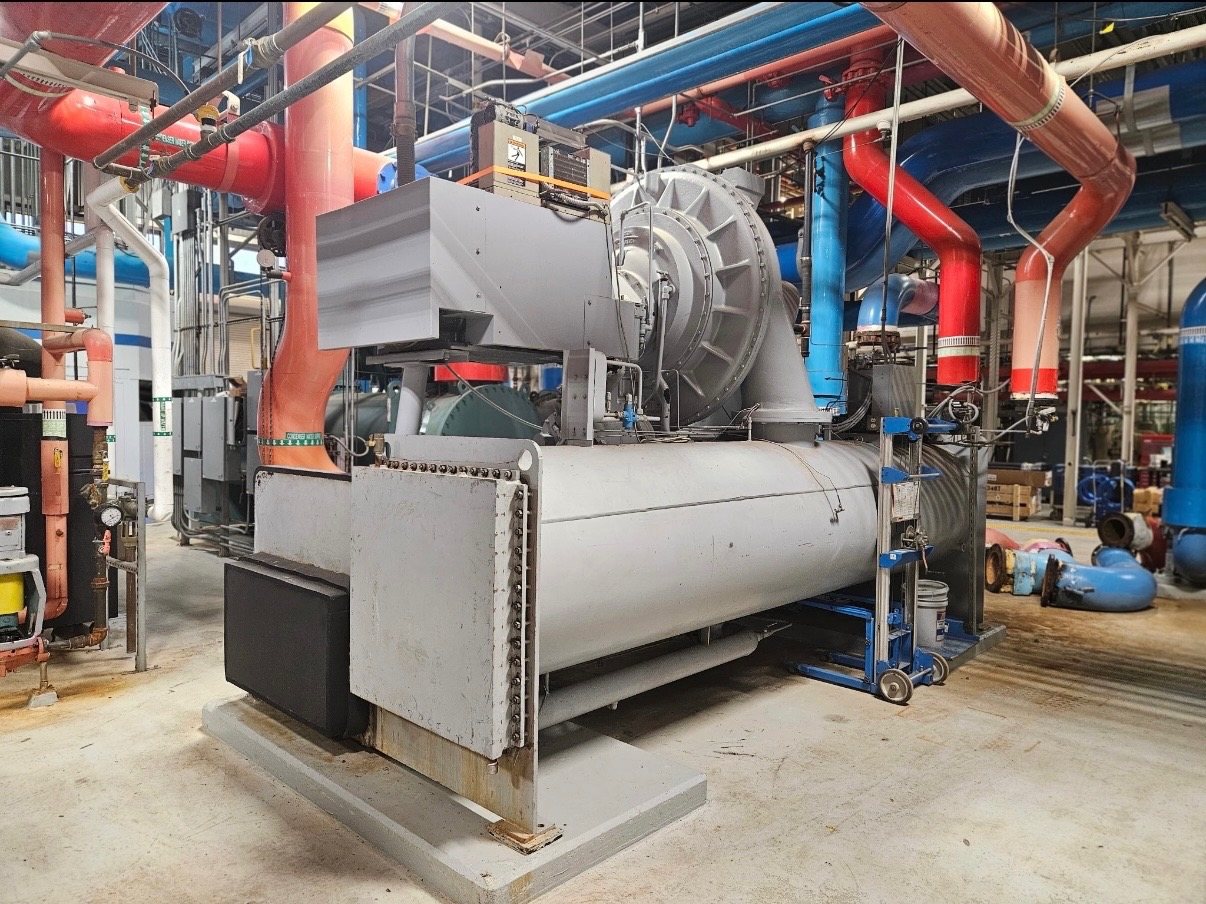
Air-cooled Chiller Buyers in Baton Rouge, Louisiana
From surplus unit to removal
We purchase a used air-cooled chiller in Baton Rouge, Louisiana; we do not sell chillers. The process starts with an upfront cash offer based on the information available, with no equipment test required. The buyer handles crane service, rigging, disconnects, refrigerant recovery, loading, hauling and freight. Site staff and appropriately qualified personnel coordinate the work around actual equipment and facility constraints.
Location and site access
The regional context for Baton Rouge includes the Capital Region and the I-10 and I-12 corridors. It is in East Baton Rouge Parish. River-corridor industrial sites and occupied institutional buildings may impose different access or shutdown rules; tell the buyer which apply at your site. Give the street address and the unit's position on the property; a regional highway does not establish which gate, route or loading area can be used at that site. If this air-cooled chiller is on a roof, report any known screens or parapets along with the possible crane setup area.
Start with the nameplate
A nameplate serves as an anchor for the discussion, not a reason to take equipment apart. From an accessible position, photograph the main plate and the machine around it; include model, serial and capacity only where legible. If the site has several similar chillers, label the photograph with the building and unit number so records are not accidentally matched to the wrong asset.
Confirm the equipment arrangement
Share photos of condenser coils, fans and visible guards, noting any exterior damage or corrosion. Photograph from a safe position outside the enclosure, without moving guards or reaching into fans. Describe visible damage as an observation, not a diagnosis; the buyer does not need the unit started to review the information.
Define the purchase scope
Define the boundaries of the proposed purchase before arranging a lift. Photograph the machine in place, list any included starter or controls, and mark equipment that will remain. For a bank, distinguish individual modules from the total system. When ownership or inclusion of a component is uncertain, tell the buyer and resolve it with the authorized site representative.
Capacity is not shipping weight
When a record says tons, ask whether that figure describes cooling output for one unit or for a group. It is not the load weight for rigging. Supply physical dimensions and a documented shipping or operating weight if known, and specify whether protrusions and separate cabinets are included. If the document does not say, let the buyer know rather than filling the gap with an estimate.
Record what is actually installed
Provide the unit dimensions and whether it is on a roof, pad or elevated structure. A roof, raised support and ground-level pad present different access questions. Include the height and extent of nearby screens or parapets if known, and say whether the stated dimensions include protruding parts.
Plan the disconnects safely
Existing drawings and exterior photos can help identify electrical interfaces, including a remote starter or shared controls. Record plate voltage and phase only if safely visible; an unreadable value can remain unknown. The buyer arranges qualified electrical disconnects in coordination with the site, so there is no reason for the owner to expose conductors or test the system.
When the charge is uncertain
Refrigerant information affects the recovery plan, but the seller need not determine the contents by opening the circuit. Photograph safely visible labels and provide service or conversion records if they exist; tell the buyer about any known leak or missing information. The buyer arranges qualified recovery in coordination with the site. Never vent refrigerant or attempt to handle it yourself.
Removal considerations for this design
Flag overhead wires, parapets, crane access and any restricted loading route before removal planning. The buyer's rigger assesses the reach, clearance and truck position for the specific lift. A clear photo of the surroundings and any known underground or surface restrictions is more useful than assuming that a crane can simply park beside the unit.
Agree on the work boundaries
A chiller can be surplus while nearby systems remain essential. Ask the authorized facility representative to identify protected services, shared controls and the people who can approve access. The buyer arranges the work and coordinates the plan with the site, including any qualified disconnect and recovery personnel. Treat timing as subject to actual site approval, not a guaranteed removal date.
The route out of the building
Identify where the chiller sits relative to the building entrance and loading area, then mention any known obstacles along that path. A narrow door, low pipe, tight turn or roof parapet may matter more than distance to the road. Provide existing measurements or photographs when permitted. The buyer's riggers verify the actual route and do not rely on an assumed clear opening.
The actual lifting constraints
If a unit is above grade or inside a constrained room, describe the possible route and any known structural or overhead limits. A safe photo of the surrounding area can help, along with unit-specific rigging documents. The buyer's rigging team assesses lift points, crane position and whether components can move as assembled. The seller is not expected to perform rigging or dismantling.
Loading and the road out
The relevant address for a pickup includes more than a postal code. Identify the truck entrance, security requirements and the point at which equipment can be loaded, if the site has selected one. Documented weight and physical dimensions are important to planning the load. The buyer handles loading, hauling and freight, coordinating the approach with the facility and rigging team.
A practical first message
Share what is known now rather than delaying until the file is perfect. A plate, a few safe exterior photos and the site's location give the buyer a starting point for an upfront cash offer. An unknown rating or incomplete history is acceptable to report as unknown. No test is needed; the buyer and site representative can discuss the removal plan and any outstanding questions.