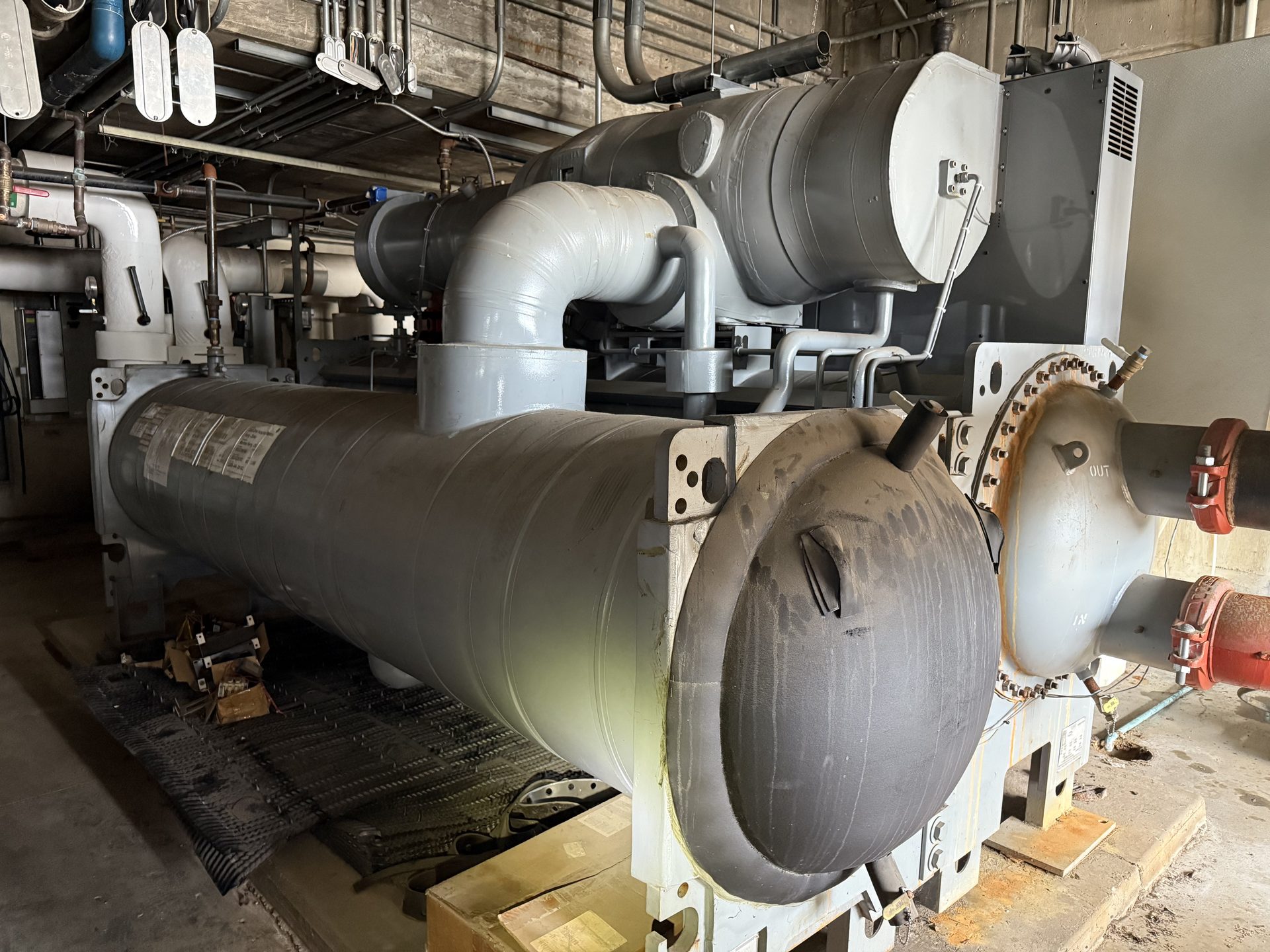
Industrial Chiller Buyers in Lake Charles, Louisiana
Offer and removal scope
An owner with a surplus industrial chiller in Lake Charles, Louisiana can begin with photographs and available records; no equipment testing is required. We buy chillers and provide an upfront cash offer. The buyer handles crane service, rigging, disconnects, refrigerant recovery, loading, hauling and freight, coordinating with authorized site personnel. An unknown detail is worth flagging; it does not need to be turned into a guess.
The route out of the building
Identify where the chiller sits relative to the building entrance and loading area, then mention any known obstacles along that path. A narrow door, low pipe, tight turn or roof parapet may matter more than distance to the road. Provide existing measurements or photographs when permitted. The buyer's riggers verify the actual route and do not rely on an assumed clear opening.
Two very different measurements
If the equipment schedule has a tonnage, match it to the correct machine and indicate whether the number is for one unit or a combined plant. Also provide available dimensions and any documented shipping or operating weight. A cabinet that fits inside the building may still have attachments that limit its exit; capacity alone says nothing reliable about those clearances.
Plan the lift around the site
The seller can help the lift team by providing existing drawings, documented component weights and a safe view of the equipment's surroundings. Mention known overhead lines, roof edges, floor limits or restricted staging areas. The buyer handles crane service and rigging, with professionals determining the lift method and acceptable setup for the actual unit rather than relying on an estimated load.
From staging to hauling
A truck-ready plan begins with the site entrance and a realistic loading area. Tell the buyer about restricted gates, low overhead services, surface limits or delivery traffic that may affect access. Supply equipment dimensions and documented weight when available. The buyer arranges loading, hauling and freight; the route and vehicle arrangement depend on the actual load and property conditions.
The details worth sending
Before compiling an equipment list, check whether the record identifies an individual chiller or the whole plant. Send the buyer the safest available photograph of the actual unit and its label, together with any matching schedule. A plate that is obscured or missing can be described honestly; do not remove a cover or enter a restricted area to obtain it.
Plan from the real address
The regional context for Lake Charles includes the I-10 corridor and the Calcasieu port and industrial area. It is in Calcasieu Parish. A large industrial facility may have specific gate, escort and work-area rules; share the rules for the actual location. Give the street address and the unit's position on the property; a regional highway does not establish which gate, route or loading area can be used at that site.
Separate the unit from its surroundings
Clarify what is included: the main chiller, any separate drive or starter, control cabinet and modules, as applicable. Some components may be shared with a machine that stays. A simple annotated photo or asset list is useful, even when you cannot identify every connection. The buyer can review the actual arrangement with the site rather than assuming every nearby cabinet belongs to the chiller.
Separate the assets that stay
The scope of a purchase should be clear before removal is planned. Name the machine or machines being offered and identify included modules, controls and separate cabinets if known. Note any equipment that is shared or will stay at the property. Photographs labeled by building or unit help avoid mixing records from two similar chillers, especially when a plant schedule contains combined capacities.
A useful condition history
Present the condition as known, not as a performance guarantee. A safe exterior photograph may show damaged coils, corrosion or missing controls; an existing maintenance record can explain a reported repair. State when the current condition is unknown or records are incomplete. No start-up or equipment test is required for the buyer to review a request.
Identify shared power equipment
An electrical schedule may identify voltage, phase, frequency and a remote starter even when the main machine is disconnected. Share the documents and safe exterior photos, noting whether controls are included or serve other units. The buyer coordinates qualified electrical disconnect personnel with the site. Do not open energized or closed cabinets, test circuits or disturb wiring to prepare a description.
When the charge is uncertain
Share the refrigerant designation and charge quantity from the plate or records if available, along with any retrofit label. The original plate does not necessarily describe a later conversion, and an unknown charge should stay unknown until qualified personnel assess it. The buyer handles refrigerant recovery with appropriately qualified personnel. Keep the circuit closed: do not attach gauges, transfer or vent refrigerant.
Agree on the work boundaries
Site conditions should be discussed before crews and equipment are assigned. Note any security, escort, loading-hour or shutdown requirements and identify the person authorized to coordinate them. The buyer handles the removal services, while site personnel define their operating and access constraints. Unknown dates or incomplete drawings can be flagged for follow-up rather than filled in with assumptions.
A practical first message
Send a short description, safe overall and nameplate photos, and the equipment location to begin the review. Mention known damage, shared components and site restrictions; incomplete records can be marked unknown. The buyer provides an upfront cash offer without requiring an equipment test, then coordinates the proposed removal scope and work with the site's authorized representative.