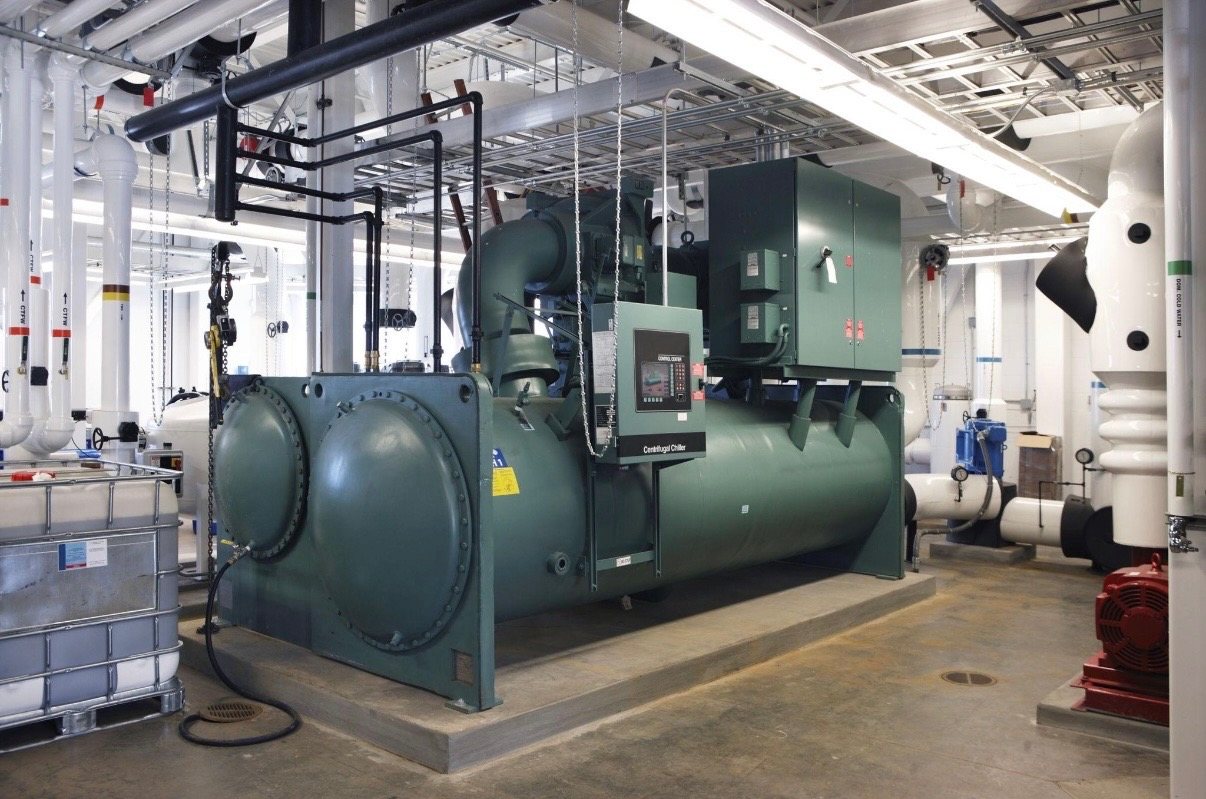
Buyers for 1,000 to under 2,000 tons Chillers in Louisiana
A practical way to start
We purchase a chiller rated 1,000 to under 2,000 tons of cooling capacity in Louisiana; we do not sell chillers. The process starts with an upfront cash offer based on the information available, with no equipment test required. The buyer handles crane service, rigging, disconnects, refrigerant recovery, loading, hauling and freight. Site staff and appropriately qualified personnel coordinate the work around actual equipment and facility constraints.
Keep remaining services in view
An owner, facilities manager and building occupant may have different responsibilities. Identify who can approve access and isolation, and tell the buyer about any remaining cooling load or shared controls. The buyer coordinates qualified work and transport with the site. If an outage window has not been approved, describe it as undecided instead of committing another party to a date.
Confirm the cooling-capacity range
Share the unit capacity, model and serial number together with available equipment-room drawings. An equipment-room drawing helps connect the nameplate to the correct machine when several similar units are installed. Identify the specific asset and the parts to be retained, sold or kept operating if that is known. Cooling tons measure capacity, not the weight to be lifted or shipped.
Match the plate to the unit
Give the buyer enough information to distinguish the machine from adjacent equipment: an overall photograph, a legible plate and the location of any separate controls included. The model and serial number are useful where visible, but a partial record is still a reasonable starting point. Mark any values copied from old documentation rather than the plate itself.
Describe the configuration
The machine may be one unit in a bank or an individual assembly with separate controls. Describe what is present and what the owner intends to include. Air-cooled or water-cooled refers to heat rejection, while screw, scroll or centrifugal describes the compressor; those classifications can overlap. Do not infer a unit's exact configuration simply from a brand name.
What the physical load includes
Identify major components and provide their documented dimensions and weights if listed separately. A main assembly, starter or control enclosure may each require different handling. Share component data from the actual records and mark any missing information; a cooling-capacity figure does not establish their weights.
When the history is incomplete
It is fine to say that operating condition is unknown. Send the records the site already has, note visible exterior damage and identify components that are absent or excluded. Avoid drawing conclusions about internal condition from appearance alone. There is no need to energize the chiller, connect test equipment or remove covers in order to request an offer.
Electrical information for the team
An electrical schedule may identify voltage, phase, frequency and a remote starter even when the main machine is disconnected. Share the documents and safe exterior photos, noting whether controls are included or serve other units. The buyer coordinates qualified electrical disconnect personnel with the site. Do not open energized or closed cabinets, test circuits or disturb wiring to prepare a description.
Handling the actual load
Discuss crane access, structural loading and transport route constraints early; qualified riggers determine the removal plan. Crane reach, building loads and the road from the site all need a project-specific review. Report the known boundaries and any proposed staging area, leaving engineering and lift decisions to the buyer's qualified team.
Labels, history and safe recovery
A retired chiller can still contain refrigerant, so its status should not be inferred from its operating history. Provide the safely visible designation and any known service or recovery notes, including gaps. The buyer coordinates the recovery work through appropriately qualified personnel; the seller leaves the circuit closed and does not vent or transfer refrigerant.
Openings, turns and overhead limits
A rooftop, basement, mechanical room and fenced yard each create different access questions. Provide the actual building and unit location, any known opening dimensions and a safe photo of the route. Mention screens, parapets, overhead services or a tight corner if present. Site restrictions should be confirmed with authorized staff rather than inferred from a map or from the machine's size.
Site-specific access
For a chiller anywhere in Louisiana, provide the actual street address and the building, yard, mechanical room or roof where the equipment sits. The city and parish help identify the property, but the gate, internal route and loading area determine how the buyer's team can reach it. Mention known access restrictions or a preferred site contact; if the location details are incomplete, say what remains to be confirmed.
The actual lifting constraints
If the machine must pass through a building opening or over a parapet, show the riggers the relevant route and any measurements already on file. Provide the unit-specific lifting documents and known weights where available. The buyer arranges crane and rigging services; the professional team decides on lifting points and whether an approved component separation is needed.
Loading and the road out
The relevant address for a pickup includes more than a postal code. Identify the truck entrance, security requirements and the point at which equipment can be loaded, if the site has selected one. Documented weight and physical dimensions are important to planning the load. The buyer handles loading, hauling and freight, coordinating the approach with the facility and rigging team.