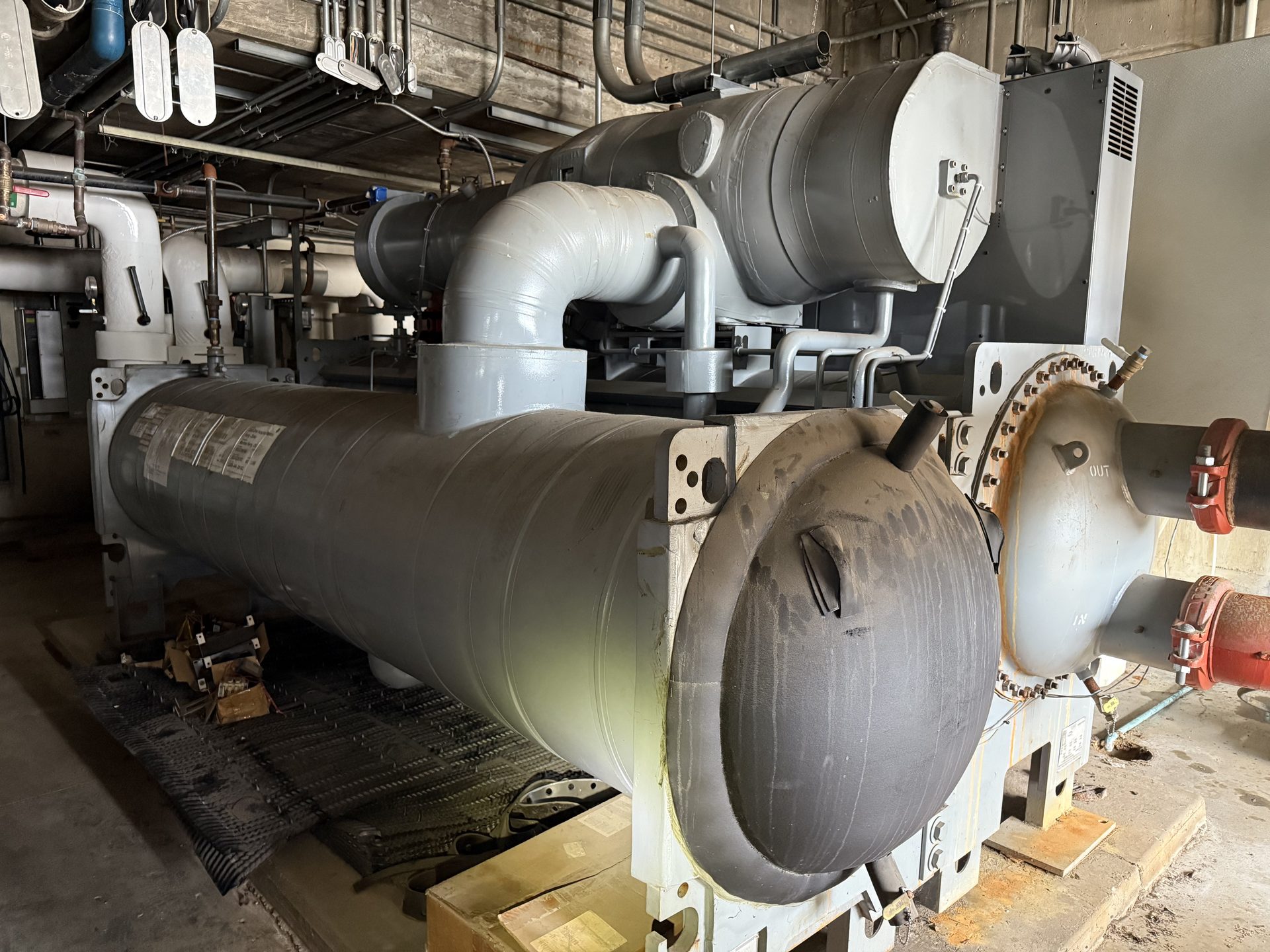
Used Daikin Chiller Buyers in Louisiana
Offer and removal scope
We purchase a used Daikin chiller in Louisiana; we do not sell chillers. The process starts with an upfront cash offer based on the information available, with no equipment test required. The buyer handles crane service, rigging, disconnects, refrigerant recovery, loading, hauling and freight. Site staff and appropriately qualified personnel coordinate the work around actual equipment and facility constraints.
Start with the property
For a chiller anywhere in Louisiana, provide the actual street address and the building, yard, mechanical room or roof where the equipment sits. The city and parish help identify the property, but the gate, internal route and loading area determine how the buyer's team can reach it. Mention known access restrictions or a preferred site contact; if the location details are incomplete, say what remains to be confirmed.
Coordinate with the facility
A chiller can be surplus while nearby systems remain essential. Ask the authorized facility representative to identify protected services, shared controls and the people who can approve access. The buyer arranges the work and coordinates the plan with the site, including any qualified disconnect and recovery personnel. Treat timing as subject to actual site approval, not a guaranteed removal date.
Identify this manufacturer's unit
Record the Daikin model and serial numbers and photograph the capacity and refrigerant information on the unit nameplate. Use the actual unit plate rather than assuming that every machine in the same plant has the same refrigerant or rating. If a label was changed or a record is missing, send the photographs and explain the uncertainty.
Report condition without a test
Idle equipment does not need to be restarted to demonstrate it. Share a dated service record if available, note missing parts and describe only damage visible from a safe position. If the unit was removed from service for a known reason, explain that without claiming an internal diagnosis. The buyer can assess the submission without a test run.
Power and separate controls
Power information belongs in the inventory even when the chiller is already idle. Share a safe photo of the rating plate and existing electrical drawings if available; identify separate controls and missing information. The buyer handles electrical disconnects through qualified personnel, coordinated with the site's authorized staff. The seller should not switch, probe or dismantle electrical components to prepare for an offer.
Record the actual arrangement
Share photos showing the full unit, visible compressors or modules, and fluid connections without removing any covers. A module count and visible connection photos are especially useful if the equipment is arranged in a bank. Indicate whether the capacity you have is for one piece or the entire group, and do not remove guards to get a closer view.
Keep the circuit closed
Share the refrigerant designation and charge quantity from the plate or records if available, along with any retrofit label. The original plate does not necessarily describe a later conversion, and an unknown charge should stay unknown until qualified personnel assess it. The buyer handles refrigerant recovery with appropriately qualified personnel. Keep the circuit closed: do not attach gauges, transfer or vent refrigerant.
Capacity is not shipping weight
If a modular bank is involved, a building's total capacity can obscure the size of each piece. State how many modules are offered and which nameplate rating applies to each, if visible. The freight team also needs the actual outside dimensions and documented weight: a cooling ton is a capacity measure, not the weight of a shipping load.
Document the route and lift
Mention rooftop location, screened enclosures or other access limits that could affect crane or freight planning. A roof screen or narrow service yard can alter the path from the unit to a truck. Give the buyer the building address, approximate location of the machine and any known limits on crane setup; the lifting team will assess the actual site.
Openings, turns and overhead limits
A facility address can contain more than one gate, building and equipment room. Specify the right entrance and unit location, along with any escort or vehicle restrictions known to the site. If a roof or indoor route is involved, provide opening dimensions and photographs from safe locations. The removal team will assess turns, floor transitions and overhead clearance as well as the doorway.
Crane and rigging considerations
The buyer handles the crane and rigging, with a professional lift plan based on the particular machine and site. Share documented weights, manufacturer lifting instructions and photos of visible lifting-point markings if available. Identify overhead wires, nearby structures, ground or floor limits and possible staging space. Do not select a lift point or attempt to separate components yourself; the rigger evaluates the actual conditions.
From staging to hauling
Moving a chiller off its foundation and getting it onto a truck are separate planning steps. Show the proposed staging and loading area, identify any site traffic restrictions and share the measurements you have. The buyer coordinates loading, hauling and freight with the riggers. If the route or truck position is unknown, say so rather than assuming a particular vehicle will fit.