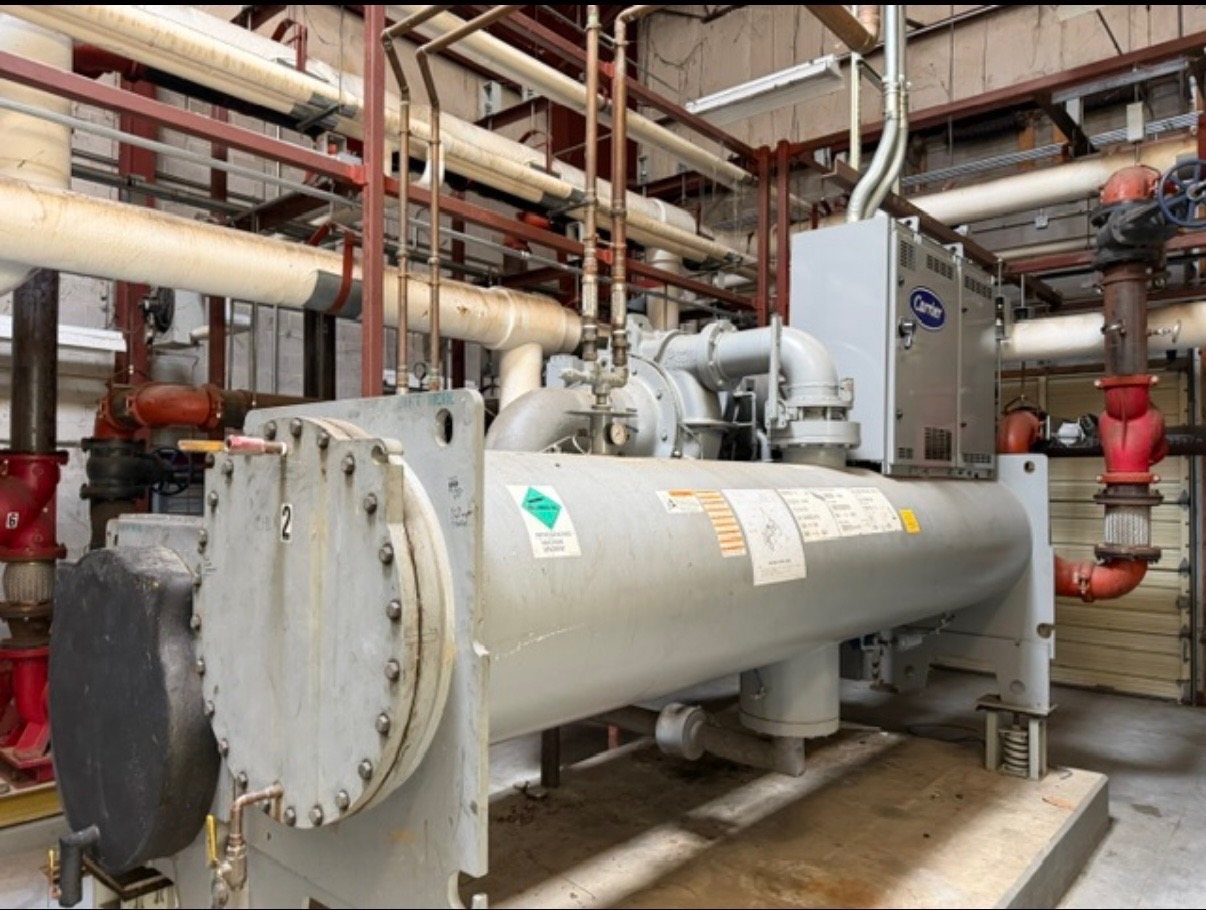
Buyers for 200 to under 500 tons Chillers in Louisiana
A practical way to start
We purchase a chiller rated 200 to under 500 tons of cooling capacity in Louisiana; we do not sell chillers. The process starts with an upfront cash offer based on the information available, with no equipment test required. The buyer handles crane service, rigging, disconnects, refrigerant recovery, loading, hauling and freight. Site staff and appropriately qualified personnel coordinate the work around actual equipment and facility constraints.
Start with the nameplate
A short identification packet can save a later round of questions: photograph the unit as installed, its accessible nameplate and any separate cabinet included in the transaction. List the model, serial number and rated cooling capacity if legible. Missing documentation is not a barrier to starting a conversation, and the seller does not need to take panels off.
Confirm the cooling-capacity range
Share the rated capacity and photos of the complete machine, including any separate electrical cabinets. A wide photo can show whether the listed machine has separate controls or other components. Do not assume that the plant's total cooling capacity is the rating of one chiller; identify the source of the number. Cooling tons measure capacity, not the weight to be lifted or shipped.
When the history is incomplete
Describe the condition you can actually observe: visible corrosion, missing covers or controls, known damage, or whether the machine has been idle. Provide maintenance records if they exist, but do not infer a working condition from an old invoice. No equipment test is required for a cash offer, and a seller should not start the unit or open electrical or refrigerant components to collect information.
Identify shared power equipment
Record power details from labels or drawings already available, and say if the voltage or phase cannot be confirmed. A separate drive or starter may have its own enclosure and removal path, and it may not be part of the purchase. The buyer handles disconnects using qualified personnel, working with authorized staff who control the site's isolation procedures.
What the physical load includes
Provide documented lift or shipping weights and dimensions, including any removable components if known. Operating weight, shipping weight and separate component weights may differ. Give the buyer the document or drawing as written, and say when a weight or measurement is unknown rather than estimating from the tonnage.
Labels, history and safe recovery
A refrigerant label should travel with any later retrofit or service documentation so the recovery team sees the whole recorded history. Give the stated quantity only if documented and describe known damage without touching the circuit. The buyer arranges appropriately qualified personnel for recovery; leave valves closed and never vent refrigerant to make a machine easier to move.
Access and operating constraints
An approved work window and a site contact are more useful than a proposed date that no one has confirmed. Identify access, escort and shutdown restrictions, and explain which cooling or process services must continue. The buyer coordinates the removal work with authorized personnel. Where the schedule or operating boundaries remain undecided, flag those questions for the facility rather than guessing.
The route to a truck
Note mechanical-room exits, roof openings, underground utilities or other known constraints for a professional lift plan. Underground utilities, restricted openings and overhead services can affect where lifting equipment may be positioned. The buyer's professional rigger reviews the actual site; a route that appears clear in a floor plan still needs verification.
From the chiller to the loading area
For an accurate removal discussion, include the street address, equipment location and the site's preferred truck entrance. A door measurement is useful, but the path can also be limited by a turn, low ceiling or floor transition. Describe known obstacles and share photographs where permitted. The buyer's riggers evaluate the route rather than assuming that the chiller will move intact.
The Louisiana site
For a chiller anywhere in Louisiana, provide the actual street address and the building, yard, mechanical room or roof where the equipment sits. The city and parish help identify the property, but the gate, internal route and loading area determine how the buyer's team can reach it. Mention known access restrictions or a preferred site contact; if the location details are incomplete, say what remains to be confirmed.
Information for the rigger
A lift plan depends on more than the cooling rating. Provide the known equipment dimensions, documented weights, roof or room access and any instructions that came with the unit. Tell the buyer about known overhead or ground restrictions and whether staging space is limited. The buyer arranges crane service and professional rigging; qualified personnel determine the lifting and separation method.
Where can the truck load?
A good freight discussion includes the equipment's documented weight, outside dimensions, gate location and space available to load. Identify narrow internal roads, overhead obstructions or restrictions on large vehicles if known. The buyer handles loading and hauling as part of the freight arrangement, while its team checks the actual route with the site. Cooling tons alone cannot establish transport requirements.