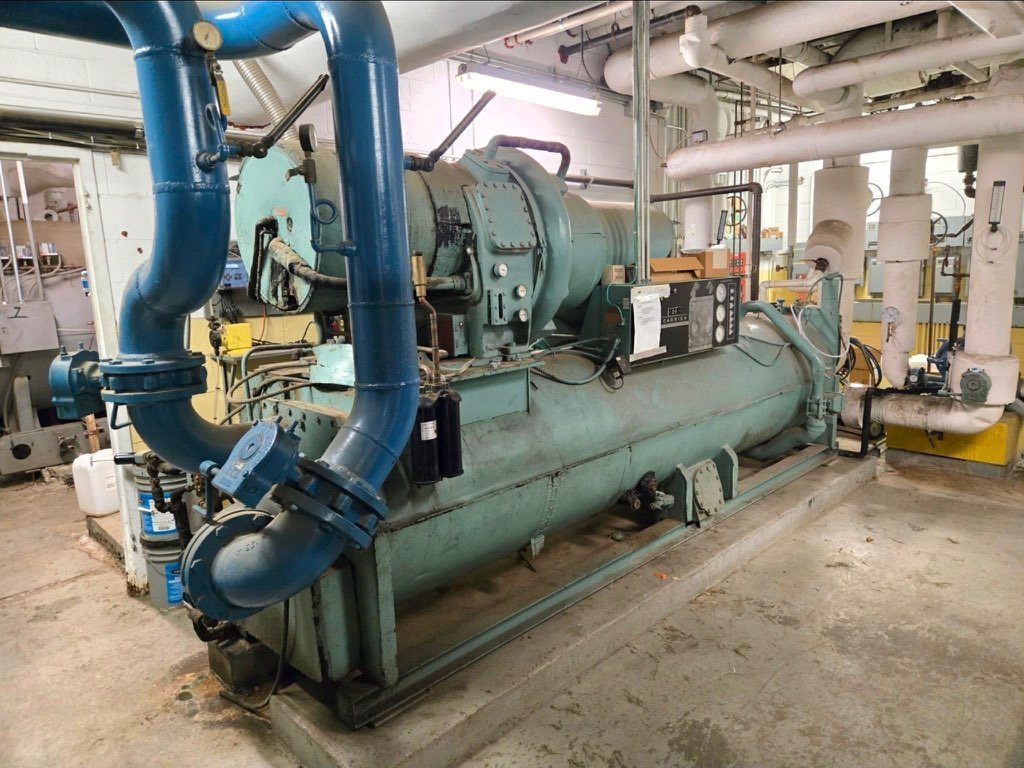
Used Chiller Buyers in Bienville Parish, Louisiana
A buyer for your chiller
An owner with a surplus industrial chiller in Bienville Parish, Louisiana can begin with photographs and available records; no equipment testing is required. We buy chillers and provide an upfront cash offer. The buyer handles crane service, rigging, disconnects, refrigerant recovery, loading, hauling and freight, coordinating with authorized site personnel. An unknown detail is worth flagging; it does not need to be turned into a guess.
Locating the equipment
Bienville Parish is in northwest Louisiana east of the Shreveport area. Give the actual building and entrance rather than assuming the parish seat or a regional landmark is the chiller's location. Provide the street address, the unit's position on the property, and known gate, loading or security limits. These details help the buyer's freight and rigging teams assess the real path to the machine rather than plan from a parish name alone.
Start with the nameplate
A short identification packet can save a later round of questions: photograph the unit as installed, its accessible nameplate and any separate cabinet included in the transaction. List the model, serial number and rated cooling capacity if legible. Missing documentation is not a barrier to starting a conversation, and the seller does not need to take panels off.
Make the equipment list clear
Define the boundaries of the proposed purchase before arranging a lift. Photograph the machine in place, list any included starter or controls, and mark equipment that will remain. For a bank, distinguish individual modules from the total system. When ownership or inclusion of a component is uncertain, tell the buyer and resolve it with the authorized site representative.
Separate the unit from its surroundings
Clarify what is included: the main chiller, any separate drive or starter, control cabinet and modules, as applicable. Some components may be shared with a machine that stays. A simple annotated photo or asset list is useful, even when you cannot identify every connection. The buyer can review the actual arrangement with the site rather than assuming every nearby cabinet belongs to the chiller.
Report condition without a test
Present the condition as known, not as a performance guarantee. A safe exterior photograph may show damaged coils, corrosion or missing controls; an existing maintenance record can explain a reported repair. State when the current condition is unknown or records are incomplete. No start-up or equipment test is required for the buyer to review a request.
Two very different measurements
Cooling tons describe capacity; they do not tell the freight team how much the machine weighs. Share the rated tons from the plate and the documented operating or shipping weight separately, if available. Give overall length, width and height, including projections, and say whether a separate cabinet has its own dimensions. Mark an estimate clearly instead of presenting it as a measured or documented figure.
Electrical information for the team
A separate power cabinet can affect both the sale scope and the removal route. If known, provide the nameplate voltage, phase and frequency and say whether the cabinet serves only this machine. Site personnel and the buyer's qualified disconnect team coordinate electrical isolation; never open a cabinet or attempt electrical work merely to gather details for the buyer.
Identify the interfaces
Retiring one machine does not necessarily retire the entire loop. Ask the facility's authorized representative to identify shared piping and any systems that must continue operating, using existing drawings where possible. Describe known water or process-fluid interfaces to the buyer. Qualified personnel coordinate isolation and disconnects; the seller should not cut, drain or open connections to obtain an offer.
Refrigerant records and recovery
A retired chiller can still contain refrigerant, so its status should not be inferred from its operating history. Provide the safely visible designation and any known service or recovery notes, including gaps. The buyer coordinates the recovery work through appropriately qualified personnel; the seller leaves the circuit closed and does not vent or transfer refrigerant.
Coordinate with the facility
Before removal, define what stays in service and who can authorize work at the property. Existing site rules may cover escorts, work windows, protected areas or shared utilities. The buyer arranges the removal team and coordinates with authorized personnel; the site supplies its requirements. Any window discussed is a planning input, not a promise that a particular date will be available.
Access starts at the unit
For an accurate removal discussion, include the street address, equipment location and the site's preferred truck entrance. A door measurement is useful, but the path can also be limited by a turn, low ceiling or floor transition. Describe known obstacles and share photographs where permitted. The buyer's riggers evaluate the route rather than assuming that the chiller will move intact.
Information for the rigger
If the machine must pass through a building opening or over a parapet, show the riggers the relevant route and any measurements already on file. Provide the unit-specific lifting documents and known weights where available. The buyer arranges crane and rigging services; the professional team decides on lifting points and whether an approved component separation is needed.
Loading and the road out
After the machine leaves its installed position, it still needs a safe staging place and a truck-accessible loading area. Share the location of gates, internal roads and any known overhead or vehicle restrictions. The buyer coordinates loading, hauling and freight. The freight team will evaluate the actual load dimensions and route rather than assuming that a nearby highway solves access inside the property.