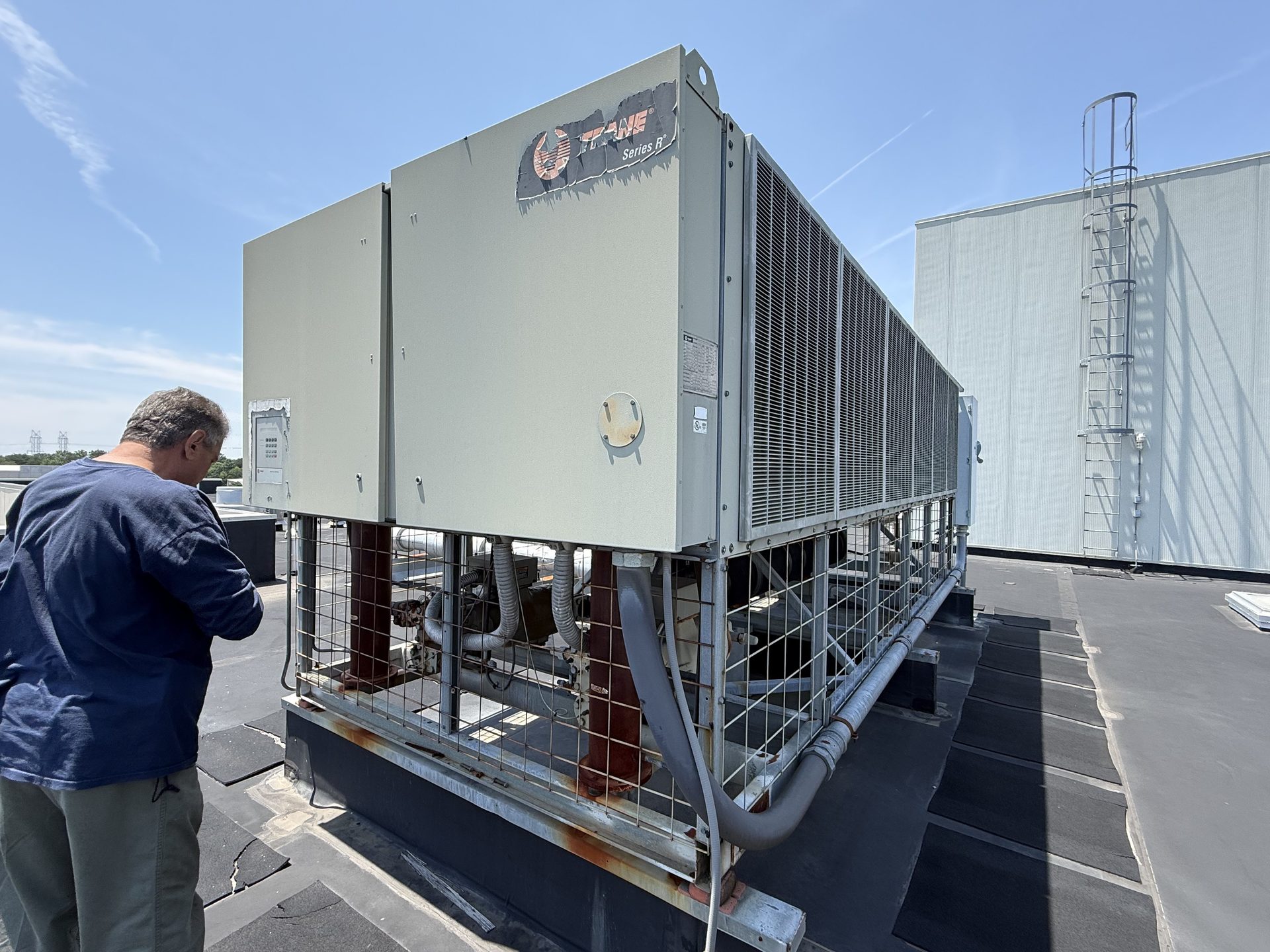
Scroll Chiller Buyers in Bossier City, Louisiana
A practical way to start
Have a used scroll chiller in Bossier City, Louisiana to remove? We are chiller buyers, and a test run is not required to request an upfront cash offer. The buyer handles crane service, rigging, disconnects, refrigerant recovery, loading, hauling and freight. Share the machine's visible details and the site's known restrictions so the work can be coordinated with authorized personnel.
Openings, turns and overhead limits
Identify where the chiller sits relative to the building entrance and loading area, then mention any known obstacles along that path. A narrow door, low pipe, tight turn or roof parapet may matter more than distance to the road. Provide existing measurements or photographs when permitted. The buyer's riggers verify the actual route and do not rely on an assumed clear opening.
Confirm the equipment arrangement
Share the chiller nameplate and any visible compressor labels; do not remove panels to collect them. A visible compressor label and the main chiller plate serve different purposes; a compressor number alone may not identify the full machine. If either is inaccessible, share the information on hand without taking covers off.
Location and site access
The regional context for Bossier City includes the east side of the Red River in the Shreveport–Bossier area. It is in Bossier Parish. Identify the site entrance and any river-crossing or access constraints relevant to the proposed freight route. A regional route or facility category cannot establish the conditions at a particular property. Provide the street address, building or yard location, and any known gate, loading or access restrictions for the actual chiller. If the scroll chiller is modular, identify the units being offered and where their shared headers are located, if known.
Measure the load, not just the rating
If the equipment schedule has a tonnage, match it to the correct machine and indicate whether the number is for one unit or a combined plant. Also provide available dimensions and any documented shipping or operating weight. A cabinet that fits inside the building may still have attachments that limit its exit; capacity alone says nothing reliable about those clearances.
The actual lifting constraints
A lift plan depends on more than the cooling rating. Provide the known equipment dimensions, documented weights, roof or room access and any instructions that came with the unit. Tell the buyer about known overhead or ground restrictions and whether staging space is limited. The buyer arranges crane service and professional rigging; qualified personnel determine the lifting and separation method.
Details that affect the review
Note the number of compressors or modules visible and whether the rated capacity describes one module or the full system. A bank can contain several modules, each with its own rating. Tell the buyer whether the figure on a schedule is for a single module or the complete system and which modules, if any, are remaining in service.
Where can the truck load?
A truck-ready plan begins with the site entrance and a realistic loading area. Tell the buyer about restricted gates, low overhead services, surface limits or delivery traffic that may affect access. Supply equipment dimensions and documented weight when available. The buyer arranges loading, hauling and freight; the route and vehicle arrangement depend on the actual load and property conditions.
Match the plate to the unit
When a plate is difficult to read, send the clearest safe photo available along with any relevant equipment schedule. Identify the particular machine in a room containing multiple units and note which numbers are incomplete. A buyer can use those starting points to ask focused follow-up questions without relying on a guess about model or age.
Plan the interfaces and access
Photograph accessible coils, headers and mounting points and describe the route to the loading area. Headers may connect a module to other equipment, and mounting points must be assessed for the actual unit. The seller can show the layout safely; qualified personnel decide whether and how the equipment can be separated and moved.
Separate the unit from its surroundings
A nameplate tells only part of the story if controls, a starter or modules sit elsewhere. Identify the chiller in a wide photograph and indicate the components that belong to the proposed transaction. Note shared equipment or uncertainties. If the heat-rejection method or compressor type is unclear, available drawings and exterior photos are more useful than a confident guess.
Identify shared power equipment
Power information belongs in the inventory even when the chiller is already idle. Share a safe photo of the rating plate and existing electrical drawings if available; identify separate controls and missing information. The buyer handles electrical disconnects through qualified personnel, coordinated with the site's authorized staff. The seller should not switch, probe or dismantle electrical components to prepare for an offer.
Fluid connections and isolation
A chiller can be connected to building cooling, condenser water or a process loop, depending on its actual installation. If you know which connections are present, share the drawings and note which services must remain active. When the purpose or contents of a line are uncertain, say so. The buyer's qualified team and site personnel coordinate isolation, disconnects and fluid handling.
Labels, history and safe recovery
A retired chiller can still contain refrigerant, so its status should not be inferred from its operating history. Provide the safely visible designation and any known service or recovery notes, including gaps. The buyer coordinates the recovery work through appropriately qualified personnel; the seller leaves the circuit closed and does not vent or transfer refrigerant.
Coordinate with the facility
Site conditions should be discussed before crews and equipment are assigned. Note any security, escort, loading-hour or shutdown requirements and identify the person authorized to coordinate them. The buyer handles the removal services, while site personnel define their operating and access constraints. Unknown dates or incomplete drawings can be flagged for follow-up rather than filled in with assumptions.