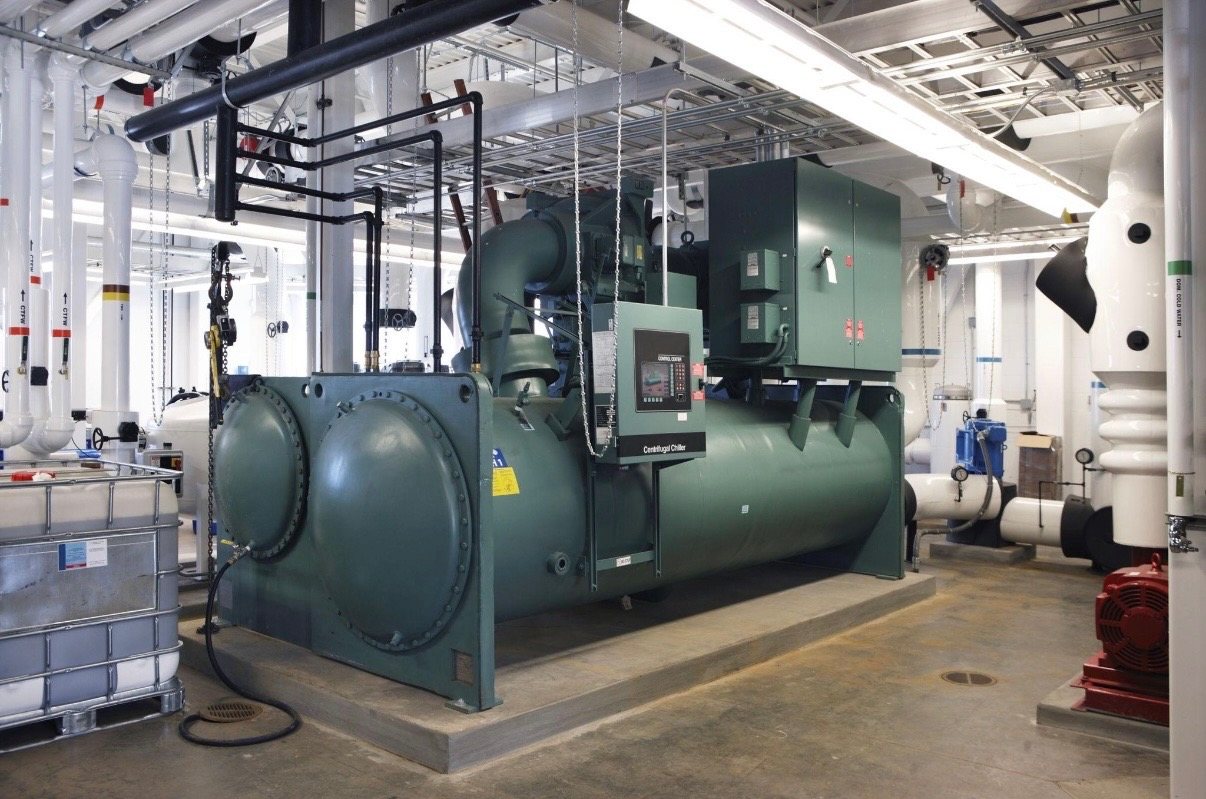
Used Chiller Buyers in Caldwell Parish, Louisiana
A buyer for your chiller
An owner with a surplus industrial chiller in Caldwell Parish, Louisiana can begin with photographs and available records; no equipment testing is required. We buy chillers and provide an upfront cash offer. The buyer handles crane service, rigging, disconnects, refrigerant recovery, loading, hauling and freight, coordinating with authorized site personnel. An unknown detail is worth flagging; it does not need to be turned into a guess.
Access starts at the unit
A facility address can contain more than one gate, building and equipment room. Specify the right entrance and unit location, along with any escort or vehicle restrictions known to the site. If a roof or indoor route is involved, provide opening dimensions and photographs from safe locations. The removal team will assess turns, floor transitions and overhead clearance as well as the doorway.
Measure the load, not just the rating
When a record says tons, ask whether that figure describes cooling output for one unit or for a group. It is not the load weight for rigging. Supply physical dimensions and a documented shipping or operating weight if known, and specify whether protrusions and separate cabinets are included. If the document does not say, let the buyer know rather than filling the gap with an estimate.
The actual lifting constraints
If the machine must pass through a building opening or over a parapet, show the riggers the relevant route and any measurements already on file. Provide the unit-specific lifting documents and known weights where available. The buyer arranges crane and rigging services; the professional team decides on lifting points and whether an approved component separation is needed.
Where can the truck load?
The buyer handles loading, hauling and freight as well as the rigging that gets the equipment to the truck. For planning, identify the actual loading area, gate width and any restrictions on large vehicles or staging. A regional highway may be nearby, but the last stretch into a property can still be constrained. The freight team assesses the actual route and load dimensions.
Identify the machine
When a plate is difficult to read, send the clearest safe photo available along with any relevant equipment schedule. Identify the particular machine in a room containing multiple units and note which numbers are incomplete. A buyer can use those starting points to ask focused follow-up questions without relying on a guess about model or age.
Parish context and the real address
Caldwell Parish is in northeast Louisiana south of Monroe along the Ouachita River. If a river crossing affects the actual route, tell the freight team; a parish-wide description does not prove that any particular bridge is involved. Provide the street address, the unit's position on the property, and known gate, loading or security limits. These details help the buyer's freight and rigging teams assess the real path to the machine rather than plan from a parish name alone.
Describe the configuration
An equipment name may describe heat rejection, a compressor, or a modular system rather than the complete installation. Share exterior pictures of the whole machine, visible connections and any separate controls. Indicate which components are included and which must remain. If you are unsure whether the unit is air-cooled, water-cooled or configured another way, leave that question open for review.
Report condition without a test
Present the condition as known, not as a performance guarantee. A safe exterior photograph may show damaged coils, corrosion or missing controls; an existing maintenance record can explain a reported repair. State when the current condition is unknown or records are incomplete. No start-up or equipment test is required for the buyer to review a request.
Identify shared power equipment
A separate power cabinet can affect both the sale scope and the removal route. If known, provide the nameplate voltage, phase and frequency and say whether the cabinet serves only this machine. Site personnel and the buyer's qualified disconnect team coordinate electrical isolation; never open a cabinet or attempt electrical work merely to gather details for the buyer.
Identify the interfaces
Identify visible water or process connections from existing labels or drawings, and flag any lines shared with equipment that remains. The site should explain known fluid or contamination concerns and who controls the isolation boundaries. The buyer coordinates qualified disconnects and appropriate fluid handling with authorized personnel. Do not drain or open an unfamiliar line just to prepare the machine for review.
When the charge is uncertain
If the refrigerant is unknown, say so rather than guessing from the make or compressor type. A photo of the original plate, any later conversion label and existing service notes gives the recovery team a starting point. Recovery is handled by the buyer's appropriately qualified personnel; the seller should neither open the circuit nor vent or mix its contents.
Keep remaining services in view
Site conditions should be discussed before crews and equipment are assigned. Note any security, escort, loading-hour or shutdown requirements and identify the person authorized to coordinate them. The buyer handles the removal services, while site personnel define their operating and access constraints. Unknown dates or incomplete drawings can be flagged for follow-up rather than filled in with assumptions.
Request an offer
A useful first message does not need every field completed. Identify the chiller and its location, send safe photographs and disclose known damage, missing records or access restrictions. The buyer provides an upfront cash offer without requiring equipment testing and handles the removal work in coordination with the site. Further details can be clarified as the actual scope is reviewed.