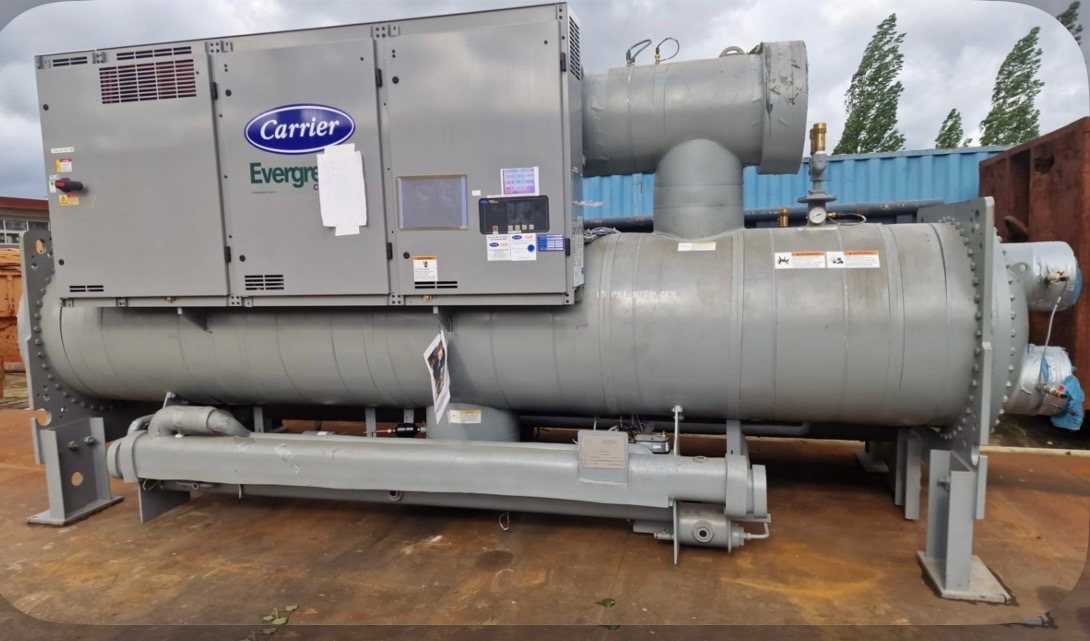
Used Chiller Buyers in Iberville Parish, Louisiana
A buyer for your chiller
If you have a surplus industrial chiller in Iberville Parish, Louisiana, we buy chillers rather than sell them. Share what you know for an upfront cash offer; no equipment testing is required. The buyer handles crane service, rigging, disconnects, refrigerant recovery, loading, hauling and freight, coordinating qualified personnel with the site. A precise inventory and an honest account of access restrictions help shape the removal plan.
Parish context and the real address
Iberville Parish is in capital Region southwest of Baton Rouge, spanning the Mississippi River. If a river crossing affects the actual route, tell the freight team; a parish-wide description does not prove that any particular bridge is involved. Provide the street address, the unit's position on the property, and known gate, loading or security limits. These details help the buyer's freight and rigging teams assess the real path to the machine rather than plan from a parish name alone.
Coordinate with the facility
An owner, facilities manager and building occupant may have different responsibilities. Identify who can approve access and isolation, and tell the buyer about any remaining cooling load or shared controls. The buyer coordinates qualified work and transport with the site. If an outage window has not been approved, describe it as undecided instead of committing another party to a date.
The details worth sending
A nameplate serves as an anchor for the discussion, not a reason to take equipment apart. From an accessible position, photograph the main plate and the machine around it; include model, serial and capacity only where legible. If the site has several similar chillers, label the photograph with the building and unit number so records are not accidentally matched to the wrong asset.
Map the components
Clarify what is included: the main chiller, any separate drive or starter, control cabinet and modules, as applicable. Some components may be shared with a machine that stays. A simple annotated photo or asset list is useful, even when you cannot identify every connection. The buyer can review the actual arrangement with the site rather than assuming every nearby cabinet belongs to the chiller.
Report condition without a test
A photo of the whole machine, close views of visible wear and a short note about known faults provide useful context. If there was a shutdown or previous repair, include the date only when known and distinguish a recollection from a documented record. The buyer can review the information without asking you to run or test the chiller.
Fluid connections and isolation
Do not assume a nearby pipe can be drained just because the chiller is surplus. Other equipment may use the same loop, and a process line can require site-specific precautions. Share existing labels and drawings, or note that the contents are unknown. The buyer handles the disconnect work with qualified personnel and the facility's authorized team.
Plan the disconnects safely
Provide the voltage, phase and frequency listed on an accessible nameplate or equipment schedule, if legible. Note any separate starter, drive or control enclosure and whether it is included or shared. Do not open a panel or handle wiring to collect these details. The buyer coordinates qualified disconnect personnel with authorized site staff, who identify isolation boundaries and any equipment that must remain energized.
Refrigerant records and recovery
Tell the buyer whether a refrigerant designation comes from a nameplate, a later conversion label or a service record. If the source is missing or the charge is unknown, say that plainly. The buyer handles recovery with qualified personnel. There is no reason for the seller to fit gauges, open a valve, mix refrigerants or release any contents.
Cooling tons and transport size
Cooling tons describe capacity; they do not tell the freight team how much the machine weighs. Share the rated tons from the plate and the documented operating or shipping weight separately, if available. Give overall length, width and height, including projections, and say whether a separate cabinet has its own dimensions. Mark an estimate clearly instead of presenting it as a measured or documented figure.
Access starts at the unit
Describe the path from the machine to a loading area, not just the mailing address. Note the floor or roof, door widths, turns, overhead pipes, stairs and any changes in level that are known. Photographs of tight spots help the buyer's riggers assess the route. Share site rules for escorts, loading zones and permitted access; do not assume the chiller can leave through the nearest door.
Plan the lift around the site
If a unit is above grade or inside a constrained room, describe the possible route and any known structural or overhead limits. A safe photo of the surrounding area can help, along with unit-specific rigging documents. The buyer's rigging team assesses lift points, crane position and whether components can move as assembled. The seller is not expected to perform rigging or dismantling.
From staging to hauling
A good freight discussion includes the equipment's documented weight, outside dimensions, gate location and space available to load. Identify narrow internal roads, overhead obstructions or restrictions on large vehicles if known. The buyer handles loading and hauling as part of the freight arrangement, while its team checks the actual route with the site. Cooling tons alone cannot establish transport requirements.
Start with what you know
Share what is known now rather than delaying until the file is perfect. A plate, a few safe exterior photos and the site's location give the buyer a starting point for an upfront cash offer. An unknown rating or incomplete history is acceptable to report as unknown. No test is needed; the buyer and site representative can discuss the removal plan and any outstanding questions.