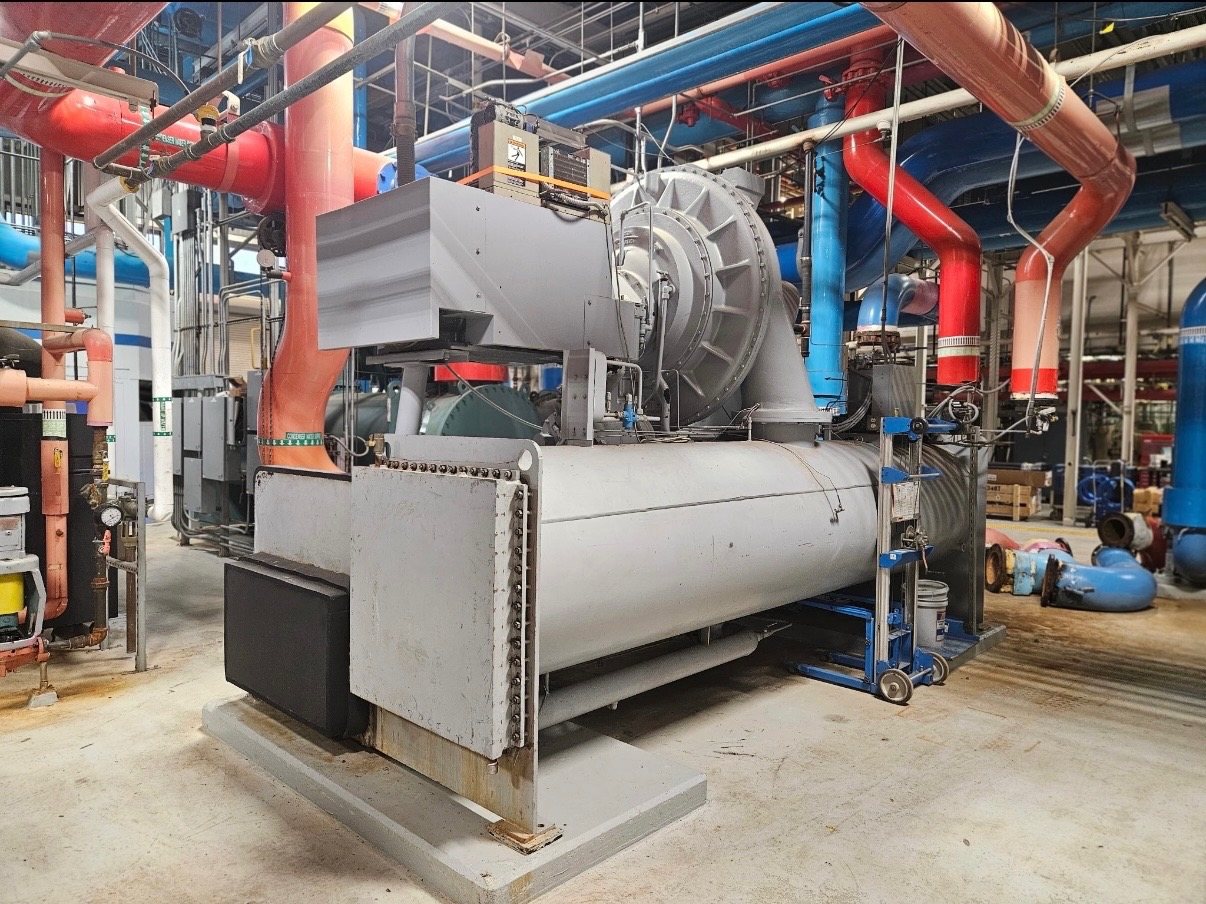
Smardt Chiller Buyers in Prairieville, Louisiana
A practical way to start
We purchase a used Smardt chiller in Prairieville, Louisiana; we do not sell chillers. The process starts with an upfront cash offer based on the information available, with no equipment test required. The buyer handles crane service, rigging, disconnects, refrigerant recovery, loading, hauling and freight. Site staff and appropriately qualified personnel coordinate the work around actual equipment and facility constraints.
Keep remaining services in view
Before removal, define what stays in service and who can authorize work at the property. Existing site rules may cover escorts, work windows, protected areas or shared utilities. The buyer arranges the removal team and coordinates with authorized personnel; the site supplies its requirements. Any window discussed is a planning input, not a promise that a particular date will be available.
Start with the unit's labels
Provide the Smardt model, serial number, capacity and refrigerant from the equipment nameplate where legible. If the building documentation refers to a group of chillers, identify the individual unit to which the plate belongs. A partial plate and a corresponding wide shot are still worth sharing when the complete record is unavailable.
Plan from the real address
The regional context for Prairieville includes the wider Baton Rouge area southeast of the city. It is in Ascension Parish. Discuss the actual truck entrance, equipment location and facility scheduling restrictions before planning removal. Give the street address and the unit's position on the property; a regional highway does not establish which gate, route or loading area can be used at that site. If a separate starter or control is included, show where it sits relative to the chiller and the path to the loading area.
What you can see safely
It is fine to say that operating condition is unknown. Send the records the site already has, note visible exterior damage and identify components that are absent or excluded. Avoid drawing conclusions about internal condition from appearance alone. There is no need to energize the chiller, connect test equipment or remove covers in order to request an offer.
Electrical information for the team
Existing drawings and exterior photos can help identify electrical interfaces, including a remote starter or shared controls. Record plate voltage and phase only if safely visible; an unreadable value can remain unknown. The buyer arranges qualified electrical disconnects in coordination with the site, so there is no reason for the owner to expose conductors or test the system.
Photograph the equipment in context
Share visible compressor and control photos and any documentation identifying the compressor arrangement without removing panels. The brand by itself does not confirm the compressor arrangement or the condition of the controls. Safe exterior pictures and the documents on hand let the buyer evaluate the equipment without asking anyone to expose electrical components.
Refrigerant records and recovery
A refrigerant label should travel with any later retrofit or service documentation so the recovery team sees the whole recorded history. Give the stated quantity only if documented and describe known damage without touching the circuit. The buyer arranges appropriately qualified personnel for recovery; leave valves closed and never vent refrigerant to make a machine easier to move.
Two very different measurements
If the equipment schedule has a tonnage, match it to the correct machine and indicate whether the number is for one unit or a combined plant. Also provide available dimensions and any documented shipping or operating weight. A cabinet that fits inside the building may still have attachments that limit its exit; capacity alone says nothing reliable about those clearances.
Plan around the installed machine
Note separate control or power components and the documented unit weight and access route for removal planning. Controls or power components may be located away from the main assembly or may serve more than one machine. Clarify ownership and inclusion, and identify any narrow openings between each included piece and the proposed truck position.
Openings, turns and overhead limits
A facility address can contain more than one gate, building and equipment room. Specify the right entrance and unit location, along with any escort or vehicle restrictions known to the site. If a roof or indoor route is involved, provide opening dimensions and photographs from safe locations. The removal team will assess turns, floor transitions and overhead clearance as well as the doorway.
Plan the lift around the site
If the machine must pass through a building opening or over a parapet, show the riggers the relevant route and any measurements already on file. Provide the unit-specific lifting documents and known weights where available. The buyer arranges crane and rigging services; the professional team decides on lifting points and whether an approved component separation is needed.
Freight begins at the gate
If a unit or separate cabinet has to be staged before loading, tell the buyer what space the facility can make available and any restrictions on its use. Share measurements, documented weights and the route through the gate. The buyer arranges loading, hauling and freight; its personnel assess whether the proposed route and vehicle access are workable for the actual load.