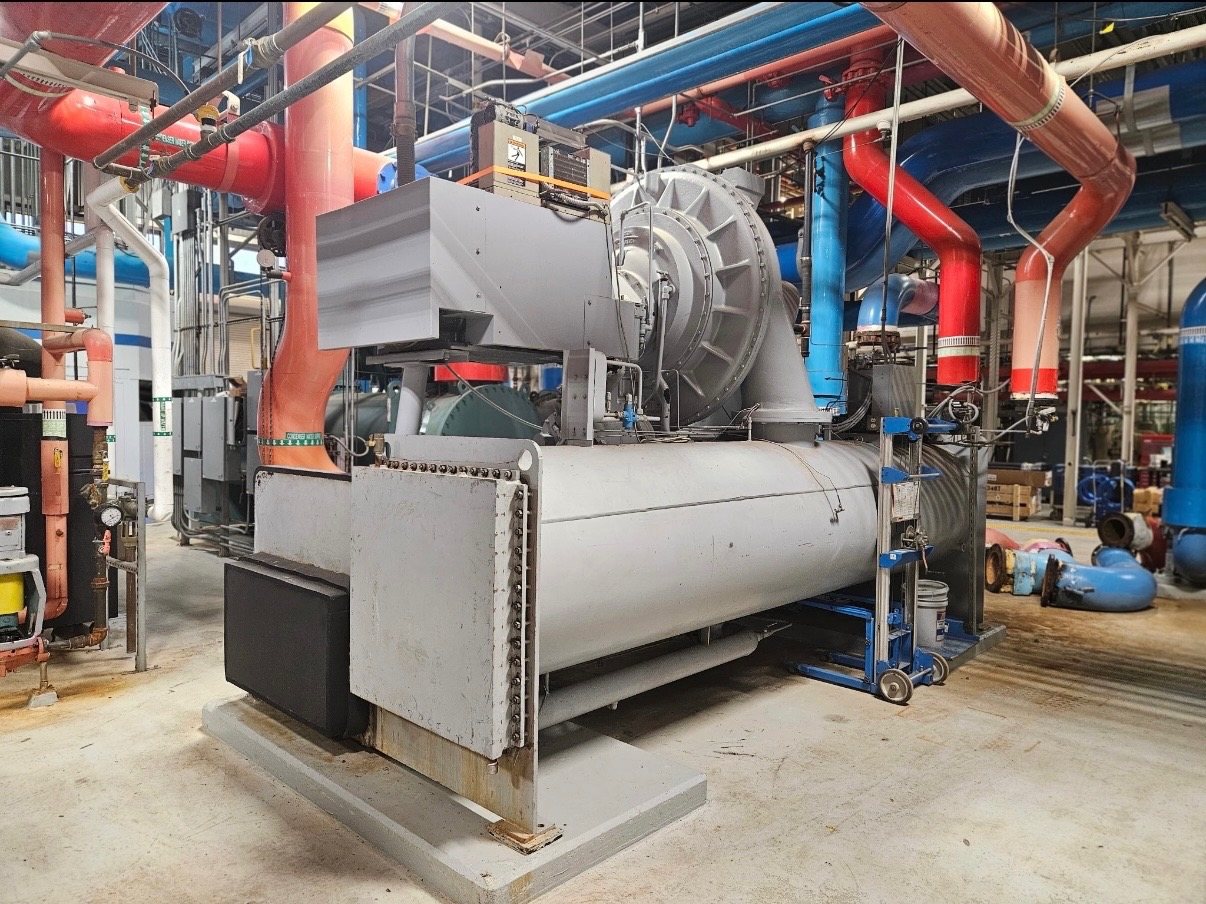
Smardt Chiller Buyers in Alexandria, Louisiana
From surplus unit to removal
An owner with a used Smardt chiller in Alexandria, Louisiana can begin with photographs and available records; no equipment testing is required. We buy chillers and provide an upfront cash offer. The buyer handles crane service, rigging, disconnects, refrigerant recovery, loading, hauling and freight, coordinating with authorized site personnel. An unknown detail is worth flagging; it does not need to be turned into a guess.
Cooling tons and transport size
A truck and crane are selected around the real load, not the chiller's rated cooling tons. Send available length, width, height and documented weight for the machine and for any separate included enclosure. Also share the nameplate capacity so the buyer can identify the equipment. It is fine to say that dimensions or a weight still need confirmation.
Identify this manufacturer's unit
Provide the Smardt model, serial number, capacity and refrigerant from the equipment nameplate where legible. If the building documentation refers to a group of chillers, identify the individual unit to which the plate belongs. A partial plate and a corresponding wide shot are still worth sharing when the complete record is unavailable.
Separate the unit from its surroundings
An equipment name may describe heat rejection, a compressor, or a modular system rather than the complete installation. Share exterior pictures of the whole machine, visible connections and any separate controls. Indicate which components are included and which must remain. If you are unsure whether the unit is air-cooled, water-cooled or configured another way, leave that question open for review.
One machine or several?
The scope of a purchase should be clear before removal is planned. Name the machine or machines being offered and identify included modules, controls and separate cabinets if known. Note any equipment that is shared or will stay at the property. Photographs labeled by building or unit help avoid mixing records from two similar chillers, especially when a plant schedule contains combined capacities.
Record the actual arrangement
Share visible compressor and control photos and any documentation identifying the compressor arrangement without removing panels. The brand by itself does not confirm the compressor arrangement or the condition of the controls. Safe exterior pictures and the documents on hand let the buyer evaluate the equipment without asking anyone to expose electrical components.
When the charge is uncertain
Share the refrigerant designation and charge quantity from the plate or records if available, along with any retrofit label. The original plate does not necessarily describe a later conversion, and an unknown charge should stay unknown until qualified personnel assess it. The buyer handles refrigerant recovery with appropriately qualified personnel. Keep the circuit closed: do not attach gauges, transfer or vent refrigerant.
Plan the disconnects safely
A site representative can point out which control cabinets belong to the chiller and which must remain. The buyer's qualified personnel coordinate the electrical disconnect with that representative. For the initial review, an accessible nameplate photograph or existing schedule is enough to communicate the listed power information; the seller should not probe, open or operate electrical equipment.
Separate the scope from the assumptions
Note separate control or power components and the documented unit weight and access route for removal planning. Controls or power components may be located away from the main assembly or may serve more than one machine. Clarify ownership and inclusion, and identify any narrow openings between each included piece and the proposed truck position.
Agree on the work boundaries
An owner, facilities manager and building occupant may have different responsibilities. Identify who can approve access and isolation, and tell the buyer about any remaining cooling load or shared controls. The buyer coordinates qualified work and transport with the site. If an outage window has not been approved, describe it as undecided instead of committing another party to a date.
Plan the lift around the site
If a unit is above grade or inside a constrained room, describe the possible route and any known structural or overhead limits. A safe photo of the surrounding area can help, along with unit-specific rigging documents. The buyer's rigging team assesses lift points, crane position and whether components can move as assembled. The seller is not expected to perform rigging or dismantling.
Plan from the real address
The regional context for Alexandria includes central Louisiana and the Red River and I-49 corridors. It is in Rapides Parish. If the property has multiple buildings, give the buyer the correct building and loading entrance as well as the unit's dimensions. Give the street address and the unit's position on the property; a regional highway does not establish which gate, route or loading area can be used at that site. If a separate starter or control is included, show where it sits relative to the chiller and the path to the loading area.
From the chiller to the loading area
Access information can be provisional. Tell the buyer the known location of the equipment, possible loading zone and any measured opening, then identify the portions of the route that still need checking. Note nearby services or protected areas if known. The buyer's professional riggers coordinate with the facility before selecting a path; the seller need not move obstructions or disassemble the chiller.
Where can the truck load?
The buyer handles loading, hauling and freight as well as the rigging that gets the equipment to the truck. For planning, identify the actual loading area, gate width and any restrictions on large vehicles or staging. A regional highway may be nearby, but the last stretch into a property can still be constrained. The freight team assesses the actual route and load dimensions.