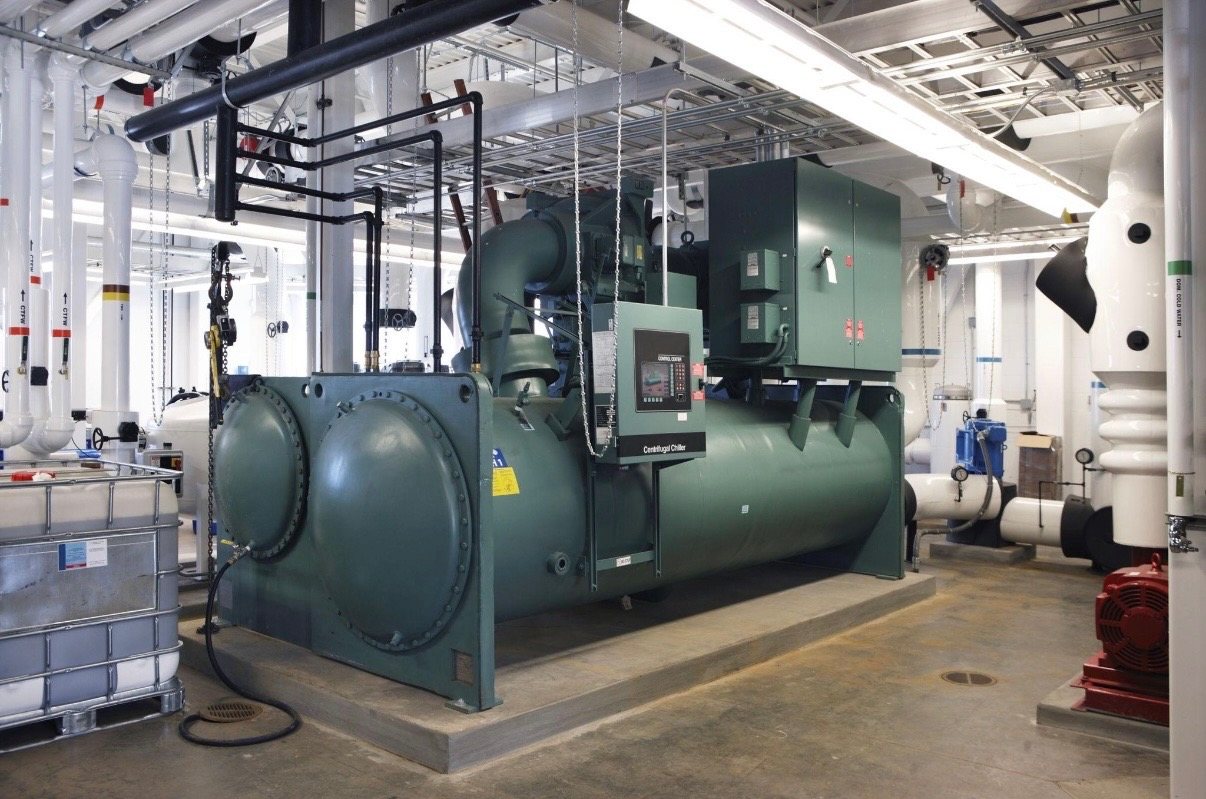
Buyers for R-1234ze Chillers in Louisiana
From surplus unit to removal
An owner with a used chiller identified with R-1234ze refrigerant in Louisiana can begin with photographs and available records; no equipment testing is required. We buy chillers and provide an upfront cash offer. The buyer handles crane service, rigging, disconnects, refrigerant recovery, loading, hauling and freight, coordinating with authorized site personnel. An unknown detail is worth flagging; it does not need to be turned into a guess.
The details worth sending
Start with the main nameplate: a legible model, serial number, manufacturer and rated capacity can anchor the review. A wide photo showing the plate's location is useful if several machines are close together. Include a separate control or starter plate only if visible safely, and say when a number cannot be read. Do not open a cabinet or remove a guard to obtain information.
Identify the actual charge information
Share the exact refrigerant designation on the nameplate and any available safety data sheet with the recovery team. The full designation matters; supply a legible photo rather than abbreviating it from memory. Share the available safety data sheet and conversion records, if any, so the recovery team can review what applies to the specific machine.
Separate the assets that stay
One photo can show several assets without showing which one is surplus. Mark the intended chiller on a wide image, then pair its plate with the same asset in the equipment list. Say whether associated controls or modules are part of the sale. If the owner has not decided what is included, flag that question for the buyer and site representative to resolve.
Cooling tons and transport size
If a modular bank is involved, a building's total capacity can obscure the size of each piece. State how many modules are offered and which nameplate rating applies to each, if visible. The freight team also needs the actual outside dimensions and documented weight: a cooling ton is a capacity measure, not the weight of a shipping load.
Information for recovery planning
Have qualified personnel confirm the refrigerant's safety classification and the unit-specific handling requirements. Handling requirements depend on the actual system and material. The buyer arranges appropriately qualified recovery personnel to assess the relevant safety classification and site conditions; the seller should not open the circuit or perform recovery.
Site-specific access
For a chiller anywhere in Louisiana, provide the actual street address and the building, yard, mechanical room or roof where the equipment sits. The city and parish help identify the property, but the gate, internal route and loading area determine how the buyer's team can reach it. Mention known access restrictions or a preferred site contact; if the location details are incomplete, say what remains to be confirmed.
Power and separate controls
Record power details from labels or drawings already available, and say if the voltage or phase cannot be confirmed. A separate drive or starter may have its own enclosure and removal path, and it may not be part of the purchase. The buyer handles disconnects using qualified personnel, working with authorized staff who control the site's isolation procedures.
Keep remaining services in view
An owner, facilities manager and building occupant may have different responsibilities. Identify who can approve access and isolation, and tell the buyer about any remaining cooling load or shared controls. The buyer coordinates qualified work and transport with the site. If an outage window has not been approved, describe it as undecided instead of committing another party to a date.
Leave handling to qualified personnel
Note machinery-room access and any known ventilation or ignition-source restrictions for recovery planning. If the site has documented ventilation or ignition-source restrictions, pass those requirements to the removal team. Do not assume a particular room arrangement or modify equipment; the site and qualified personnel determine the precautions needed. Keep the circuit closed and never release refrigerant.
From the chiller to the loading area
For an accurate removal discussion, include the street address, equipment location and the site's preferred truck entrance. A door measurement is useful, but the path can also be limited by a turn, low ceiling or floor transition. Describe known obstacles and share photographs where permitted. The buyer's riggers evaluate the route rather than assuming that the chiller will move intact.
Information for the rigger
If the machine must pass through a building opening or over a parapet, show the riggers the relevant route and any measurements already on file. Provide the unit-specific lifting documents and known weights where available. The buyer arranges crane and rigging services; the professional team decides on lifting points and whether an approved component separation is needed.
Loading and the road out
After the machine leaves its installed position, it still needs a safe staging place and a truck-accessible loading area. Share the location of gates, internal roads and any known overhead or vehicle restrictions. The buyer coordinates loading, hauling and freight. The freight team will evaluate the actual load dimensions and route rather than assuming that a nearby highway solves access inside the property.