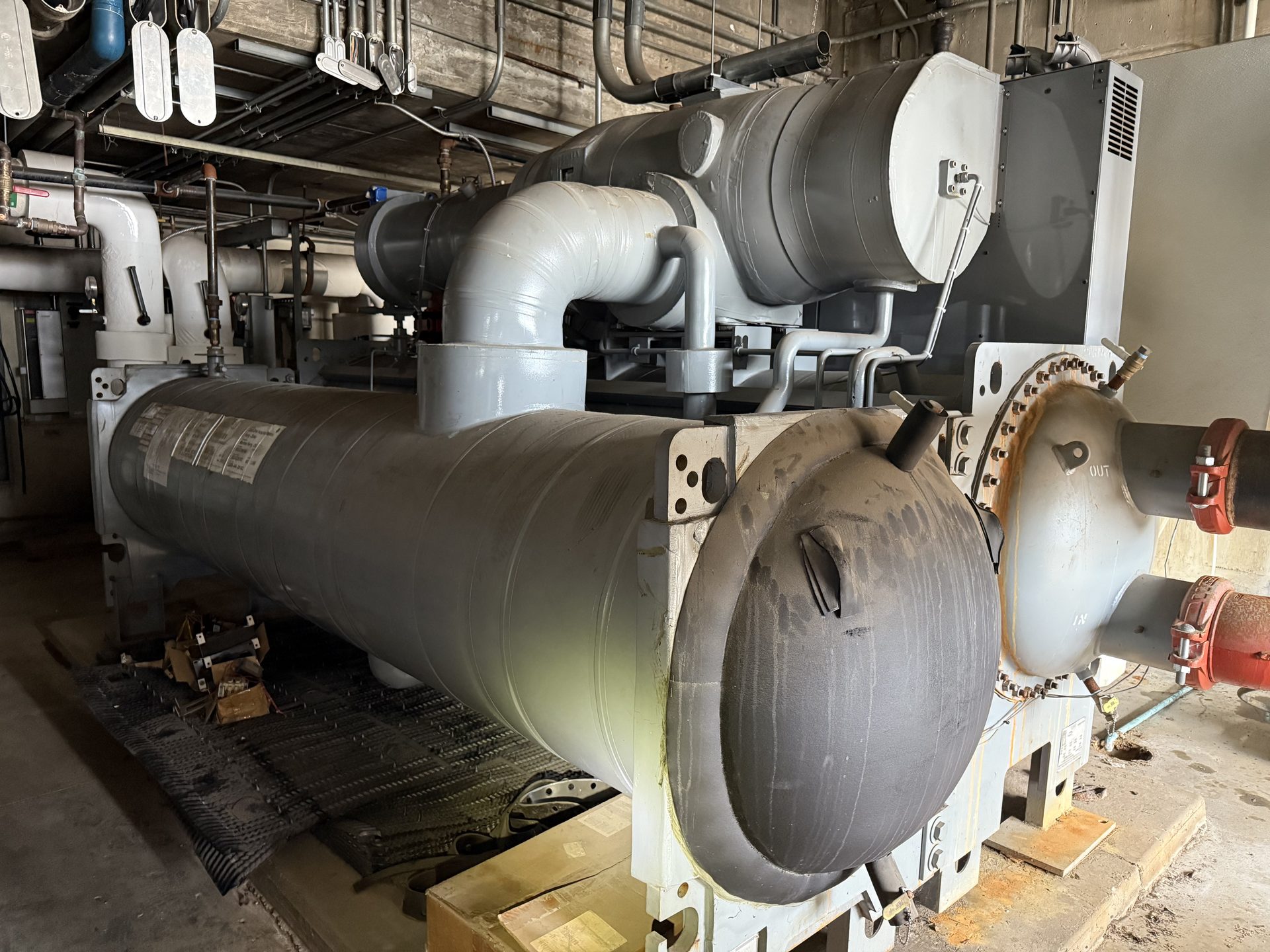
Used Chiller Buyers in St. Bernard Parish, Louisiana
Offer and removal scope
We purchase a surplus industrial chiller in St. Bernard Parish, Louisiana; we do not sell chillers. The process starts with an upfront cash offer based on the information available, with no equipment test required. The buyer handles crane service, rigging, disconnects, refrigerant recovery, loading, hauling and freight. Site staff and appropriately qualified personnel coordinate the work around actual equipment and facility constraints.
When the history is incomplete
Present the condition as known, not as a performance guarantee. A safe exterior photograph may show damaged coils, corrosion or missing controls; an existing maintenance record can explain a reported repair. State when the current condition is unknown or records are incomplete. No start-up or equipment test is required for the buyer to review a request.
Match the plate to the unit
Give the buyer enough information to distinguish the machine from adjacent equipment: an overall photograph, a legible plate and the location of any separate controls included. The model and serial number are useful where visible, but a partial record is still a reasonable starting point. Mark any values copied from old documentation rather than the plate itself.
Measure the load, not just the rating
A truck and crane are selected around the real load, not the chiller's rated cooling tons. Send available length, width, height and documented weight for the machine and for any separate included enclosure. Also share the nameplate capacity so the buyer can identify the equipment. It is fine to say that dimensions or a weight still need confirmation.
Separate the unit from its surroundings
Clarify what is included: the main chiller, any separate drive or starter, control cabinet and modules, as applicable. Some components may be shared with a machine that stays. A simple annotated photo or asset list is useful, even when you cannot identify every connection. The buyer can review the actual arrangement with the site rather than assuming every nearby cabinet belongs to the chiller.
One machine or several?
A list of assets is especially useful when one room contains multiple similar chillers. Pair each plate photo with a location and say which machine, modules and separate cabinets are included. Identify anything shared or excluded. A plant-wide schedule can accompany the list, but a combined cooling total should not be presented as the rating of each individual unit.
Refrigerant records and recovery
A label and a service record can tell different parts of the chiller's refrigerant history. Send both, identify the machine they belong to, and note any uncertainty about the designation or quantity. The buyer coordinates appropriately qualified recovery personnel for the actual system. Leave valves and connections untouched and do not release refrigerant, even if the unit has been idle for years.
Plan the disconnects safely
An electrical schedule may identify voltage, phase, frequency and a remote starter even when the main machine is disconnected. Share the documents and safe exterior photos, noting whether controls are included or serve other units. The buyer coordinates qualified electrical disconnect personnel with the site. Do not open energized or closed cabinets, test circuits or disturb wiring to prepare a description.
Keep remaining services in view
A chiller can be surplus while nearby systems remain essential. Ask the authorized facility representative to identify protected services, shared controls and the people who can approve access. The buyer arranges the work and coordinates the plan with the site, including any qualified disconnect and recovery personnel. Treat timing as subject to actual site approval, not a guaranteed removal date.
Plan the lift around the site
A clear ground-level view does not guarantee a clear lift: overhead services, structural limits and the available crane position also matter. Send the buyer what the site knows about those constraints, along with documented dimensions and weight. Professional riggers arranged by the buyer develop the equipment-specific plan. Do not tie on lifting gear or attempt to shift the chiller yourself.
Regional setting, site-specific plan
St. Bernard Parish is in southeast Louisiana downriver from New Orleans. If a river crossing affects the actual route, tell the freight team; a parish-wide description does not prove that any particular bridge is involved. Provide the street address, the unit's position on the property, and known gate, loading or security limits. These details help the buyer's freight and rigging teams assess the real path to the machine rather than plan from a parish name alone.
Access starts at the unit
Describe the path from the machine to a loading area, not just the mailing address. Note the floor or roof, door widths, turns, overhead pipes, stairs and any changes in level that are known. Photographs of tight spots help the buyer's riggers assess the route. Share site rules for escorts, loading zones and permitted access; do not assume the chiller can leave through the nearest door.
Where can the truck load?
The buyer handles loading, hauling and freight as well as the rigging that gets the equipment to the truck. For planning, identify the actual loading area, gate width and any restrictions on large vehicles or staging. A regional highway may be nearby, but the last stretch into a property can still be constrained. The freight team assesses the actual route and load dimensions.