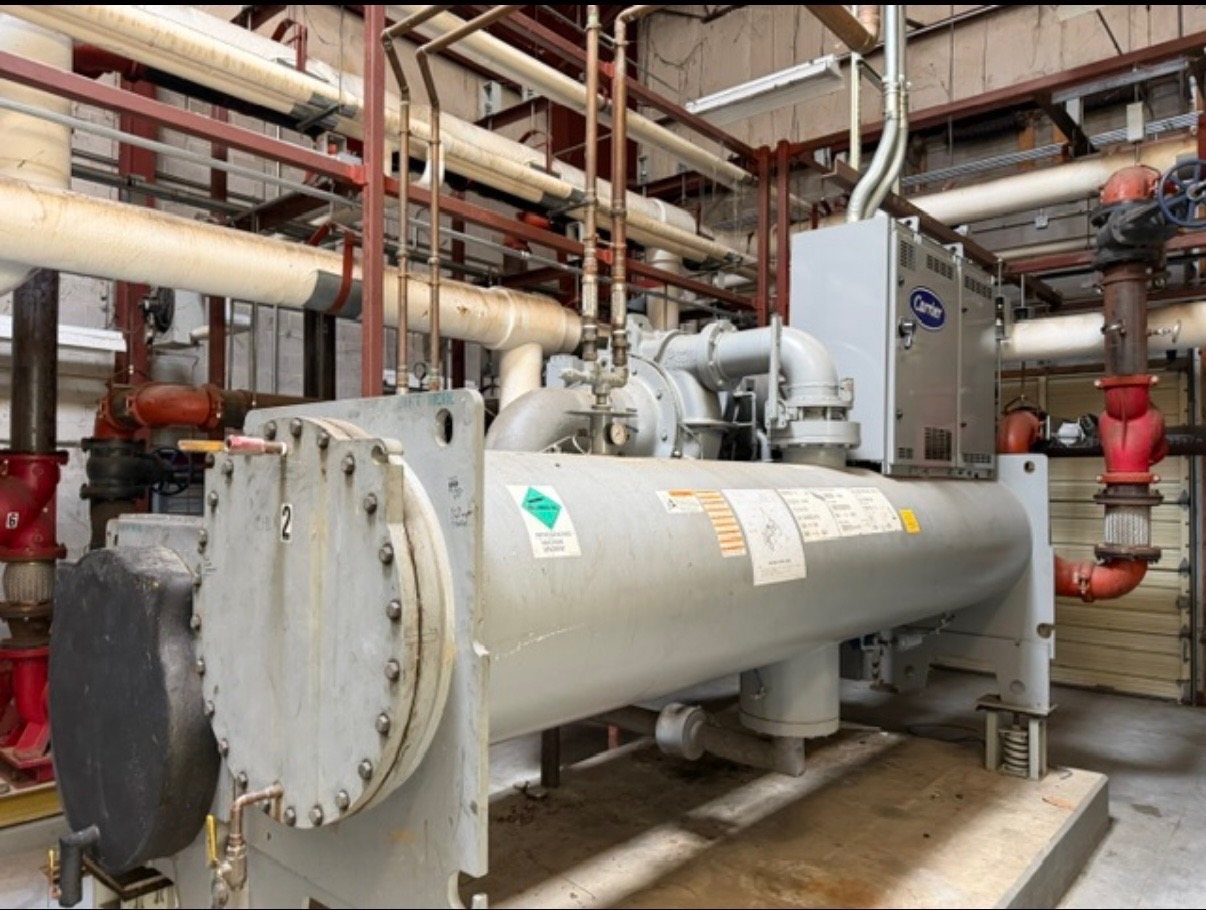
Used Chiller Buyers in St. Landry Parish, Louisiana
Offer and removal scope
An owner with a surplus industrial chiller in St. Landry Parish, Louisiana can begin with photographs and available records; no equipment testing is required. We buy chillers and provide an upfront cash offer. The buyer handles crane service, rigging, disconnects, refrigerant recovery, loading, hauling and freight, coordinating with authorized site personnel. An unknown detail is worth flagging; it does not need to be turned into a guess.
When the history is incomplete
A candid account is more helpful than a perfect history. Tell the buyer when the chiller last served the facility if known, what parts are missing and whether damage is visible from a safe location. An old repair record does not guarantee current performance, so label uncertain details accordingly. The buyer does not require a test run to review the equipment.
The details worth sending
When a plate is difficult to read, send the clearest safe photo available along with any relevant equipment schedule. Identify the particular machine in a room containing multiple units and note which numbers are incomplete. A buyer can use those starting points to ask focused follow-up questions without relying on a guess about model or age.
Capacity is not shipping weight
The buyer needs two different kinds of size information. Rated cooling tons describe performance, whereas transport planning depends on the actual length, width, height and documented weight of each piece. Explain whether a figure covers the whole chiller or a single module and whether a starter or other enclosure is separate. Do not estimate a load weight from cooling capacity.
Define the purchase scope
For a multi-unit property, separate the inventory by building, room and machine. Include the plate details and any separate components that are safely identifiable, and distinguish what is being offered from equipment still needed on site. The buyer can then discuss the actual scope and handling requirements without treating a building-wide cooling figure as a single unit's capacity.
Labels, history and safe recovery
A label and a service record can tell different parts of the chiller's refrigerant history. Send both, identify the machine they belong to, and note any uncertainty about the designation or quantity. The buyer coordinates appropriately qualified recovery personnel for the actual system. Leave valves and connections untouched and do not release refrigerant, even if the unit has been idle for years.
From parish to loading entrance
St. Landry Parish is in northern Acadiana around Opelousas and the I-49 corridor.. If the site's route has a highway, border-area or access restriction, identify the actual entrance; regional location alone does not describe the loading area. Provide the street address, the unit's position on the property, and known gate, loading or security limits. These details help the buyer's freight and rigging teams assess the real path to the machine rather than plan from a parish name alone.
Power and separate controls
Record power details from labels or drawings already available, and say if the voltage or phase cannot be confirmed. A separate drive or starter may have its own enclosure and removal path, and it may not be part of the purchase. The buyer handles disconnects using qualified personnel, working with authorized staff who control the site's isolation procedures.
Access and operating constraints
An owner, facilities manager and building occupant may have different responsibilities. Identify who can approve access and isolation, and tell the buyer about any remaining cooling load or shared controls. The buyer coordinates qualified work and transport with the site. If an outage window has not been approved, describe it as undecided instead of committing another party to a date.
Plan the lift around the site
The buyer handles the crane and rigging, with a professional lift plan based on the particular machine and site. Share documented weights, manufacturer lifting instructions and photos of visible lifting-point markings if available. Identify overhead wires, nearby structures, ground or floor limits and possible staging space. Do not select a lift point or attempt to separate components yourself; the rigger evaluates the actual conditions.
Openings, turns and overhead limits
A rooftop, basement, mechanical room and fenced yard each create different access questions. Provide the actual building and unit location, any known opening dimensions and a safe photo of the route. Mention screens, parapets, overhead services or a tight corner if present. Site restrictions should be confirmed with authorized staff rather than inferred from a map or from the machine's size.
Where can the truck load?
A truck-ready plan begins with the site entrance and a realistic loading area. Tell the buyer about restricted gates, low overhead services, surface limits or delivery traffic that may affect access. Supply equipment dimensions and documented weight when available. The buyer arranges loading, hauling and freight; the route and vehicle arrangement depend on the actual load and property conditions.
Request an offer
To request an upfront cash offer, send the buyer the equipment details and photographs you already have, together with the location and site contact. A missing serial number, incomplete service history or unknown refrigerant can be noted rather than guessed. No equipment testing is required. The buyer reviews the information and coordinates the removal scope and site requirements with the authorized representative.