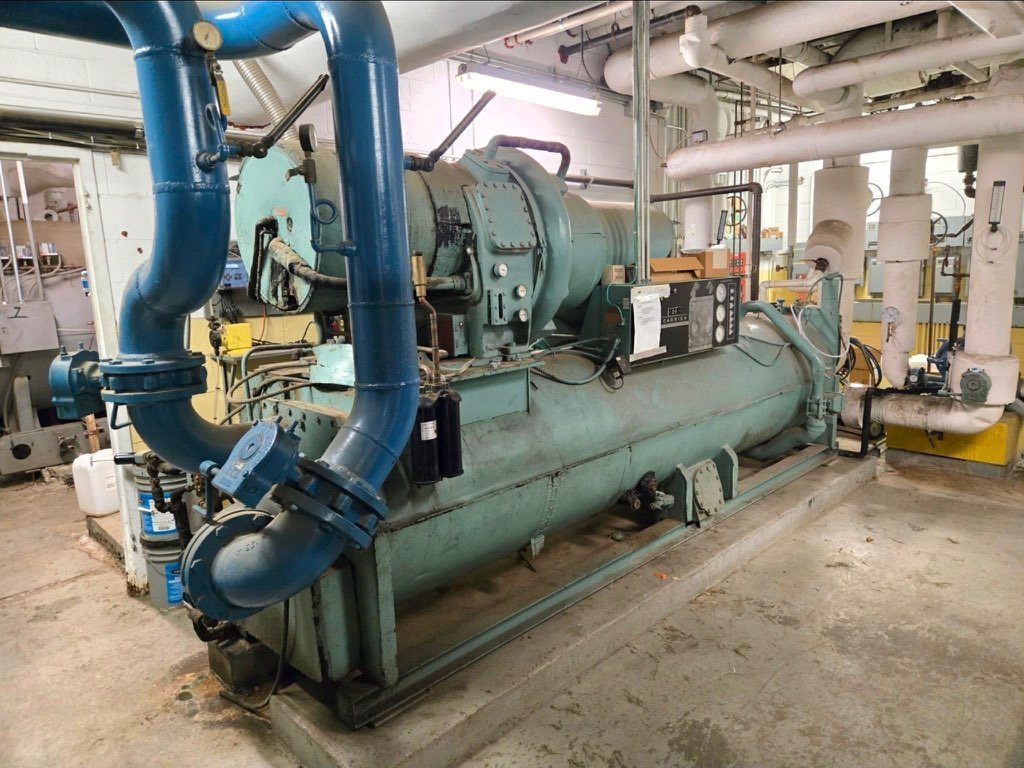
Used Chiller Buyers in Terrebonne Parish, Louisiana
A buyer for your chiller
We purchase a surplus industrial chiller in Terrebonne Parish, Louisiana; we do not sell chillers. The process starts with an upfront cash offer based on the information available, with no equipment test required. The buyer handles crane service, rigging, disconnects, refrigerant recovery, loading, hauling and freight. Site staff and appropriately qualified personnel coordinate the work around actual equipment and facility constraints.
The details worth sending
Match the chiller to its records before sending an equipment list. A photo of the complete machine and a close view of the nameplate help distinguish it from neighboring assets; an equipment schedule can fill some gaps. Tell the buyer when a model, serial number or capacity comes from a drawing rather than the actual plate, and leave uncertain details marked as such.
One machine or several?
A list of assets is especially useful when one room contains multiple similar chillers. Pair each plate photo with a location and say which machine, modules and separate cabinets are included. Identify anything shared or excluded. A plant-wide schedule can accompany the list, but a combined cooling total should not be presented as the rating of each individual unit.
Parish context and the real address
Terrebonne Parish is in coastal south Louisiana and the Bayou Region around Houma.. If a river crossing affects the actual route, tell the freight team; a parish-wide description does not prove that any particular bridge is involved. Provide the street address, the unit's position on the property, and known gate, loading or security limits. These details help the buyer's freight and rigging teams assess the real path to the machine rather than plan from a parish name alone.
Map the components
Describe the actual configuration rather than relying on one broad label. Air-cooled and water-cooled describe how heat is rejected; centrifugal, screw and scroll refer to compressor types, and a chiller can have one description from each group. If you do not know the arrangement, exterior photos and available documents are enough to start. Avoid removing panels or assuming a compressor type from the brand.
Capacity is not shipping weight
If the equipment schedule has a tonnage, match it to the correct machine and indicate whether the number is for one unit or a combined plant. Also provide available dimensions and any documented shipping or operating weight. A cabinet that fits inside the building may still have attachments that limit its exit; capacity alone says nothing reliable about those clearances.
Plan the disconnects safely
Provide the voltage, phase and frequency listed on an accessible nameplate or equipment schedule, if legible. Note any separate starter, drive or control enclosure and whether it is included or shared. Do not open a panel or handle wiring to collect these details. The buyer coordinates qualified disconnect personnel with authorized site staff, who identify isolation boundaries and any equipment that must remain energized.
Piping and shared loops
Do not assume a nearby pipe can be drained just because the chiller is surplus. Other equipment may use the same loop, and a process line can require site-specific precautions. Share existing labels and drawings, or note that the contents are unknown. The buyer handles the disconnect work with qualified personnel and the facility's authorized team.
Keep the circuit closed
If the refrigerant is unknown, say so rather than guessing from the make or compressor type. A photo of the original plate, any later conversion label and existing service notes gives the recovery team a starting point. Recovery is handled by the buyer's appropriately qualified personnel; the seller should neither open the circuit nor vent or mix its contents.
Agree on the work boundaries
A chiller can be surplus while nearby systems remain essential. Ask the authorized facility representative to identify protected services, shared controls and the people who can approve access. The buyer arranges the work and coordinates the plan with the site, including any qualified disconnect and recovery personnel. Treat timing as subject to actual site approval, not a guaranteed removal date.
From the chiller to the loading area
Describe the path from the machine to a loading area, not just the mailing address. Note the floor or roof, door widths, turns, overhead pipes, stairs and any changes in level that are known. Photographs of tight spots help the buyer's riggers assess the route. Share site rules for escorts, loading zones and permitted access; do not assume the chiller can leave through the nearest door.
Information for the rigger
The seller can help the lift team by providing existing drawings, documented component weights and a safe view of the equipment's surroundings. Mention known overhead lines, roof edges, floor limits or restricted staging areas. The buyer handles crane service and rigging, with professionals determining the lift method and acceptable setup for the actual unit rather than relying on an estimated load.
From staging to hauling
If a unit or separate cabinet has to be staged before loading, tell the buyer what space the facility can make available and any restrictions on its use. Share measurements, documented weights and the route through the gate. The buyer arranges loading, hauling and freight; its personnel assess whether the proposed route and vehicle access are workable for the actual load.
A practical first message
A useful first message does not need every field completed. Identify the chiller and its location, send safe photographs and disclose known damage, missing records or access restrictions. The buyer provides an upfront cash offer without requiring equipment testing and handles the removal work in coordination with the site. Further details can be clarified as the actual scope is reviewed.