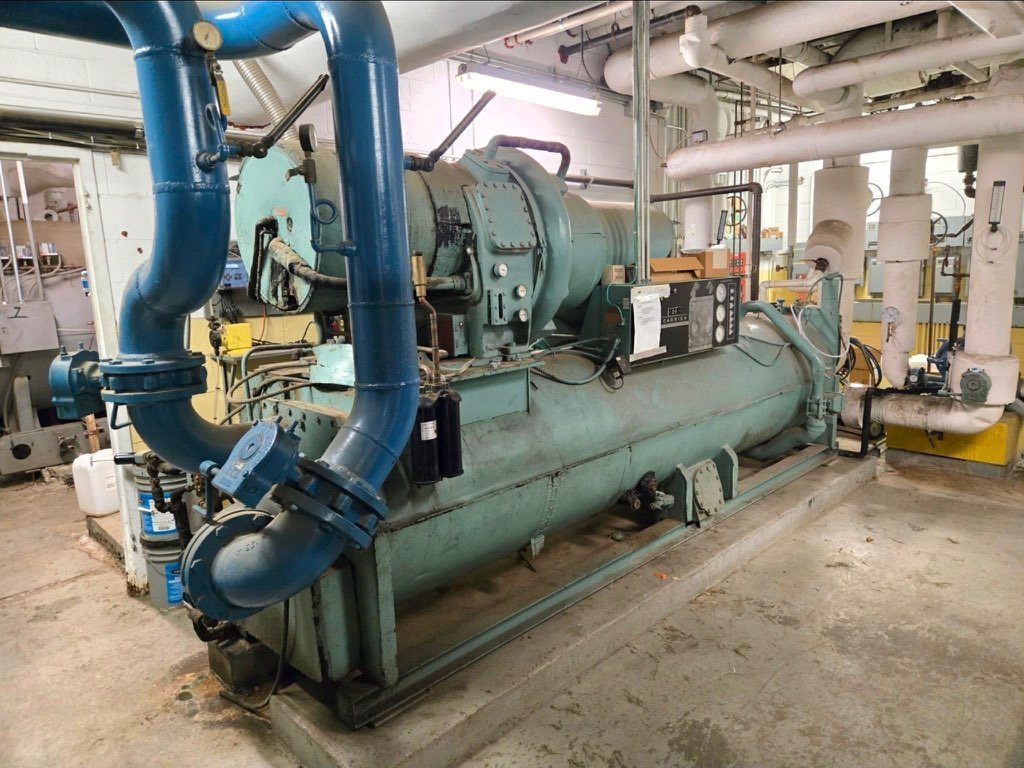
Used Chiller Buyers in West Feliciana Parish, Louisiana
Offer and removal scope
Have a surplus industrial chiller in West Feliciana Parish, Louisiana to remove? We are chiller buyers, and a test run is not required to request an upfront cash offer. The buyer handles crane service, rigging, disconnects, refrigerant recovery, loading, hauling and freight. Share the machine's visible details and the site's known restrictions so the work can be coordinated with authorized personnel.
Access and operating constraints
Site conditions should be discussed before crews and equipment are assigned. Note any security, escort, loading-hour or shutdown requirements and identify the person authorized to coordinate them. The buyer handles the removal services, while site personnel define their operating and access constraints. Unknown dates or incomplete drawings can be flagged for follow-up rather than filled in with assumptions.
Start with the nameplate
A nameplate serves as an anchor for the discussion, not a reason to take equipment apart. From an accessible position, photograph the main plate and the machine around it; include model, serial and capacity only where legible. If the site has several similar chillers, label the photograph with the building and unit number so records are not accidentally matched to the wrong asset.
Describe the configuration
An equipment name may describe heat rejection, a compressor, or a modular system rather than the complete installation. Share exterior pictures of the whole machine, visible connections and any separate controls. Indicate which components are included and which must remain. If you are unsure whether the unit is air-cooled, water-cooled or configured another way, leave that question open for review.
What remains connected?
Drawings may show whether the chiller interfaces with building water, condenser water or a process circuit. Send what the site has and identify any lines believed to be shared with equipment that stays. The buyer's qualified disconnect team coordinates the work with authorized site personnel, who identify isolation boundaries and known fluid-handling or contamination requirements.
Identify shared power equipment
Record power details from labels or drawings already available, and say if the voltage or phase cannot be confirmed. A separate drive or starter may have its own enclosure and removal path, and it may not be part of the purchase. The buyer handles disconnects using qualified personnel, working with authorized staff who control the site's isolation procedures.
Refrigerant records and recovery
Share the refrigerant designation and charge quantity from the plate or records if available, along with any retrofit label. The original plate does not necessarily describe a later conversion, and an unknown charge should stay unknown until qualified personnel assess it. The buyer handles refrigerant recovery with appropriately qualified personnel. Keep the circuit closed: do not attach gauges, transfer or vent refrigerant.
Two very different measurements
Cooling tons describe capacity; they do not tell the freight team how much the machine weighs. Share the rated tons from the plate and the documented operating or shipping weight separately, if available. Give overall length, width and height, including projections, and say whether a separate cabinet has its own dimensions. Mark an estimate clearly instead of presenting it as a measured or documented figure.
Access starts at the unit
A facility address can contain more than one gate, building and equipment room. Specify the right entrance and unit location, along with any escort or vehicle restrictions known to the site. If a roof or indoor route is involved, provide opening dimensions and photographs from safe locations. The removal team will assess turns, floor transitions and overhead clearance as well as the doorway.
Plan the lift around the site
The buyer handles the crane and rigging, with a professional lift plan based on the particular machine and site. Share documented weights, manufacturer lifting instructions and photos of visible lifting-point markings if available. Identify overhead wires, nearby structures, ground or floor limits and possible staging space. Do not select a lift point or attempt to separate components yourself; the rigger evaluates the actual conditions.
From parish to loading entrance
West Feliciana Parish is in capital Region north of Baton Rouge along the Mississippi River and Mississippi state line. If a river crossing affects the actual route, tell the freight team; a parish-wide description does not prove that any particular bridge is involved. Provide the street address, the unit's position on the property, and known gate, loading or security limits. These details help the buyer's freight and rigging teams assess the real path to the machine rather than plan from a parish name alone.
Where can the truck load?
A good freight discussion includes the equipment's documented weight, outside dimensions, gate location and space available to load. Identify narrow internal roads, overhead obstructions or restrictions on large vehicles if known. The buyer handles loading and hauling as part of the freight arrangement, while its team checks the actual route with the site. Cooling tons alone cannot establish transport requirements.
Send the information on hand
There is no need to make the machine operational before contacting a buyer. Available photographs, plate details and the location can support an upfront cash offer. Tell the buyer which parts are included and what is still uncertain, including access or refrigerant information. The removal team can work through those details with the facility before the work is arranged.