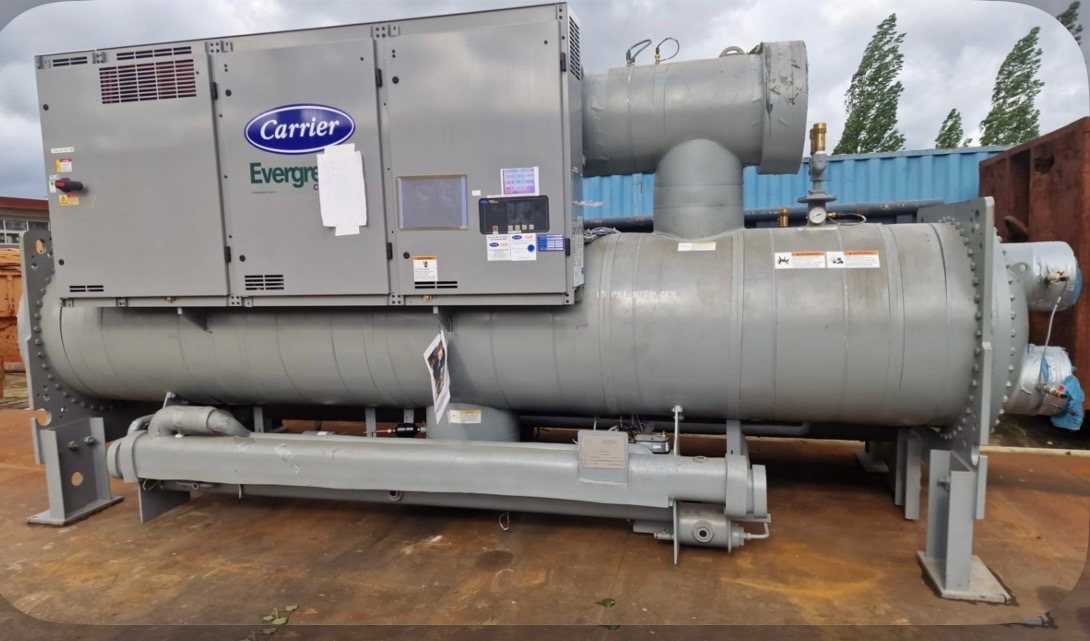
Air-cooled Chiller Buyers in Monroe, Louisiana
Offer and removal scope
An owner with a used air-cooled chiller in Monroe, Louisiana can begin with photographs and available records; no equipment testing is required. We buy chillers and provide an upfront cash offer. The buyer handles crane service, rigging, disconnects, refrigerant recovery, loading, hauling and freight, coordinating with authorized site personnel. An unknown detail is worth flagging; it does not need to be turned into a guess.
Location and site access
The regional context for Monroe includes the east side of the Ouachita River and the I-20 corridor. It is in Ouachita Parish. In a large building, the actual equipment-room or roof location matters more than the street address alone; describe the route to loading. Give the street address and the unit's position on the property; a regional highway does not establish which gate, route or loading area can be used at that site. If this air-cooled chiller is on a roof, report any known screens or parapets along with the possible crane setup area.
Coordinate with the facility
Site conditions should be discussed before crews and equipment are assigned. Note any security, escort, loading-hour or shutdown requirements and identify the person authorized to coordinate them. The buyer handles the removal services, while site personnel define their operating and access constraints. Unknown dates or incomplete drawings can be flagged for follow-up rather than filled in with assumptions.
Confirm the equipment arrangement
Share photos of condenser coils, fans and visible guards, noting any exterior damage or corrosion. Photograph from a safe position outside the enclosure, without moving guards or reaching into fans. Describe visible damage as an observation, not a diagnosis; the buyer does not need the unit started to review the information.
Match the plate to the unit
Start with the main nameplate: a legible model, serial number, manufacturer and rated capacity can anchor the review. A wide photo showing the plate's location is useful if several machines are close together. Include a separate control or starter plate only if visible safely, and say when a number cannot be read. Do not open a cabinet or remove a guard to obtain information.
What you can see safely
It is fine to say that operating condition is unknown. Send the records the site already has, note visible exterior damage and identify components that are absent or excluded. Avoid drawing conclusions about internal condition from appearance alone. There is no need to energize the chiller, connect test equipment or remove covers in order to request an offer.
Condition and associated components
Provide the unit dimensions and whether it is on a roof, pad or elevated structure. A roof, raised support and ground-level pad present different access questions. Include the height and extent of nearby screens or parapets if known, and say whether the stated dimensions include protruding parts.
Plan the disconnects safely
A separate power cabinet can affect both the sale scope and the removal route. If known, provide the nameplate voltage, phase and frequency and say whether the cabinet serves only this machine. Site personnel and the buyer's qualified disconnect team coordinate electrical isolation; never open a cabinet or attempt electrical work merely to gather details for the buyer.
Refrigerant records and recovery
A label and a service record can tell different parts of the chiller's refrigerant history. Send both, identify the machine they belong to, and note any uncertainty about the designation or quantity. The buyer coordinates appropriately qualified recovery personnel for the actual system. Leave valves and connections untouched and do not release refrigerant, even if the unit has been idle for years.
Plan the interfaces and access
Flag overhead wires, parapets, crane access and any restricted loading route before removal planning. The buyer's rigger assesses the reach, clearance and truck position for the specific lift. A clear photo of the surroundings and any known underground or surface restrictions is more useful than assuming that a crane can simply park beside the unit.
Capacity is not shipping weight
A truck and crane are selected around the real load, not the chiller's rated cooling tons. Send available length, width, height and documented weight for the machine and for any separate included enclosure. Also share the nameplate capacity so the buyer can identify the equipment. It is fine to say that dimensions or a weight still need confirmation.
Access starts at the unit
A rooftop, basement, mechanical room and fenced yard each create different access questions. Provide the actual building and unit location, any known opening dimensions and a safe photo of the route. Mention screens, parapets, overhead services or a tight corner if present. Site restrictions should be confirmed with authorized staff rather than inferred from a map or from the machine's size.
The actual lifting constraints
A lift plan depends on more than the cooling rating. Provide the known equipment dimensions, documented weights, roof or room access and any instructions that came with the unit. Tell the buyer about known overhead or ground restrictions and whether staging space is limited. The buyer arranges crane service and professional rigging; qualified personnel determine the lifting and separation method.
From staging to hauling
The buyer handles loading, hauling and freight as well as the rigging that gets the equipment to the truck. For planning, identify the actual loading area, gate width and any restrictions on large vehicles or staging. A regional highway may be nearby, but the last stretch into a property can still be constrained. The freight team assesses the actual route and load dimensions.
Start with what you know
A useful first message does not need every field completed. Identify the chiller and its location, send safe photographs and disclose known damage, missing records or access restrictions. The buyer provides an upfront cash offer without requiring equipment testing and handles the removal work in coordination with the site. Further details can be clarified as the actual scope is reviewed.