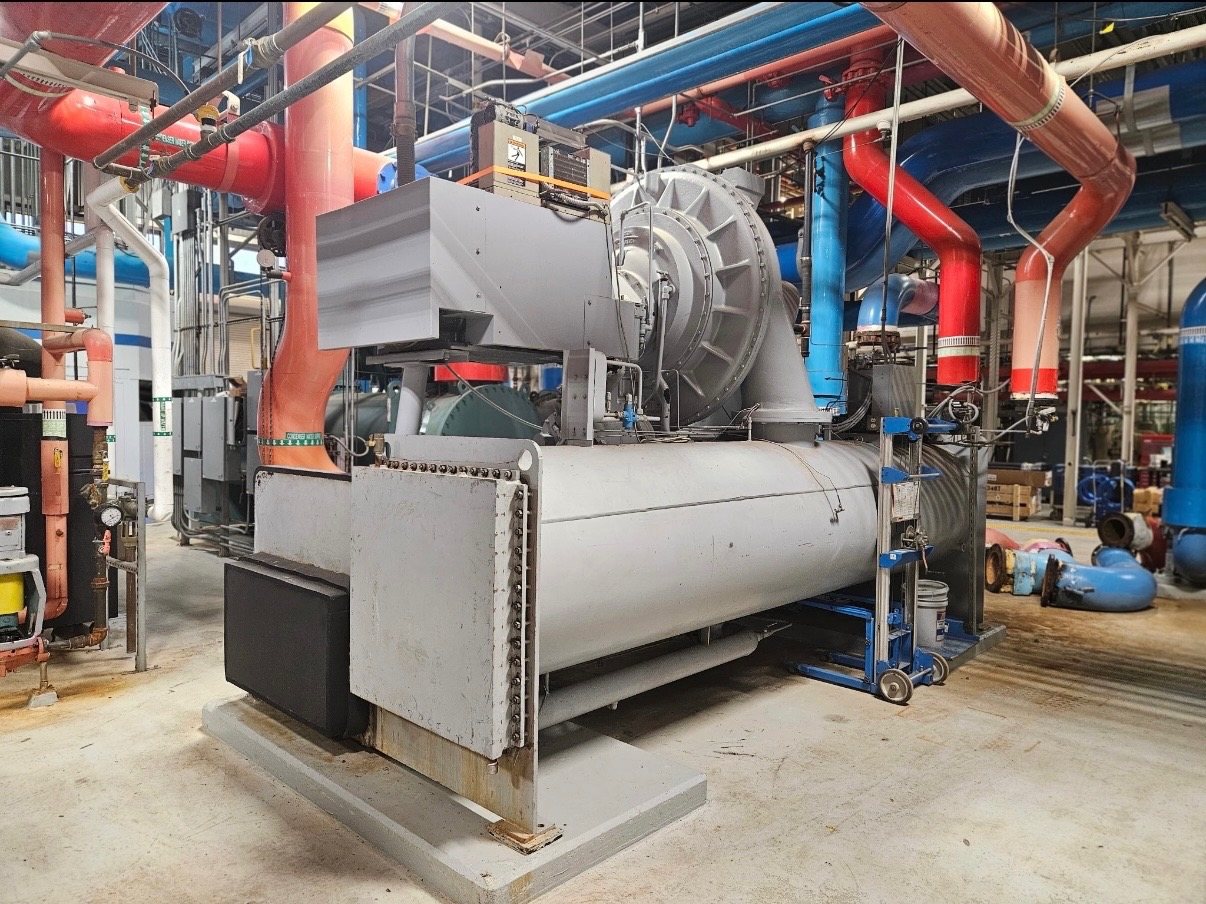
R-22 Chiller Buyers in Monroe, Louisiana
Offer and removal scope
We purchase a used chiller identified with R-22 refrigerant in Monroe, Louisiana; we do not sell chillers. The process starts with an upfront cash offer based on the information available, with no equipment test required. The buyer handles crane service, rigging, disconnects, refrigerant recovery, loading, hauling and freight. Site staff and appropriately qualified personnel coordinate the work around actual equipment and facility constraints.
Local context, actual site
The regional context for Monroe includes the east side of the Ouachita River and the I-20 corridor. It is in Ouachita Parish. In a large building, the actual equipment-room or roof location matters more than the street address alone; describe the route to loading. Give the street address and the unit's position on the property; a regional highway does not establish which gate, route or loading area can be used at that site. Include any restrictions on access to the chiller's machinery area so the qualified recovery team can plan around the site.
From the chiller to the loading area
The first obstacle may be inside the building rather than on the road. Tell the buyer where the unit sits, how it is reached and where a truck might be allowed to load. Identify narrow openings, overhead obstructions and any restricted travel paths from existing measurements. The buyer's professional team verifies the route and determines the handling plan for the specific equipment.
Identify the actual charge information
Photograph the refrigerant nameplate and any retrofit label; do not assume the original charge is still present. The original plate and a later conversion label may not agree. Send both with any dated records so the recovery team can determine what information applies to the machine as it stands; a brand or age alone is not proof of the current charge.
Measure the load, not just the rating
A truck and crane are selected around the real load, not the chiller's rated cooling tons. Send available length, width, height and documented weight for the machine and for any separate included enclosure. Also share the nameplate capacity so the buyer can identify the equipment. It is fine to say that dimensions or a weight still need confirmation.
Plan the lift around the site
The buyer handles the crane and rigging, with a professional lift plan based on the particular machine and site. Share documented weights, manufacturer lifting instructions and photos of visible lifting-point markings if available. Identify overhead wires, nearby structures, ground or floor limits and possible staging space. Do not select a lift point or attempt to separate components yourself; the rigger evaluates the actual conditions.
Do not assume the system details
Share available refrigerant service and recovery records with the removal team. Previous maintenance notes can identify reported changes or recovery, but gaps are common and should be marked as unknown. Do not connect gauges or attempt to establish the charge by operating the machine just to request an offer.
Freight begins at the gate
A truck-ready plan begins with the site entrance and a realistic loading area. Tell the buyer about restricted gates, low overhead services, surface limits or delivery traffic that may affect access. Supply equipment dimensions and documented weight when available. The buyer arranges loading, hauling and freight; the route and vehicle arrangement depend on the actual load and property conditions.
Identify the machine
Start with the main nameplate: a legible model, serial number, manufacturer and rated capacity can anchor the review. A wide photo showing the plate's location is useful if several machines are close together. Include a separate control or starter plate only if visible safely, and say when a number cannot be read. Do not open a cabinet or remove a guard to obtain information.
Leave handling to qualified personnel
Leave the circuit closed and coordinate recovery through appropriately qualified personnel; never vent refrigerant. The buyer arranges refrigerant recovery using appropriately qualified personnel in coordination with the site. The seller should leave valves and circuit connections untouched; the removal plan must account for the actual equipment and records. Keep the circuit closed and never release refrigerant.
Report condition without a test
A photo of the whole machine, close views of visible wear and a short note about known faults provide useful context. If there was a shutdown or previous repair, include the date only when known and distinguish a recollection from a documented record. The buyer can review the information without asking you to run or test the chiller.
Plan the disconnects safely
Record power details from labels or drawings already available, and say if the voltage or phase cannot be confirmed. A separate drive or starter may have its own enclosure and removal path, and it may not be part of the purchase. The buyer handles disconnects using qualified personnel, working with authorized staff who control the site's isolation procedures.
Identify the interfaces
A photograph of visible piping can help the buyer understand the installation, but it cannot establish the contents of a line. Share labels, drawings and known site restrictions, including any process interface, and mark unknowns clearly. The buyer handles disconnects with qualified personnel in coordination with the facility's isolation and fluid-handling requirements.
Coordinate with the facility
Explain who can grant entry to the property and who understands the machine's interfaces with the rest of the facility. Their input can clarify restricted work areas, ongoing cooling loads and any permitted removal window. The buyer handles the removal services and coordinates with authorized staff. Missing schedules or drawings can be discussed without committing the site to an unapproved outage.