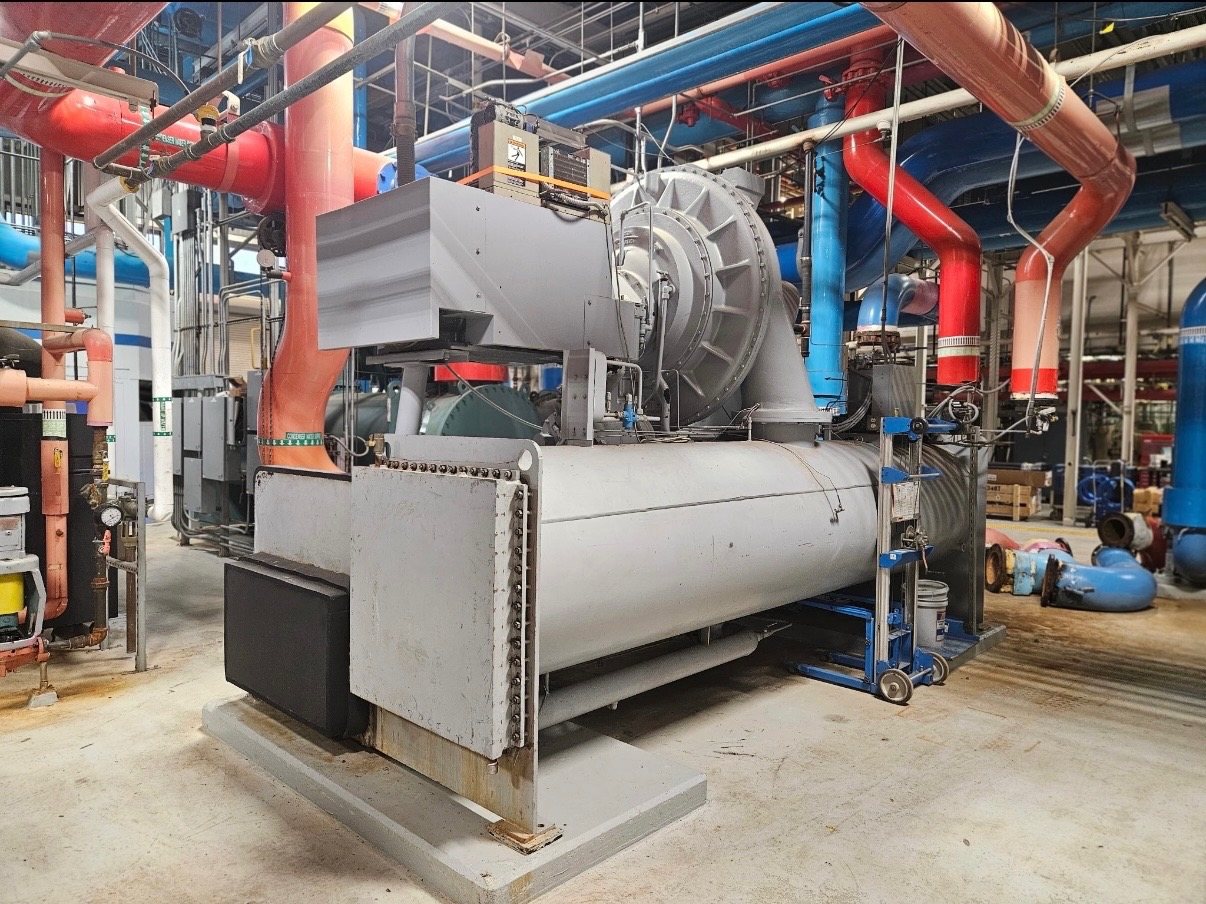
Screw Chiller Buyers in Ruston, Louisiana
From surplus unit to removal
We purchase a used screw chiller in Ruston, Louisiana; we do not sell chillers. The process starts with an upfront cash offer based on the information available, with no equipment test required. The buyer handles crane service, rigging, disconnects, refrigerant recovery, loading, hauling and freight. Site staff and appropriately qualified personnel coordinate the work around actual equipment and facility constraints.
Where the equipment sits
The regional context for Ruston includes north Louisiana and the I-20 corridor. It is in Lincoln Parish. For a campus or occupied building, the facilities team can identify the unit, operating dependencies and allowable access window. A regional route or facility category cannot establish the conditions at a particular property. Provide the street address, building or yard location, and any known gate, loading or access restrictions for the actual chiller. For this screw chiller, identify accessible compressor and connection photos with the correct equipment location.
What you can see safely
Present the condition as known, not as a performance guarantee. A safe exterior photograph may show damaged coils, corrosion or missing controls; an existing maintenance record can explain a reported repair. State when the current condition is unknown or records are incomplete. No start-up or equipment test is required for the buyer to review a request.
Identify the connections and machine
Photograph the unit nameplate and visible compressor housings; note how many compressors are present if clearly visible. Do not assume the number of compressors from the word screw. If the housings or labels are not visible without opening a cover, say the count is unknown and provide a safe overall photo instead.
The details worth sending
A nameplate serves as an anchor for the discussion, not a reason to take equipment apart. From an accessible position, photograph the main plate and the machine around it; include model, serial and capacity only where legible. If the site has several similar chillers, label the photograph with the building and unit number so records are not accidentally matched to the wrong asset.
Two very different measurements
If the equipment schedule has a tonnage, match it to the correct machine and indicate whether the number is for one unit or a combined plant. Also provide available dimensions and any documented shipping or operating weight. A cabinet that fits inside the building may still have attachments that limit its exit; capacity alone says nothing reliable about those clearances.
Condition and associated components
Share available maintenance history, including oil or compressor service records, without opening the system. An older service invoice can establish what work was reported, but it does not guarantee present condition. Flag incomplete maintenance history, known damage and missing parts honestly; no operating demonstration is needed to start a review.
Map the components
Clarify what is included: the main chiller, any separate drive or starter, control cabinet and modules, as applicable. Some components may be shared with a machine that stays. A simple annotated photo or asset list is useful, even when you cannot identify every connection. The buyer can review the actual arrangement with the site rather than assuming every nearby cabinet belongs to the chiller.
When the charge is uncertain
A refrigerant label should travel with any later retrofit or service documentation so the recovery team sees the whole recorded history. Give the stated quantity only if documented and describe known damage without touching the circuit. The buyer arranges appropriately qualified personnel for recovery; leave valves closed and never vent refrigerant to make a machine easier to move.
Removal considerations for this design
Identify visible fluid and electrical connections and note the equipment's location and removal clearances. Include any separate power or control cabinet if it belongs in the transaction, and identify lines that the site believes are shared. Qualified personnel plan the disconnects while the buyer's riggers evaluate the path and lift.
Electrical information for the team
Existing drawings and exterior photos can help identify electrical interfaces, including a remote starter or shared controls. Record plate voltage and phase only if safely visible; an unreadable value can remain unknown. The buyer arranges qualified electrical disconnects in coordination with the site, so there is no reason for the owner to expose conductors or test the system.
Agree on the work boundaries
A chiller can be surplus while nearby systems remain essential. Ask the authorized facility representative to identify protected services, shared controls and the people who can approve access. The buyer arranges the work and coordinates the plan with the site, including any qualified disconnect and recovery personnel. Treat timing as subject to actual site approval, not a guaranteed removal date.
The actual lifting constraints
Give the buyer any available shipping weights, lifting drawings and pictures of the machine's surroundings. Explain known limits on crane setup, floor loading, overhead clearance or staging space, and note where information is unavailable. The buyer coordinates the crane and qualified riggers. An equipment plate or a general diagram is useful context, but it is not a substitute for a site-specific lift plan.
From the chiller to the loading area
The first obstacle may be inside the building rather than on the road. Tell the buyer where the unit sits, how it is reached and where a truck might be allowed to load. Identify narrow openings, overhead obstructions and any restricted travel paths from existing measurements. The buyer's professional team verifies the route and determines the handling plan for the specific equipment.
Freight begins at the gate
Moving a chiller off its foundation and getting it onto a truck are separate planning steps. Show the proposed staging and loading area, identify any site traffic restrictions and share the measurements you have. The buyer coordinates loading, hauling and freight with the riggers. If the route or truck position is unknown, say so rather than assuming a particular vehicle will fit.