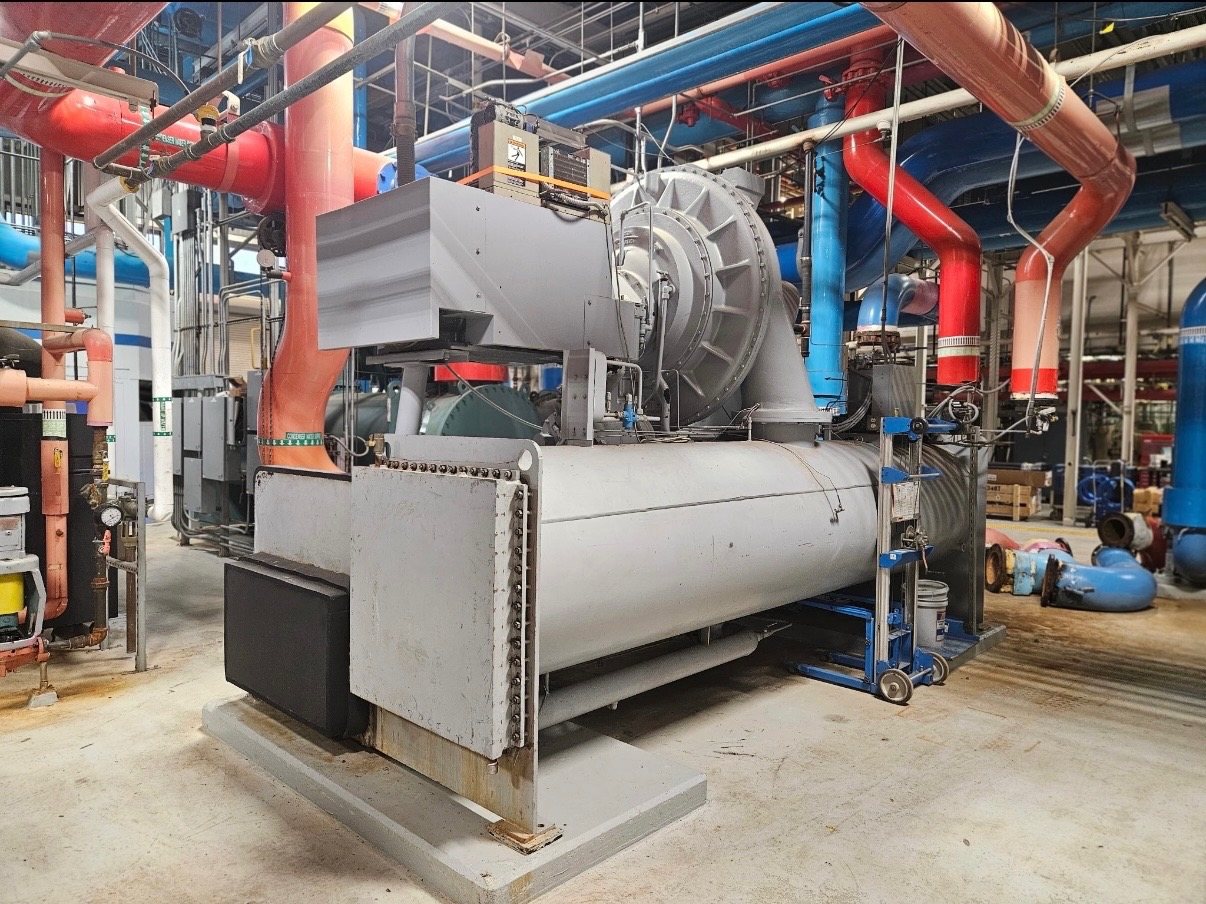
Smardt Chiller Buyers in Slidell, Louisiana
A practical way to start
An owner with a used Smardt chiller in Slidell, Louisiana can begin with photographs and available records; no equipment testing is required. We buy chillers and provide an upfront cash offer. The buyer handles crane service, rigging, disconnects, refrigerant recovery, loading, hauling and freight, coordinating with authorized site personnel. An unknown detail is worth flagging; it does not need to be turned into a guess.
A useful condition history
Describe the condition you can actually observe: visible corrosion, missing covers or controls, known damage, or whether the machine has been idle. Provide maintenance records if they exist, but do not infer a working condition from an old invoice. No equipment test is required for a cash offer, and a seller should not start the unit or open electrical or refrigerant components to collect information.
Start with the unit's labels
Provide the Smardt model, serial number, capacity and refrigerant from the equipment nameplate where legible. If the building documentation refers to a group of chillers, identify the individual unit to which the plate belongs. A partial plate and a corresponding wide shot are still worth sharing when the complete record is unavailable.
Two very different measurements
A truck and crane are selected around the real load, not the chiller's rated cooling tons. Send available length, width, height and documented weight for the machine and for any separate included enclosure. Also share the nameplate capacity so the buyer can identify the equipment. It is fine to say that dimensions or a weight still need confirmation.
Power and separate controls
Power information belongs in the inventory even when the chiller is already idle. Share a safe photo of the rating plate and existing electrical drawings if available; identify separate controls and missing information. The buyer handles electrical disconnects through qualified personnel, coordinated with the site's authorized staff. The seller should not switch, probe or dismantle electrical components to prepare for an offer.
Record the actual arrangement
Share visible compressor and control photos and any documentation identifying the compressor arrangement without removing panels. The brand by itself does not confirm the compressor arrangement or the condition of the controls. Safe exterior pictures and the documents on hand let the buyer evaluate the equipment without asking anyone to expose electrical components.
Refrigerant records and recovery
A retired chiller can still contain refrigerant, so its status should not be inferred from its operating history. Provide the safely visible designation and any known service or recovery notes, including gaps. The buyer coordinates the recovery work through appropriately qualified personnel; the seller leaves the circuit closed and does not vent or transfer refrigerant.
Keep remaining services in view
Before removal, define what stays in service and who can authorize work at the property. Existing site rules may cover escorts, work windows, protected areas or shared utilities. The buyer arranges the removal team and coordinates with authorized personnel; the site supplies its requirements. Any window discussed is a planning input, not a promise that a particular date will be available.
Separate the scope from the assumptions
Note separate control or power components and the documented unit weight and access route for removal planning. Controls or power components may be located away from the main assembly or may serve more than one machine. Clarify ownership and inclusion, and identify any narrow openings between each included piece and the proposed truck position.
From the chiller to the loading area
The first obstacle may be inside the building rather than on the road. Tell the buyer where the unit sits, how it is reached and where a truck might be allowed to load. Identify narrow openings, overhead obstructions and any restricted travel paths from existing measurements. The buyer's professional team verifies the route and determines the handling plan for the specific equipment.
Where the equipment sits
The regional context for Slidell includes the eastern Lake Pontchartrain Northshore and the I-10, I-12 and I-59 corridors. It is in St. Tammany Parish. A regional highway connection does not establish access to a specific loading area; describe the practical truck approach and site restrictions. Give the street address and the unit's position on the property; a regional highway does not establish which gate, route or loading area can be used at that site. If a separate starter or control is included, show where it sits relative to the chiller and the path to the loading area.
Plan the lift around the site
If a unit is above grade or inside a constrained room, describe the possible route and any known structural or overhead limits. A safe photo of the surrounding area can help, along with unit-specific rigging documents. The buyer's rigging team assesses lift points, crane position and whether components can move as assembled. The seller is not expected to perform rigging or dismantling.
Freight begins at the gate
After the machine leaves its installed position, it still needs a safe staging place and a truck-accessible loading area. Share the location of gates, internal roads and any known overhead or vehicle restrictions. The buyer coordinates loading, hauling and freight. The freight team will evaluate the actual load dimensions and route rather than assuming that a nearby highway solves access inside the property.