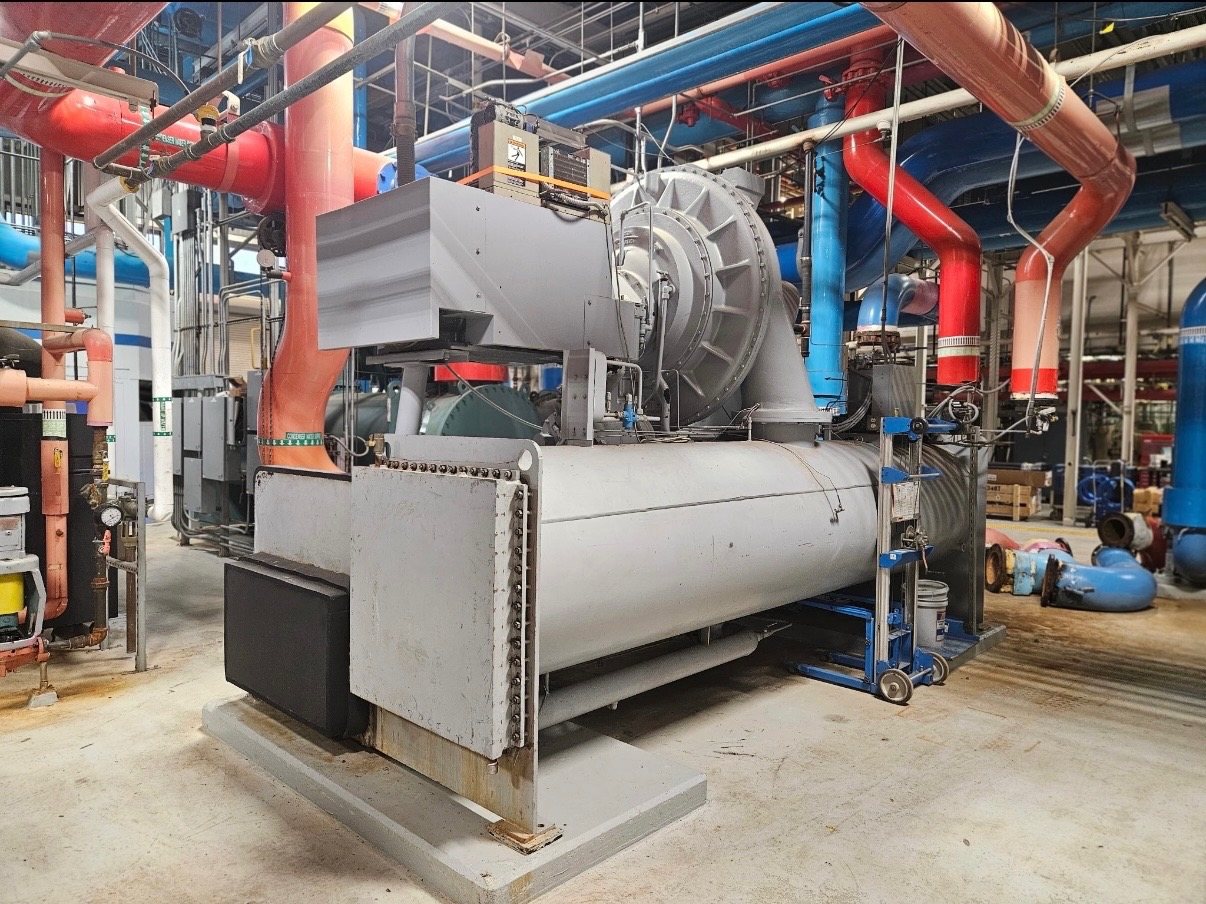
Scroll Chiller Buyers in Slidell, Louisiana
A practical way to start
If you have a used scroll chiller in Slidell, Louisiana, we buy chillers rather than sell them. Share what you know for an upfront cash offer; no equipment testing is required. The buyer handles crane service, rigging, disconnects, refrigerant recovery, loading, hauling and freight, coordinating qualified personnel with the site. A precise inventory and an honest account of access restrictions help shape the removal plan.
Match the plate to the unit
A nameplate serves as an anchor for the discussion, not a reason to take equipment apart. From an accessible position, photograph the main plate and the machine around it; include model, serial and capacity only where legible. If the site has several similar chillers, label the photograph with the building and unit number so records are not accidentally matched to the wrong asset.
Start with the visible configuration
Share the chiller nameplate and any visible compressor labels; do not remove panels to collect them. A visible compressor label and the main chiller plate serve different purposes; a compressor number alone may not identify the full machine. If either is inaccessible, share the information on hand without taking covers off.
Location and site access
The regional context for Slidell includes the eastern Lake Pontchartrain Northshore and the I-10, I-12 and I-59 corridors. It is in St. Tammany Parish. A regional highway connection does not establish access to a specific loading area; describe the practical truck approach and site restrictions. Share the actual address, building and approved entrance where known. The buyer's team must assess the specific property rather than infer a clear route from a regional map. If the scroll chiller is modular, identify the units being offered and where their shared headers are located, if known.
Two very different measurements
When a record says tons, ask whether that figure describes cooling output for one unit or for a group. It is not the load weight for rigging. Supply physical dimensions and a documented shipping or operating weight if known, and specify whether protrusions and separate cabinets are included. If the document does not say, let the buyer know rather than filling the gap with an estimate.
Define the purchase scope
One photo can show several assets without showing which one is surplus. Mark the intended chiller on a wide image, then pair its plate with the same asset in the equipment list. Say whether associated controls or modules are part of the sale. If the owner has not decided what is included, flag that question for the buyer and site representative to resolve.
Condition and associated components
Note the number of compressors or modules visible and whether the rated capacity describes one module or the full system. A bank can contain several modules, each with its own rating. Tell the buyer whether the figure on a schedule is for a single module or the complete system and which modules, if any, are remaining in service.
Keep the circuit closed
A label and a service record can tell different parts of the chiller's refrigerant history. Send both, identify the machine they belong to, and note any uncertainty about the designation or quantity. The buyer coordinates appropriately qualified recovery personnel for the actual system. Leave valves and connections untouched and do not release refrigerant, even if the unit has been idle for years.
Power and separate controls
Existing drawings and exterior photos can help identify electrical interfaces, including a remote starter or shared controls. Record plate voltage and phase only if safely visible; an unreadable value can remain unknown. The buyer arranges qualified electrical disconnects in coordination with the site, so there is no reason for the owner to expose conductors or test the system.
Account for the equipment path
Photograph accessible coils, headers and mounting points and describe the route to the loading area. Headers may connect a module to other equipment, and mounting points must be assessed for the actual unit. The seller can show the layout safely; qualified personnel decide whether and how the equipment can be separated and moved.
Agree on the work boundaries
An owner, facilities manager and building occupant may have different responsibilities. Identify who can approve access and isolation, and tell the buyer about any remaining cooling load or shared controls. The buyer coordinates qualified work and transport with the site. If an outage window has not been approved, describe it as undecided instead of committing another party to a date.
Plan the lift around the site
A clear ground-level view does not guarantee a clear lift: overhead services, structural limits and the available crane position also matter. Send the buyer what the site knows about those constraints, along with documented dimensions and weight. Professional riggers arranged by the buyer develop the equipment-specific plan. Do not tie on lifting gear or attempt to shift the chiller yourself.
Access starts at the unit
Identify where the chiller sits relative to the building entrance and loading area, then mention any known obstacles along that path. A narrow door, low pipe, tight turn or roof parapet may matter more than distance to the road. Provide existing measurements or photographs when permitted. The buyer's riggers verify the actual route and do not rely on an assumed clear opening.
Where can the truck load?
If a unit or separate cabinet has to be staged before loading, tell the buyer what space the facility can make available and any restrictions on its use. Share measurements, documented weights and the route through the gate. The buyer arranges loading, hauling and freight; its personnel assess whether the proposed route and vehicle access are workable for the actual load.
Send the information on hand
There is no need to make the machine operational before contacting a buyer. Available photographs, plate details and the location can support an upfront cash offer. Tell the buyer which parts are included and what is still uncertain, including access or refrigerant information. The removal team can work through those details with the facility before the work is arranged.