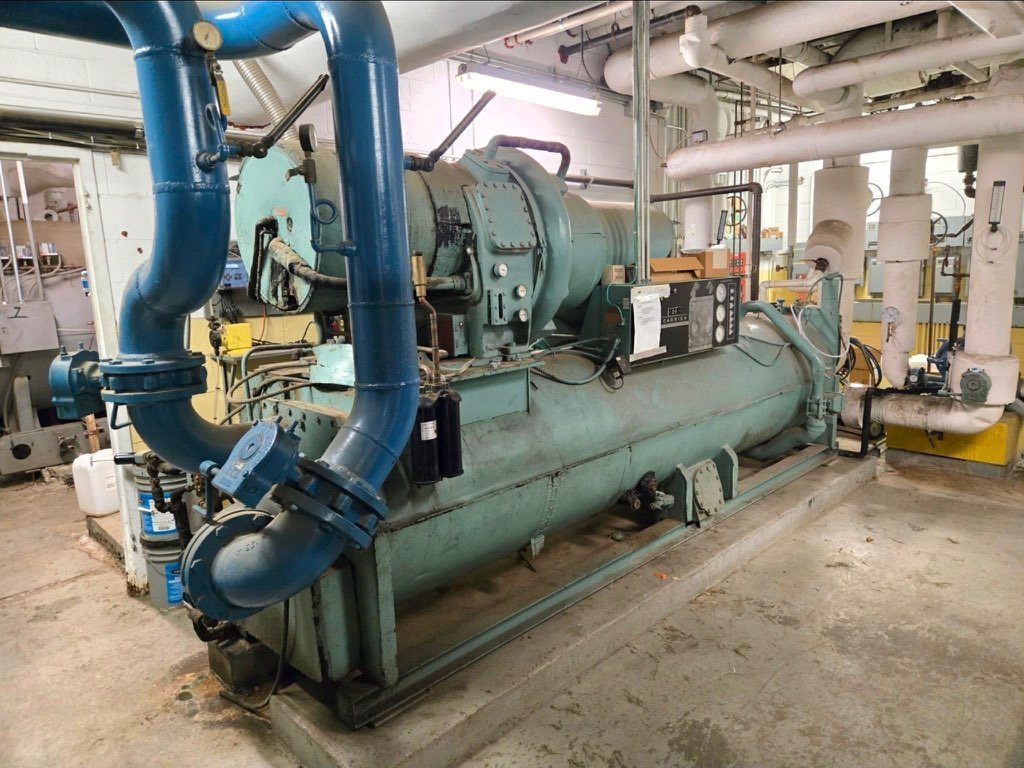
Centrifugal Chiller Buyers in Hammond, Louisiana
A buyer for your chiller
Have a used centrifugal chiller in Hammond, Louisiana to remove? We are chiller buyers, and a test run is not required to request an upfront cash offer. The buyer handles crane service, rigging, disconnects, refrigerant recovery, loading, hauling and freight. Share the machine's visible details and the site's known restrictions so the work can be coordinated with authorized personnel.
The details worth sending
Give the buyer enough information to distinguish the machine from adjacent equipment: an overall photograph, a legible plate and the location of any separate controls included. The model and serial number are useful where visible, but a partial record is still a reasonable starting point. Mark any values copied from old documentation rather than the plate itself.
Start with the visible configuration
Share nameplate photos and any available records identifying the compressor, refrigerant and rated cooling capacity. Capacity and refrigerant are properties of the specific machine, not something to infer from the compressor category. An old equipment schedule or a partial plate is useful when clearly marked as incomplete or unverified.
Make the equipment list clear
Define the boundaries of the proposed purchase before arranging a lift. Photograph the machine in place, list any included starter or controls, and mark equipment that will remain. For a bank, distinguish individual modules from the total system. When ownership or inclusion of a component is uncertain, tell the buyer and resolve it with the authorized site representative.
Cooling tons and transport size
A truck and crane are selected around the real load, not the chiller's rated cooling tons. Send available length, width, height and documented weight for the machine and for any separate included enclosure. Also share the nameplate capacity so the buyer can identify the equipment. It is fine to say that dimensions or a weight still need confirmation.
Record what is actually installed
Identify separate starter, drive or control cabinets if present and say whether they are included. A starter or drive can be physically separate and may not be obvious in a picture of the chiller. Mark which cabinets belong to the machine, what is included and whether any controls also serve equipment that will remain.
Plan the disconnects safely
A separate power cabinet can affect both the sale scope and the removal route. If known, provide the nameplate voltage, phase and frequency and say whether the cabinet serves only this machine. Site personnel and the buyer's qualified disconnect team coordinate electrical isolation; never open a cabinet or attempt electrical work merely to gather details for the buyer.
Piping and shared loops
Drawings may show whether the chiller interfaces with building water, condenser water or a process circuit. Send what the site has and identify any lines believed to be shared with equipment that stays. The buyer's qualified disconnect team coordinates the work with authorized site personnel, who identify isolation boundaries and known fluid-handling or contamination requirements.
Plan the interfaces and access
Document shell dimensions and available equipment-room openings; any disassembly should be planned by qualified personnel for that unit. Measure only where safely accessible and share original drawings when available. Door size alone may not describe the full route: bends, overhead services and floor load limits can determine whether the proposed path needs further assessment.
Refrigerant records and recovery
A label and a service record can tell different parts of the chiller's refrigerant history. Send both, identify the machine they belong to, and note any uncertainty about the designation or quantity. The buyer coordinates appropriately qualified recovery personnel for the actual system. Leave valves and connections untouched and do not release refrigerant, even if the unit has been idle for years.
Agree on the work boundaries
An owner, facilities manager and building occupant may have different responsibilities. Identify who can approve access and isolation, and tell the buyer about any remaining cooling load or shared controls. The buyer coordinates qualified work and transport with the site. If an outage window has not been approved, describe it as undecided instead of committing another party to a date.
Access starts at the unit
For an accurate removal discussion, include the street address, equipment location and the site's preferred truck entrance. A door measurement is useful, but the path can also be limited by a turn, low ceiling or floor transition. Describe known obstacles and share photographs where permitted. The buyer's riggers evaluate the route rather than assuming that the chiller will move intact.
Local context, actual site
The regional context for Hammond includes the I-12 and I-55 crossroads north of Lake Pontchartrain. It is in Tangipahoa Parish. Commercial or distribution properties can have different service entrances from their public entrances; identify the one approved for equipment loading. Share the actual address, building and approved entrance where known. The buyer's team must assess the specific property rather than infer a clear route from a regional map. For this centrifugal machine, describe the path for the shell and any separate starter or drive that is included.
Information for the rigger
The seller can help the lift team by providing existing drawings, documented component weights and a safe view of the equipment's surroundings. Mention known overhead lines, roof edges, floor limits or restricted staging areas. The buyer handles crane service and rigging, with professionals determining the lift method and acceptable setup for the actual unit rather than relying on an estimated load.
Freight begins at the gate
A truck-ready plan begins with the site entrance and a realistic loading area. Tell the buyer about restricted gates, low overhead services, surface limits or delivery traffic that may affect access. Supply equipment dimensions and documented weight when available. The buyer arranges loading, hauling and freight; the route and vehicle arrangement depend on the actual load and property conditions.