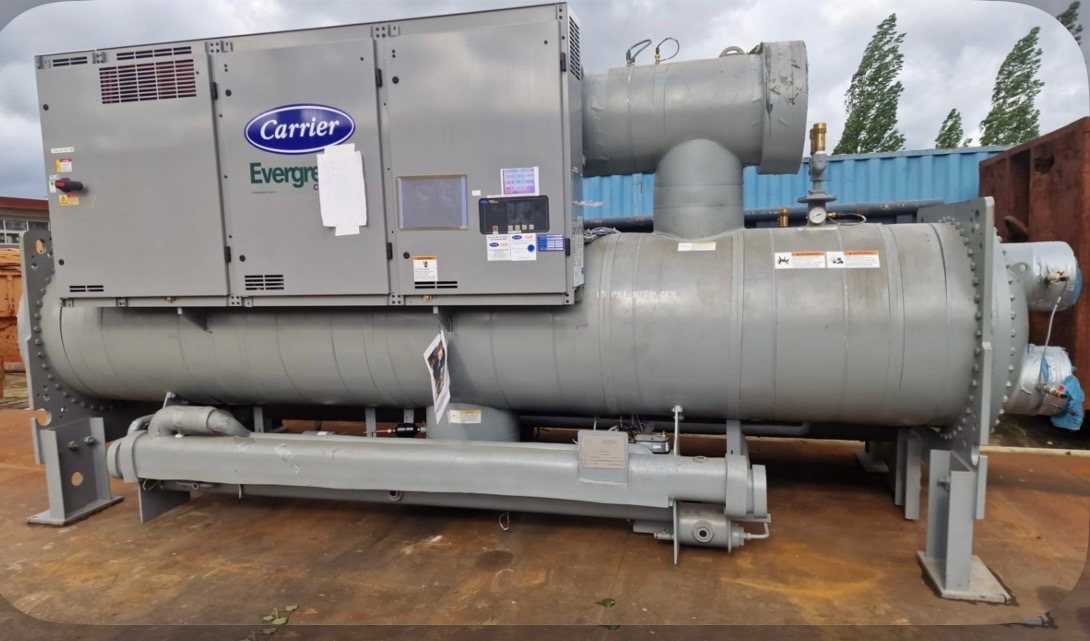
McQuay Chiller Buyers in Hammond, Louisiana
Offer and removal scope
An owner with a used McQuay chiller in Hammond, Louisiana can begin with photographs and available records; no equipment testing is required. We buy chillers and provide an upfront cash offer. The buyer handles crane service, rigging, disconnects, refrigerant recovery, loading, hauling and freight, coordinating with authorized site personnel. An unknown detail is worth flagging; it does not need to be turned into a guess.
Make the equipment list clear
Define the boundaries of the proposed purchase before arranging a lift. Photograph the machine in place, list any included starter or controls, and mark equipment that will remain. For a bank, distinguish individual modules from the total system. When ownership or inclusion of a component is uncertain, tell the buyer and resolve it with the authorized site representative.
Match the plate to the equipment
Photograph the McQuay nameplate and any retrofit labels so the actual model and listed refrigerant can be checked. A retrofit label can differ from the original plate, so provide both rather than choosing the number that looks newer. If a plate is missing, available drawings and wide photographs can still help identify the particular chiller.
Local context, actual site
The regional context for Hammond includes the I-12 and I-55 crossroads north of Lake Pontchartrain. It is in Tangipahoa Parish. Commercial or distribution properties can have different service entrances from their public entrances; identify the one approved for equipment loading. Give the street address and the unit's position on the property; a regional highway does not establish which gate, route or loading area can be used at that site. If a separate starter or control is included, show where it sits relative to the chiller and the path to the loading area.
When the history is incomplete
A photo of the whole machine, close views of visible wear and a short note about known faults provide useful context. If there was a shutdown or previous repair, include the date only when known and distinguish a recollection from a documented record. The buyer can review the information without asking you to run or test the chiller.
Measure the load, not just the rating
A capacity on a plant schedule may cover several machines, while a module plate may describe only one. Identify which figure applies to the equipment being offered. For moving it, the more relevant information is the physical envelope, documented weight and any protruding connections. If those details are missing, say so; a cooling-ton figure cannot be converted into a dependable lift weight.
Record the actual arrangement
Share available service records and photos of the chiller's compressor, heat exchangers and controls; do not start it for an offer. Records of past service are useful even when they do not prove current operating condition. Describe what you know, such as an old repair or a missing control, without opening the machine, energizing it or promising that it will run.
Plan the disconnects safely
A site representative can point out which control cabinets belong to the chiller and which must remain. The buyer's qualified personnel coordinate the electrical disconnect with that representative. For the initial review, an accessible nameplate photograph or existing schedule is enough to communicate the listed power information; the seller should not probe, open or operate electrical equipment.
Labels, history and safe recovery
A label and a service record can tell different parts of the chiller's refrigerant history. Send both, identify the machine they belong to, and note any uncertainty about the designation or quantity. The buyer coordinates appropriately qualified recovery personnel for the actual system. Leave valves and connections untouched and do not release refrigerant, even if the unit has been idle for years.
Document the route and lift
Flag missing data plates, obsolete-looking controls or tightly enclosed equipment so identification and removal can be planned. An enclosed location can make both identification and the extraction route harder to assess. Share room openings, overhead obstacles and a photo of the installed unit; the buyer's riggers can determine what further information is needed.
Coordinate with the facility
The facility controls access and knows which systems and areas must remain in service. Share the name or role of an authorized site contact, the approved access requirements and any shutdown window already established. The buyer coordinates disconnects, refrigerant recovery, rigging and freight with that contact. Do not assume a removal date until the necessary site and equipment details have been reviewed together.
From the chiller to the loading area
Identify where the chiller sits relative to the building entrance and loading area, then mention any known obstacles along that path. A narrow door, low pipe, tight turn or roof parapet may matter more than distance to the road. Provide existing measurements or photographs when permitted. The buyer's riggers verify the actual route and do not rely on an assumed clear opening.
Plan the lift around the site
A clear ground-level view does not guarantee a clear lift: overhead services, structural limits and the available crane position also matter. Send the buyer what the site knows about those constraints, along with documented dimensions and weight. Professional riggers arranged by the buyer develop the equipment-specific plan. Do not tie on lifting gear or attempt to shift the chiller yourself.
Loading and the road out
The buyer handles loading, hauling and freight as well as the rigging that gets the equipment to the truck. For planning, identify the actual loading area, gate width and any restrictions on large vehicles or staging. A regional highway may be nearby, but the last stretch into a property can still be constrained. The freight team assesses the actual route and load dimensions.