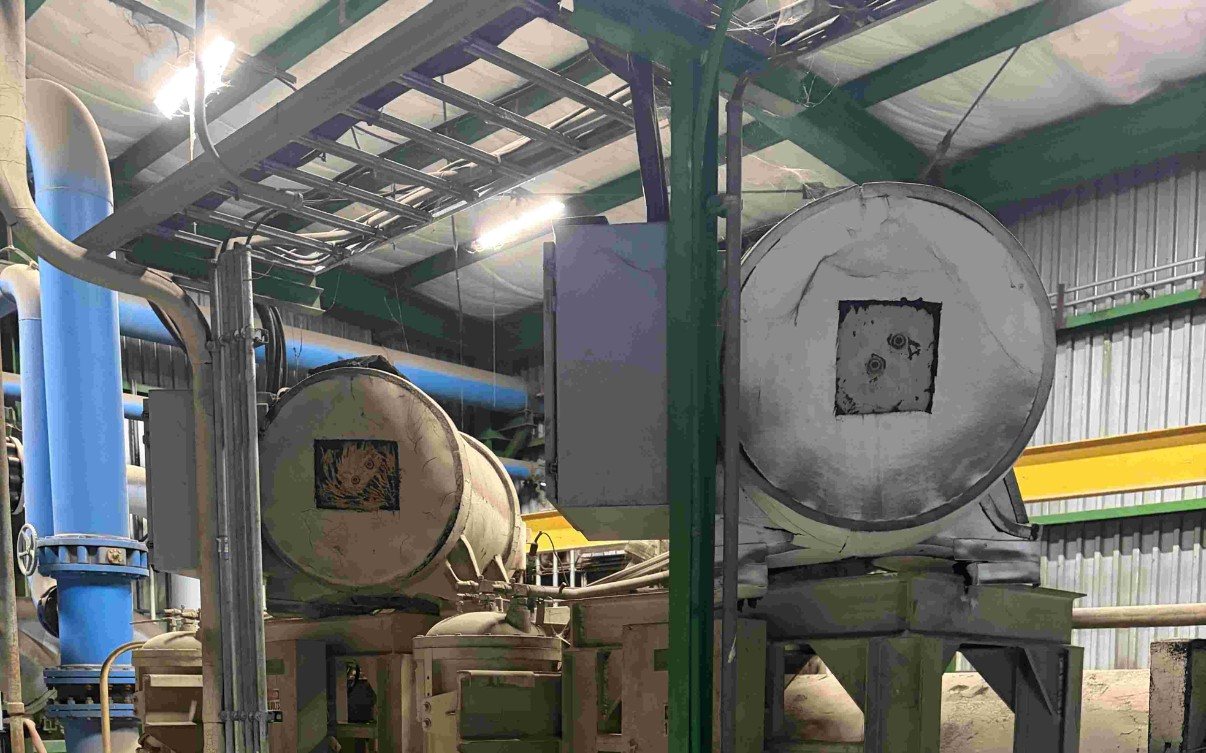
Industrial Chiller Buyers in Hammond, Louisiana
Offer and removal scope
Have a surplus industrial chiller in Hammond, Louisiana to remove? We are chiller buyers, and a test run is not required to request an upfront cash offer. The buyer handles crane service, rigging, disconnects, refrigerant recovery, loading, hauling and freight. Share the machine's visible details and the site's known restrictions so the work can be coordinated with authorized personnel.
Start with the nameplate
When a plate is difficult to read, send the clearest safe photo available along with any relevant equipment schedule. Identify the particular machine in a room containing multiple units and note which numbers are incomplete. A buyer can use those starting points to ask focused follow-up questions without relying on a guess about model or age.
One machine or several?
If several chillers are available, list each machine separately with its location, model and rated capacity where known. Mark missing parts and distinguish individual modules from a complete bank. Identify control cabinets or other components included in the proposed purchase and anything that must stay. A separate line for each asset helps the buyer plan recovery, lifting and freight without confusing plant totals with unit ratings.
Report condition without a test
It is fine to say that operating condition is unknown. Send the records the site already has, note visible exterior damage and identify components that are absent or excluded. Avoid drawing conclusions about internal condition from appearance alone. There is no need to energize the chiller, connect test equipment or remove covers in order to request an offer.
Two very different measurements
If a modular bank is involved, a building's total capacity can obscure the size of each piece. State how many modules are offered and which nameplate rating applies to each, if visible. The freight team also needs the actual outside dimensions and documented weight: a cooling ton is a capacity measure, not the weight of a shipping load.
Power and separate controls
Power information belongs in the inventory even when the chiller is already idle. Share a safe photo of the rating plate and existing electrical drawings if available; identify separate controls and missing information. The buyer handles electrical disconnects through qualified personnel, coordinated with the site's authorized staff. The seller should not switch, probe or dismantle electrical components to prepare for an offer.
Identify the interfaces
Do not assume a nearby pipe can be drained just because the chiller is surplus. Other equipment may use the same loop, and a process line can require site-specific precautions. Share existing labels and drawings, or note that the contents are unknown. The buyer handles the disconnect work with qualified personnel and the facility's authorized team.
Refrigerant records and recovery
Share the refrigerant designation and charge quantity from the plate or records if available, along with any retrofit label. The original plate does not necessarily describe a later conversion, and an unknown charge should stay unknown until qualified personnel assess it. The buyer handles refrigerant recovery with appropriately qualified personnel. Keep the circuit closed: do not attach gauges, transfer or vent refrigerant.
Access and operating constraints
Explain who can grant entry to the property and who understands the machine's interfaces with the rest of the facility. Their input can clarify restricted work areas, ongoing cooling loads and any permitted removal window. The buyer handles the removal services and coordinates with authorized staff. Missing schedules or drawings can be discussed without committing the site to an unapproved outage.
Access starts at the unit
Identify where the chiller sits relative to the building entrance and loading area, then mention any known obstacles along that path. A narrow door, low pipe, tight turn or roof parapet may matter more than distance to the road. Provide existing measurements or photographs when permitted. The buyer's riggers verify the actual route and do not rely on an assumed clear opening.
Crane and rigging considerations
The seller can help the lift team by providing existing drawings, documented component weights and a safe view of the equipment's surroundings. Mention known overhead lines, roof edges, floor limits or restricted staging areas. The buyer handles crane service and rigging, with professionals determining the lift method and acceptable setup for the actual unit rather than relying on an estimated load.
Plan from the real address
The regional context for Hammond includes the I-12 and I-55 crossroads north of Lake Pontchartrain. It is in Tangipahoa Parish. Commercial or distribution properties can have different service entrances from their public entrances; identify the one approved for equipment loading. Give the street address and the unit's position on the property; a regional highway does not establish which gate, route or loading area can be used at that site.
Loading and the road out
The relevant address for a pickup includes more than a postal code. Identify the truck entrance, security requirements and the point at which equipment can be loaded, if the site has selected one. Documented weight and physical dimensions are important to planning the load. The buyer handles loading, hauling and freight, coordinating the approach with the facility and rigging team.
Send the information on hand
Begin with the information that is readily available: a nameplate photo, an overall view, the equipment location and a description of access. The buyer can make an upfront cash offer without a test run. Point out missing records and any equipment that must remain; questions about the removal scope can then be resolved with the site before work is arranged.