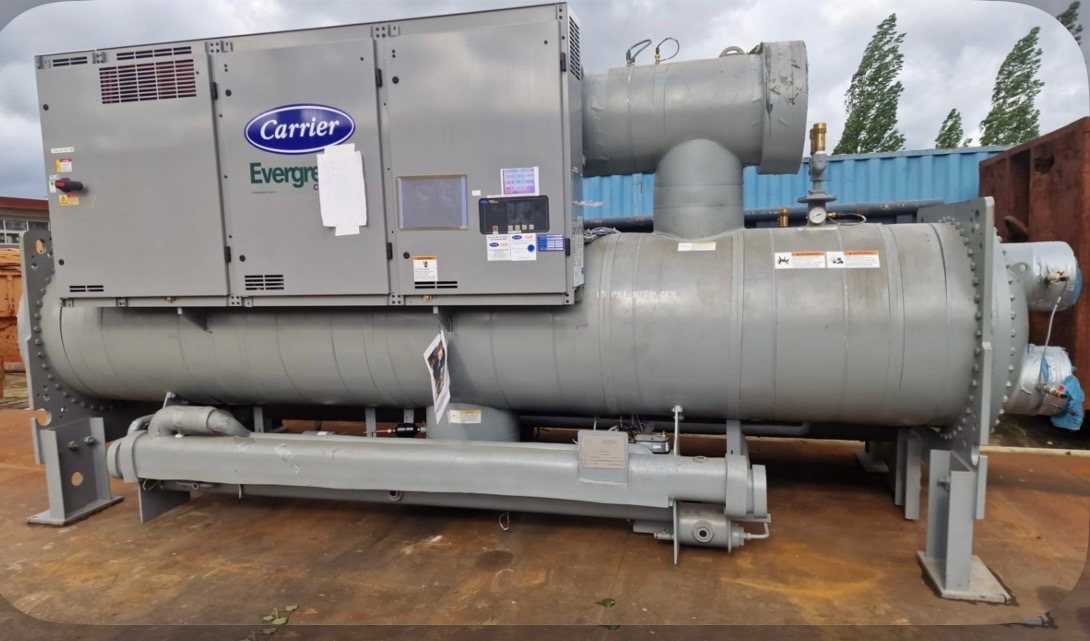
McQuay Chiller Buyers in New Orleans, Louisiana
A buyer for your chiller
If you have a used McQuay chiller in New Orleans, Louisiana, we buy chillers rather than sell them. Share what you know for an upfront cash offer; no equipment testing is required. The buyer handles crane service, rigging, disconnects, refrigerant recovery, loading, hauling and freight, coordinating qualified personnel with the site. A precise inventory and an honest account of access restrictions help shape the removal plan.
Plan from the real address
The regional context for New Orleans includes the Mississippi River port setting and the I-10 corridor. It is in Orleans Parish. Dense building locations can have restricted loading areas or building rules; identify the actual entrance and any limits on a crane position. Share the actual address, building and approved entrance where known. The buyer's team must assess the specific property rather than infer a clear route from a regional map. If a separate starter or control is included, show where it sits relative to the chiller and the path to the loading area.
Separate the assets that stay
For a multi-unit property, separate the inventory by building, room and machine. Include the plate details and any separate components that are safely identifiable, and distinguish what is being offered from equipment still needed on site. The buyer can then discuss the actual scope and handling requirements without treating a building-wide cooling figure as a single unit's capacity.
Start with the unit's labels
Photograph the McQuay nameplate and any retrofit labels so the actual model and listed refrigerant can be checked. A retrofit label can differ from the original plate, so provide both rather than choosing the number that looks newer. If a plate is missing, available drawings and wide photographs can still help identify the particular chiller.
Capacity is not shipping weight
A truck and crane are selected around the real load, not the chiller's rated cooling tons. Send available length, width, height and documented weight for the machine and for any separate included enclosure. Also share the nameplate capacity so the buyer can identify the equipment. It is fine to say that dimensions or a weight still need confirmation.
Power and separate controls
A site representative can point out which control cabinets belong to the chiller and which must remain. The buyer's qualified personnel coordinate the electrical disconnect with that representative. For the initial review, an accessible nameplate photograph or existing schedule is enough to communicate the listed power information; the seller should not probe, open or operate electrical equipment.
Which components belong to the chiller?
Share available service records and photos of the chiller's compressor, heat exchangers and controls; do not start it for an offer. Records of past service are useful even when they do not prove current operating condition. Describe what you know, such as an old repair or a missing control, without opening the machine, energizing it or promising that it will run.
Piping and shared loops
A chiller can be connected to building cooling, condenser water or a process loop, depending on its actual installation. If you know which connections are present, share the drawings and note which services must remain active. When the purpose or contents of a line are uncertain, say so. The buyer's qualified team and site personnel coordinate isolation, disconnects and fluid handling.
When the charge is uncertain
If the refrigerant is unknown, say so rather than guessing from the make or compressor type. A photo of the original plate, any later conversion label and existing service notes gives the recovery team a starting point. Recovery is handled by the buyer's appropriately qualified personnel; the seller should neither open the circuit nor vent or mix its contents.
Separate the scope from the assumptions
Flag missing data plates, obsolete-looking controls or tightly enclosed equipment so identification and removal can be planned. An enclosed location can make both identification and the extraction route harder to assess. Share room openings, overhead obstacles and a photo of the installed unit; the buyer's riggers can determine what further information is needed.
Access and operating constraints
An owner, facilities manager and building occupant may have different responsibilities. Identify who can approve access and isolation, and tell the buyer about any remaining cooling load or shared controls. The buyer coordinates qualified work and transport with the site. If an outage window has not been approved, describe it as undecided instead of committing another party to a date.
From the chiller to the loading area
For an accurate removal discussion, include the street address, equipment location and the site's preferred truck entrance. A door measurement is useful, but the path can also be limited by a turn, low ceiling or floor transition. Describe known obstacles and share photographs where permitted. The buyer's riggers evaluate the route rather than assuming that the chiller will move intact.
Crane and rigging considerations
The buyer handles the crane and rigging, with a professional lift plan based on the particular machine and site. Share documented weights, manufacturer lifting instructions and photos of visible lifting-point markings if available. Identify overhead wires, nearby structures, ground or floor limits and possible staging space. Do not select a lift point or attempt to separate components yourself; the rigger evaluates the actual conditions.
From staging to hauling
After the machine leaves its installed position, it still needs a safe staging place and a truck-accessible loading area. Share the location of gates, internal roads and any known overhead or vehicle restrictions. The buyer coordinates loading, hauling and freight. The freight team will evaluate the actual load dimensions and route rather than assuming that a nearby highway solves access inside the property.