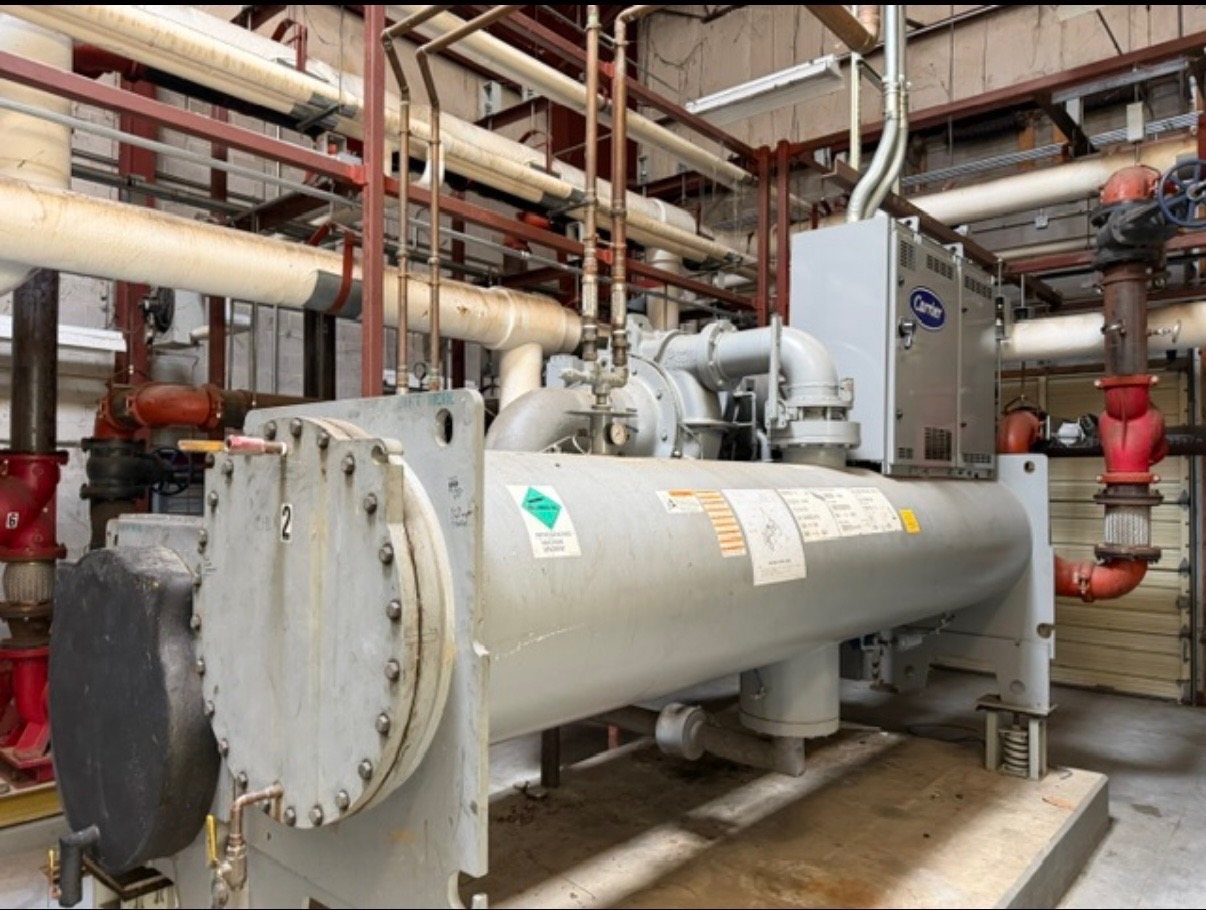
Aaon Chiller Buyers in Lafayette, Louisiana
A buyer for your chiller
If you have a used Aaon chiller in Lafayette, Louisiana, we buy chillers rather than sell them. Share what you know for an upfront cash offer; no equipment testing is required. The buyer handles crane service, rigging, disconnects, refrigerant recovery, loading, hauling and freight, coordinating qualified personnel with the site. A precise inventory and an honest account of access restrictions help shape the removal plan.
Keep remaining services in view
The facility controls access and knows which systems and areas must remain in service. Share the name or role of an authorized site contact, the approved access requirements and any shutdown window already established. The buyer coordinates disconnects, refrigerant recovery, rigging and freight with that contact. Do not assume a removal date until the necessary site and equipment details have been reviewed together.
Match the plate to the equipment
Share the Aaon equipment nameplate and identify the item as a chiller or chiller module rather than assuming from the brand alone. Equipment bearing a familiar name is not necessarily a chiller. A photo of the entire assembly and any visible water connections helps distinguish the item being offered; if its function is unclear, describe the uncertainty rather than guessing.
What is actually included?
An equipment name may describe heat rejection, a compressor, or a modular system rather than the complete installation. Share exterior pictures of the whole machine, visible connections and any separate controls. Indicate which components are included and which must remain. If you are unsure whether the unit is air-cooled, water-cooled or configured another way, leave that question open for review.
Plan the disconnects safely
Record power details from labels or drawings already available, and say if the voltage or phase cannot be confirmed. A separate drive or starter may have its own enclosure and removal path, and it may not be part of the purchase. The buyer handles disconnects using qualified personnel, working with authorized staff who control the site's isolation procedures.
Which components belong to the chiller?
Photograph visible compressor sections, condenser coils and water connections to help establish the unit configuration. These views help establish what is actually present without assuming a particular compressor or condenser arrangement. Mention any separate module or control cabinet, and specify which pieces the owner intends to include.
When the charge is uncertain
A refrigerant label should travel with any later retrofit or service documentation so the recovery team sees the whole recorded history. Give the stated quantity only if documented and describe known damage without touching the circuit. The buyer arranges appropriately qualified personnel for recovery; leave valves closed and never vent refrigerant to make a machine easier to move.
Measure the load, not just the rating
The buyer needs two different kinds of size information. Rated cooling tons describe performance, whereas transport planning depends on the actual length, width, height and documented weight of each piece. Explain whether a figure covers the whole chiller or a single module and whether a starter or other enclosure is separate. Do not estimate a load weight from cooling capacity.
Document the route and lift
Note whether the unit is roof-mounted or at grade, and share access dimensions and any available lifting instructions. The location matters independently of cooling capacity: an elevated unit may need a different lift approach from a machine on a pad. Share the route to the loading area and any overhead restrictions for the buyer's assessment.
From the chiller to the loading area
Describe the path from the machine to a loading area, not just the mailing address. Note the floor or roof, door widths, turns, overhead pipes, stairs and any changes in level that are known. Photographs of tight spots help the buyer's riggers assess the route. Share site rules for escorts, loading zones and permitted access; do not assume the chiller can leave through the nearest door.
Local context, actual site
The regional context for Lafayette includes the Acadiana region and the meeting of I-10 and I-49. It is in Lafayette Parish. A chiller could serve a building, a process, or both; explain its actual role and any services that must remain active. A regional route or facility category cannot establish the conditions at a particular property. Provide the street address, building or yard location, and any known gate, loading or access restrictions for the actual chiller. If a separate starter or control is included, show where it sits relative to the chiller and the path to the loading area.
Information for the rigger
The seller can help the lift team by providing existing drawings, documented component weights and a safe view of the equipment's surroundings. Mention known overhead lines, roof edges, floor limits or restricted staging areas. The buyer handles crane service and rigging, with professionals determining the lift method and acceptable setup for the actual unit rather than relying on an estimated load.
Loading and the road out
A good freight discussion includes the equipment's documented weight, outside dimensions, gate location and space available to load. Identify narrow internal roads, overhead obstructions or restrictions on large vehicles if known. The buyer handles loading and hauling as part of the freight arrangement, while its team checks the actual route with the site. Cooling tons alone cannot establish transport requirements.