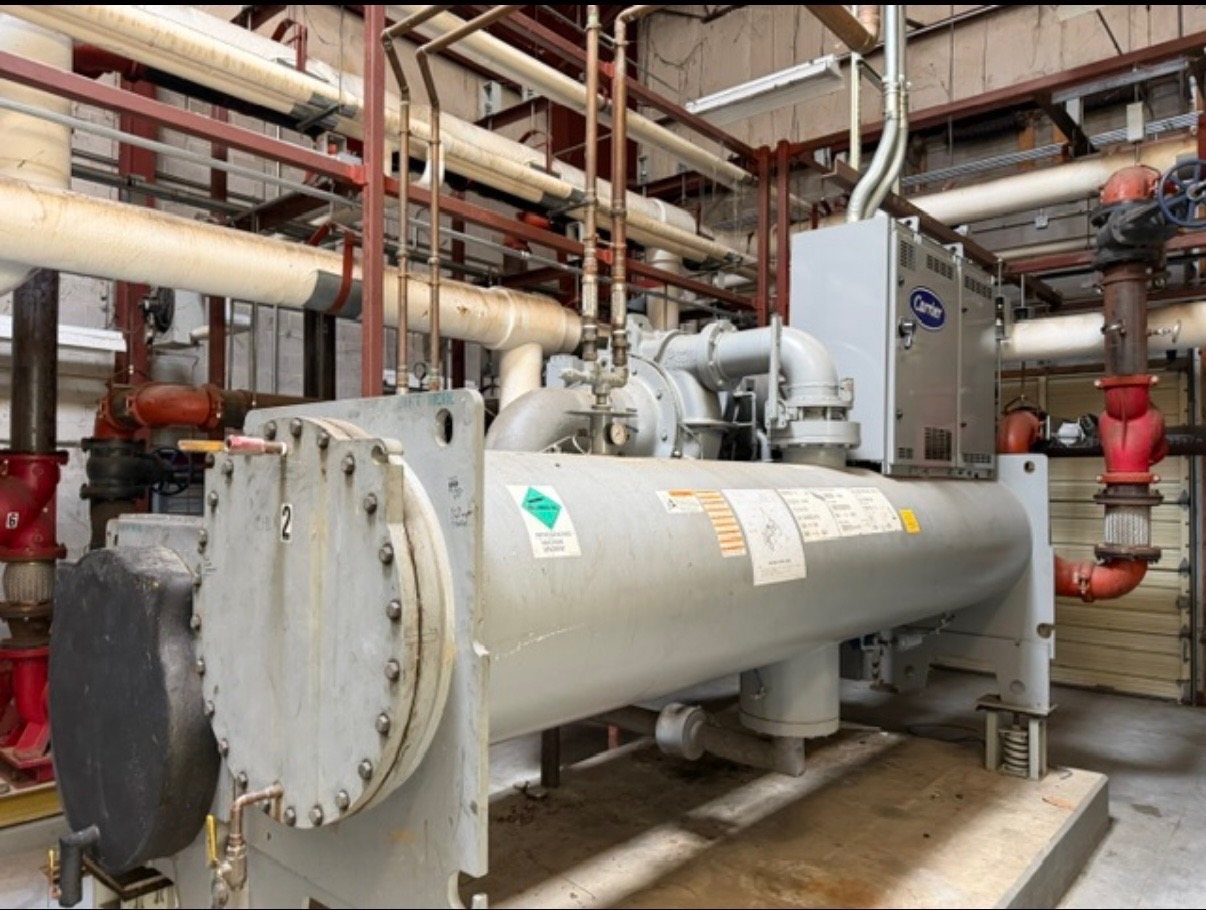
Data center closures Chiller Buyers in Lake Charles, Louisiana
A practical way to start
Have a surplus chiller associated with data center closures in Lake Charles, Louisiana to remove? We are chiller buyers, and a test run is not required to request an upfront cash offer. The buyer handles crane service, rigging, disconnects, refrigerant recovery, loading, hauling and freight. Share the machine's visible details and the site's known restrictions so the work can be coordinated with authorized personnel.
Access starts at the unit
For an accurate removal discussion, include the street address, equipment location and the site's preferred truck entrance. A door measurement is useful, but the path can also be limited by a turn, low ceiling or floor transition. Describe known obstacles and share photographs where permitted. The buyer's riggers evaluate the route rather than assuming that the chiller will move intact.
Start with the site's equipment list
Identify the chillers, module count and any associated controls included in the shutdown inventory. Distinguish a retired machine from redundant equipment that must remain ready. A module-by-module inventory, with photographs and inclusion of separate controls, helps define what the buyer may remove without assuming that the whole plant is closing.
Two very different measurements
Cooling tons describe capacity; they do not tell the freight team how much the machine weighs. Share the rated tons from the plate and the documented operating or shipping weight separately, if available. Give overall length, width and height, including projections, and say whether a separate cabinet has its own dimensions. Mark an estimate clearly instead of presenting it as a measured or documented figure.
The actual lifting constraints
If the machine must pass through a building opening or over a parapet, show the riggers the relevant route and any measurements already on file. Provide the unit-specific lifting documents and known weights where available. The buyer arranges crane and rigging services; the professional team decides on lifting points and whether an approved component separation is needed.
Coordinate the isolation boundaries
Coordinate removal around remaining cooling loads, redundant systems and the facility's approved outage window. Facilities staff should identify remaining loads and approve any outage or isolation window. The buyer's team coordinates disconnects with authorized personnel; the seller need not put operational cooling at risk or run a surplus unit for an offer.
Plan from the real address
The regional context for Lake Charles includes the I-10 corridor and the Calcasieu port and industrial area. It is in Calcasieu Parish. A large industrial facility may have specific gate, escort and work-area rules; share the rules for the actual location. Give the street address and the unit's position on the property; a regional highway does not establish which gate, route or loading area can be used at that site. Include the facility's approved access and outage requirements alongside the inventory, especially where other cooling equipment must stay in service.
From staging to hauling
The buyer handles loading, hauling and freight as well as the rigging that gets the equipment to the truck. For planning, identify the actual loading area, gate width and any restrictions on large vehicles or staging. A regional highway may be nearby, but the last stretch into a property can still be constrained. The freight team assesses the actual route and load dimensions.
Match the plate to the unit
Match the chiller to its records before sending an equipment list. A photo of the complete machine and a close view of the nameplate help distinguish it from neighboring assets; an equipment schedule can fill some gaps. Tell the buyer when a model, serial number or capacity comes from a drawing rather than the actual plate, and leave uncertain details marked as such.
Access and the approved work window
Flag secured access, roof or yard locations and the route for cranes and freight vehicles. Security, escort rules and an active loading area can constrain access even when a unit is outdoors. Share the equipment's location and site requirements with the buyer so crane and freight planning reflects the actual facility.
Map the components
Clarify what is included: the main chiller, any separate drive or starter, control cabinet and modules, as applicable. Some components may be shared with a machine that stays. A simple annotated photo or asset list is useful, even when you cannot identify every connection. The buyer can review the actual arrangement with the site rather than assuming every nearby cabinet belongs to the chiller.
Power and separate controls
Record power details from labels or drawings already available, and say if the voltage or phase cannot be confirmed. A separate drive or starter may have its own enclosure and removal path, and it may not be part of the purchase. The buyer handles disconnects using qualified personnel, working with authorized staff who control the site's isolation procedures.
Refrigerant records and recovery
A refrigerant label should travel with any later retrofit or service documentation so the recovery team sees the whole recorded history. Give the stated quantity only if documented and describe known damage without touching the circuit. The buyer arranges appropriately qualified personnel for recovery; leave valves closed and never vent refrigerant to make a machine easier to move.