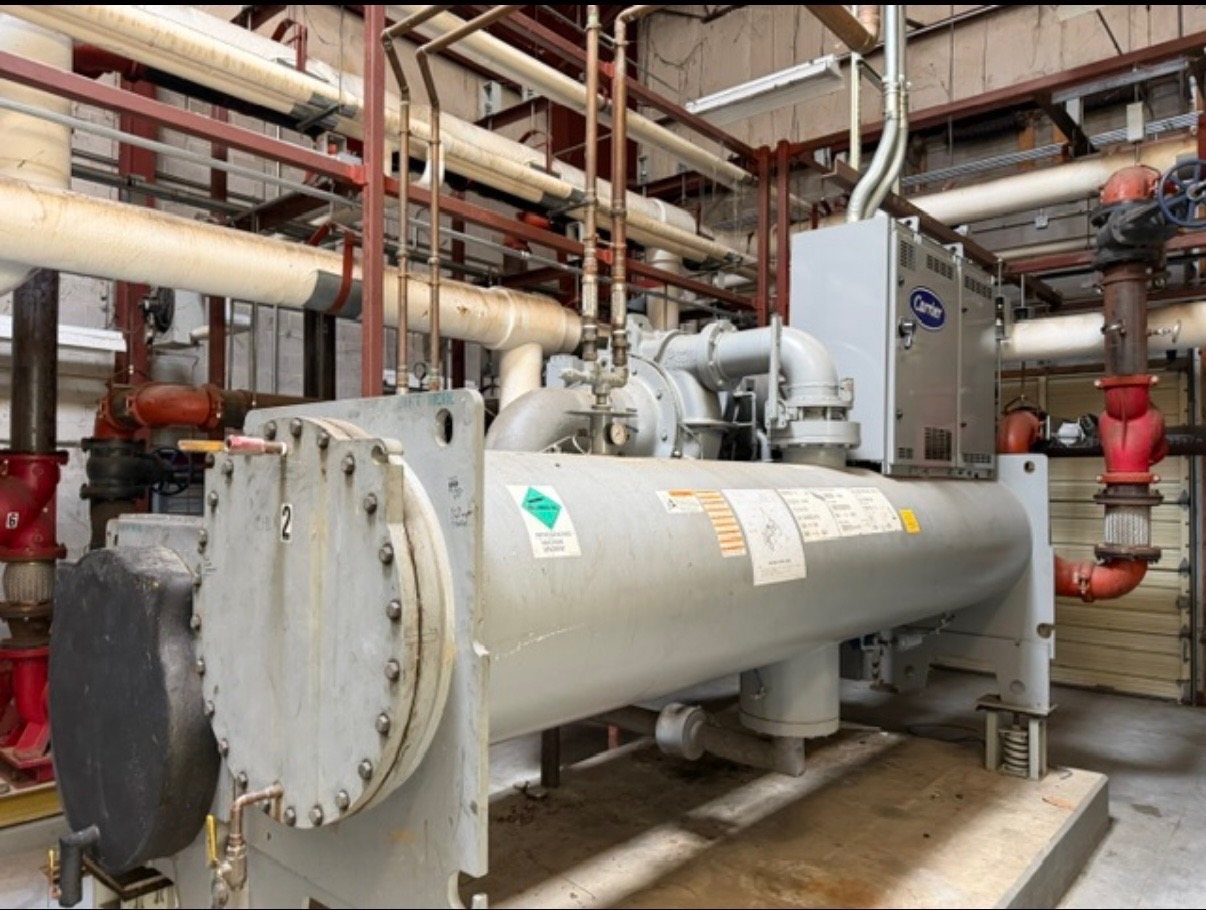
R-22 Chiller Buyers in Lake Charles, Louisiana
Offer and removal scope
If you have a used chiller identified with R-22 refrigerant in Lake Charles, Louisiana, we buy chillers rather than sell them. Share what you know for an upfront cash offer; no equipment testing is required. The buyer handles crane service, rigging, disconnects, refrigerant recovery, loading, hauling and freight, coordinating qualified personnel with the site. A precise inventory and an honest account of access restrictions help shape the removal plan.
Plan from the real address
The regional context for Lake Charles includes the I-10 corridor and the Calcasieu port and industrial area. It is in Calcasieu Parish. A large industrial facility may have specific gate, escort and work-area rules; share the rules for the actual location. Share the actual address, building and approved entrance where known. The buyer's team must assess the specific property rather than infer a clear route from a regional map. Include any restrictions on access to the chiller's machinery area so the qualified recovery team can plan around the site.
The route out of the building
The first obstacle may be inside the building rather than on the road. Tell the buyer where the unit sits, how it is reached and where a truck might be allowed to load. Identify narrow openings, overhead obstructions and any restricted travel paths from existing measurements. The buyer's professional team verifies the route and determines the handling plan for the specific equipment.
Identify the actual charge information
Photograph the refrigerant nameplate and any retrofit label; do not assume the original charge is still present. The original plate and a later conversion label may not agree. Send both with any dated records so the recovery team can determine what information applies to the machine as it stands; a brand or age alone is not proof of the current charge.
Two very different measurements
When a record says tons, ask whether that figure describes cooling output for one unit or for a group. It is not the load weight for rigging. Supply physical dimensions and a documented shipping or operating weight if known, and specify whether protrusions and separate cabinets are included. If the document does not say, let the buyer know rather than filling the gap with an estimate.
Crane and rigging considerations
The buyer handles the crane and rigging, with a professional lift plan based on the particular machine and site. Share documented weights, manufacturer lifting instructions and photos of visible lifting-point markings if available. Identify overhead wires, nearby structures, ground or floor limits and possible staging space. Do not select a lift point or attempt to separate components yourself; the rigger evaluates the actual conditions.
Provide the available records
Share available refrigerant service and recovery records with the removal team. Previous maintenance notes can identify reported changes or recovery, but gaps are common and should be marked as unknown. Do not connect gauges or attempt to establish the charge by operating the machine just to request an offer.
Freight begins at the gate
The buyer handles loading, hauling and freight as well as the rigging that gets the equipment to the truck. For planning, identify the actual loading area, gate width and any restrictions on large vehicles or staging. A regional highway may be nearby, but the last stretch into a property can still be constrained. The freight team assesses the actual route and load dimensions.
Identify the machine
When a plate is difficult to read, send the clearest safe photo available along with any relevant equipment schedule. Identify the particular machine in a room containing multiple units and note which numbers are incomplete. A buyer can use those starting points to ask focused follow-up questions without relying on a guess about model or age.
Plan for the actual circuit
Leave the circuit closed and coordinate recovery through appropriately qualified personnel; never vent refrigerant. The buyer arranges refrigerant recovery using appropriately qualified personnel in coordination with the site. The seller should leave valves and circuit connections untouched; the removal plan must account for the actual equipment and records. Keep the circuit closed and never release refrigerant.
What is actually included?
An equipment name may describe heat rejection, a compressor, or a modular system rather than the complete installation. Share exterior pictures of the whole machine, visible connections and any separate controls. Indicate which components are included and which must remain. If you are unsure whether the unit is air-cooled, water-cooled or configured another way, leave that question open for review.
Power and separate controls
An electrical schedule may identify voltage, phase, frequency and a remote starter even when the main machine is disconnected. Share the documents and safe exterior photos, noting whether controls are included or serve other units. The buyer coordinates qualified electrical disconnect personnel with the site. Do not open energized or closed cabinets, test circuits or disturb wiring to prepare a description.
Identify the interfaces
A photograph of visible piping can help the buyer understand the installation, but it cannot establish the contents of a line. Share labels, drawings and known site restrictions, including any process interface, and mark unknowns clearly. The buyer handles disconnects with qualified personnel in coordination with the facility's isolation and fluid-handling requirements.
Coordinate with the facility
Before removal, define what stays in service and who can authorize work at the property. Existing site rules may cover escorts, work windows, protected areas or shared utilities. The buyer arranges the removal team and coordinates with authorized personnel; the site supplies its requirements. Any window discussed is a planning input, not a promise that a particular date will be available.