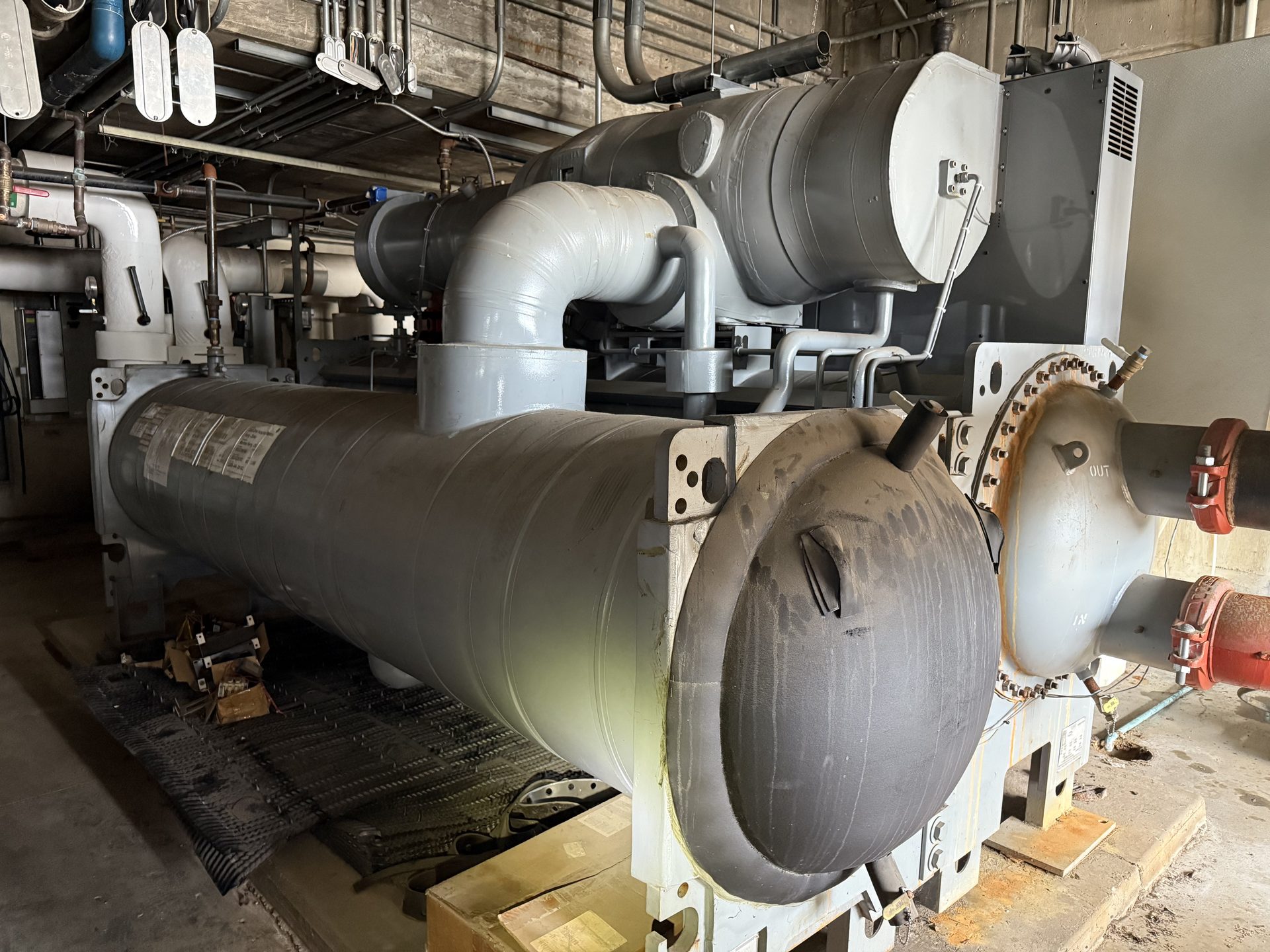
Chemical plant turnarounds Chiller Buyers in Lake Charles, Louisiana
A practical way to start
Have a surplus chiller associated with chemical plant turnarounds in Lake Charles, Louisiana to remove? We are chiller buyers, and a test run is not required to request an upfront cash offer. The buyer handles crane service, rigging, disconnects, refrigerant recovery, loading, hauling and freight. Share the machine's visible details and the site's known restrictions so the work can be coordinated with authorized personnel.
When the history is incomplete
A candid account is more helpful than a perfect history. Tell the buyer when the chiller last served the facility if known, what parts are missing and whether damage is visible from a safe location. An old repair record does not guarantee current performance, so label uncertain details accordingly. The buyer does not require a test run to review the equipment.
Define the shutdown inventory
Provide chiller nameplates and identify any process-fluid or secondary-loop connections from site records. Drawings or labels may distinguish ordinary chilled-water connections from process or secondary-fluid interfaces. If the service is unclear, provide the records and say so; a photo or brand name cannot establish the contents of a line.
The details worth sending
Give the buyer enough information to distinguish the machine from adjacent equipment: an overall photograph, a legible plate and the location of any separate controls included. The model and serial number are useful where visible, but a partial record is still a reasonable starting point. Mark any values copied from old documentation rather than the plate itself.
Cooling tons and transport size
If a modular bank is involved, a building's total capacity can obscure the size of each piece. State how many modules are offered and which nameplate rating applies to each, if visible. The freight team also needs the actual outside dimensions and documented weight: a cooling ton is a capacity measure, not the weight of a shipping load.
Coordinate the isolation boundaries
Ask authorized site personnel to identify contamination concerns and applicable isolation or decontamination requirements. The site must identify known contamination and its own isolation or decontamination requirements before a work plan is finalized. The buyer coordinates qualified disconnects rather than asking the seller to open or drain unknown lines.
Plan from the real address
The regional context for Lake Charles includes the I-10 corridor and the Calcasieu port and industrial area. It is in Calcasieu Parish. A large industrial facility may have specific gate, escort and work-area rules; share the rules for the actual location. Give the street address and the unit's position on the property; a regional highway does not establish which gate, route or loading area can be used at that site. Include the facility's approved access and outage requirements alongside the inventory, especially where other cooling equipment must stay in service.
Refrigerant records and recovery
Tell the buyer whether a refrigerant designation comes from a nameplate, a later conversion label or a service record. If the source is missing or the charge is unknown, say that plainly. The buyer handles recovery with qualified personnel. There is no reason for the seller to fit gauges, open a valve, mix refrigerants or release any contents.
Plan the disconnects safely
Provide the voltage, phase and frequency listed on an accessible nameplate or equipment schedule, if legible. Note any separate starter, drive or control enclosure and whether it is included or shared. Do not open a panel or handle wiring to collect these details. The buyer coordinates qualified disconnect personnel with authorized site staff, who identify isolation boundaries and any equipment that must remain energized.
Access and the approved work window
Coordinate lift paths, staging space and the removal window with the plant's turnaround team. A proposed lift path may cross active process areas or shared access routes. Explain the site's staging and work-window requirements so the buyer's riggers can assess them with authorized plant personnel rather than assuming an unobstructed move.
Information for the rigger
Give the buyer any available shipping weights, lifting drawings and pictures of the machine's surroundings. Explain known limits on crane setup, floor loading, overhead clearance or staging space, and note where information is unavailable. The buyer coordinates the crane and qualified riggers. An equipment plate or a general diagram is useful context, but it is not a substitute for a site-specific lift plan.
Access starts at the unit
Identify where the chiller sits relative to the building entrance and loading area, then mention any known obstacles along that path. A narrow door, low pipe, tight turn or roof parapet may matter more than distance to the road. Provide existing measurements or photographs when permitted. The buyer's riggers verify the actual route and do not rely on an assumed clear opening.
Loading and the road out
The relevant address for a pickup includes more than a postal code. Identify the truck entrance, security requirements and the point at which equipment can be loaded, if the site has selected one. Documented weight and physical dimensions are important to planning the load. The buyer handles loading, hauling and freight, coordinating the approach with the facility and rigging team.
Send the information on hand
A useful first message does not need every field completed. Identify the chiller and its location, send safe photographs and disclose known damage, missing records or access restrictions. The buyer provides an upfront cash offer without requiring equipment testing and handles the removal work in coordination with the site. Further details can be clarified as the actual scope is reviewed.