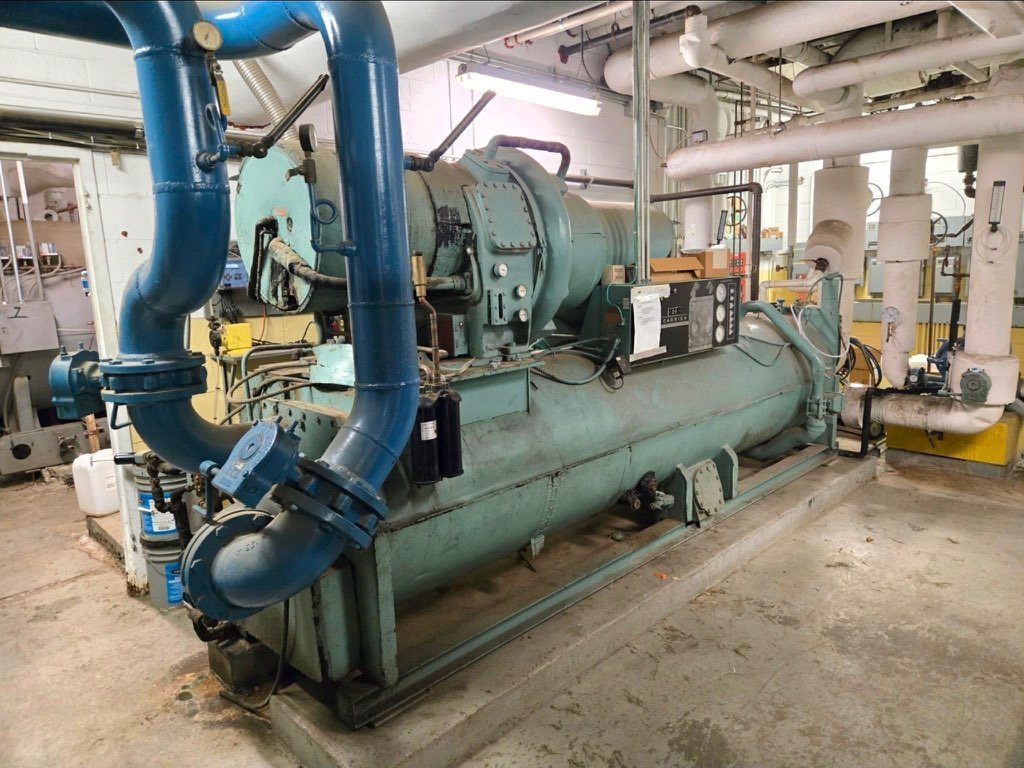
Daikin Chiller Buyers in Lake Charles, Louisiana
A buyer for your chiller
An owner with a used Daikin chiller in Lake Charles, Louisiana can begin with photographs and available records; no equipment testing is required. We buy chillers and provide an upfront cash offer. The buyer handles crane service, rigging, disconnects, refrigerant recovery, loading, hauling and freight, coordinating with authorized site personnel. An unknown detail is worth flagging; it does not need to be turned into a guess.
Where the equipment sits
The regional context for Lake Charles includes the I-10 corridor and the Calcasieu port and industrial area. It is in Calcasieu Parish. A large industrial facility may have specific gate, escort and work-area rules; share the rules for the actual location. Share the actual address, building and approved entrance where known. The buyer's team must assess the specific property rather than infer a clear route from a regional map. If a separate starter or control is included, show where it sits relative to the chiller and the path to the loading area.
Map the components
A nameplate tells only part of the story if controls, a starter or modules sit elsewhere. Identify the chiller in a wide photograph and indicate the components that belong to the proposed transaction. Note shared equipment or uncertainties. If the heat-rejection method or compressor type is unclear, available drawings and exterior photos are more useful than a confident guess.
Identify this manufacturer's unit
Record the Daikin model and serial numbers and photograph the capacity and refrigerant information on the unit nameplate. Use the actual unit plate rather than assuming that every machine in the same plant has the same refrigerant or rating. If a label was changed or a record is missing, send the photographs and explain the uncertainty.
Two very different measurements
If the equipment schedule has a tonnage, match it to the correct machine and indicate whether the number is for one unit or a combined plant. Also provide available dimensions and any documented shipping or operating weight. A cabinet that fits inside the building may still have attachments that limit its exit; capacity alone says nothing reliable about those clearances.
Power and separate controls
Record power details from labels or drawings already available, and say if the voltage or phase cannot be confirmed. A separate drive or starter may have its own enclosure and removal path, and it may not be part of the purchase. The buyer handles disconnects using qualified personnel, working with authorized staff who control the site's isolation procedures.
Photograph the equipment in context
Share photos showing the full unit, visible compressors or modules, and fluid connections without removing any covers. A module count and visible connection photos are especially useful if the equipment is arranged in a bank. Indicate whether the capacity you have is for one piece or the entire group, and do not remove guards to get a closer view.
Refrigerant records and recovery
Tell the buyer whether a refrigerant designation comes from a nameplate, a later conversion label or a service record. If the source is missing or the charge is unknown, say that plainly. The buyer handles recovery with qualified personnel. There is no reason for the seller to fit gauges, open a valve, mix refrigerants or release any contents.
Access and operating constraints
A chiller can be surplus while nearby systems remain essential. Ask the authorized facility representative to identify protected services, shared controls and the people who can approve access. The buyer arranges the work and coordinates the plan with the site, including any qualified disconnect and recovery personnel. Treat timing as subject to actual site approval, not a guaranteed removal date.
Document the route and lift
Mention rooftop location, screened enclosures or other access limits that could affect crane or freight planning. A roof screen or narrow service yard can alter the path from the unit to a truck. Give the buyer the building address, approximate location of the machine and any known limits on crane setup; the lifting team will assess the actual site.
From the chiller to the loading area
A rooftop, basement, mechanical room and fenced yard each create different access questions. Provide the actual building and unit location, any known opening dimensions and a safe photo of the route. Mention screens, parapets, overhead services or a tight corner if present. Site restrictions should be confirmed with authorized staff rather than inferred from a map or from the machine's size.
Information for the rigger
The seller can help the lift team by providing existing drawings, documented component weights and a safe view of the equipment's surroundings. Mention known overhead lines, roof edges, floor limits or restricted staging areas. The buyer handles crane service and rigging, with professionals determining the lift method and acceptable setup for the actual unit rather than relying on an estimated load.
Where can the truck load?
The relevant address for a pickup includes more than a postal code. Identify the truck entrance, security requirements and the point at which equipment can be loaded, if the site has selected one. Documented weight and physical dimensions are important to planning the load. The buyer handles loading, hauling and freight, coordinating the approach with the facility and rigging team.
A practical first message
Begin with the information that is readily available: a nameplate photo, an overall view, the equipment location and a description of access. The buyer can make an upfront cash offer without a test run. Point out missing records and any equipment that must remain; questions about the removal scope can then be resolved with the site before work is arranged.