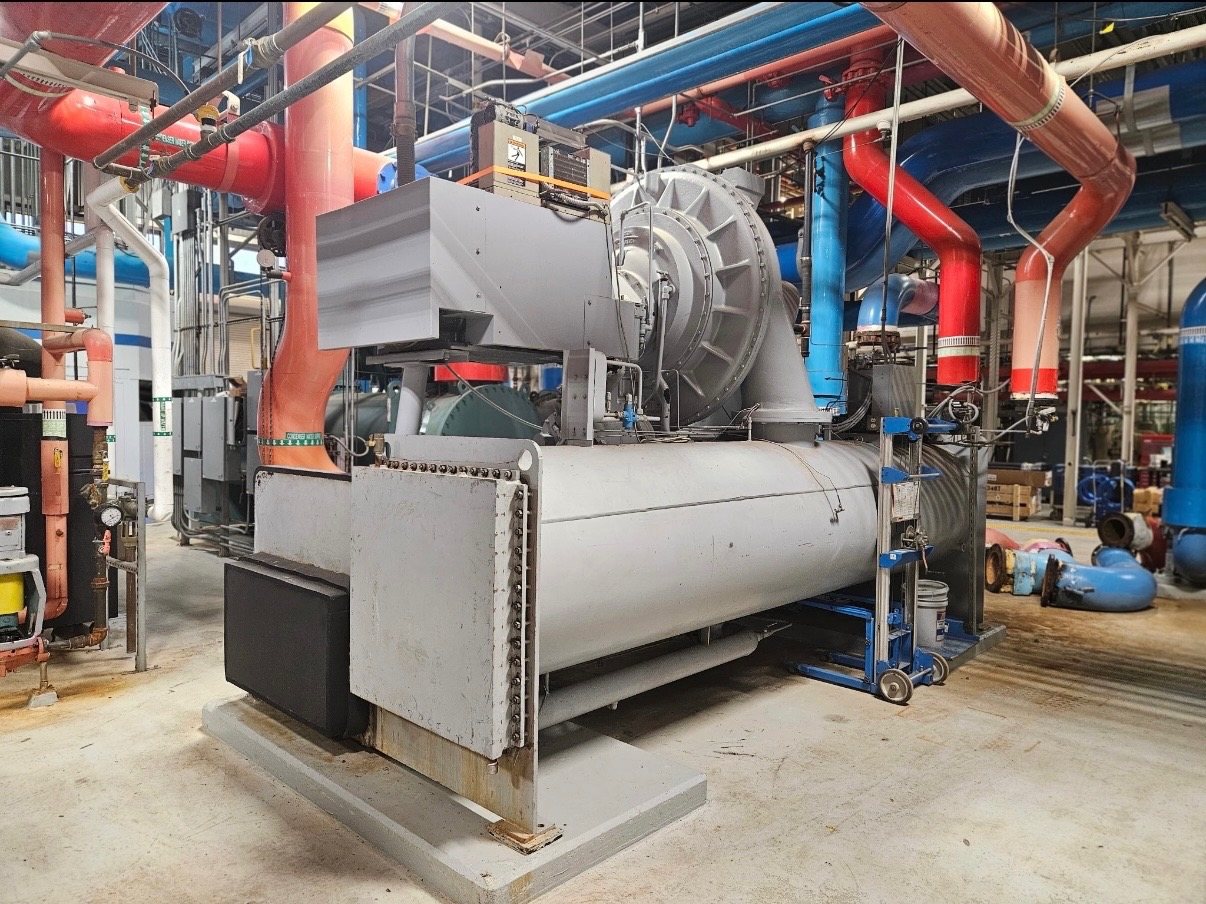
Smardt Chiller Buyers in Metairie, Louisiana
From surplus unit to removal
Have a used Smardt chiller in Metairie, Louisiana to remove? We are chiller buyers, and a test run is not required to request an upfront cash offer. The buyer handles crane service, rigging, disconnects, refrigerant recovery, loading, hauling and freight. Share the machine's visible details and the site's known restrictions so the work can be coordinated with authorized personnel.
The route out of the building
Identify where the chiller sits relative to the building entrance and loading area, then mention any known obstacles along that path. A narrow door, low pipe, tight turn or roof parapet may matter more than distance to the road. Provide existing measurements or photographs when permitted. The buyer's riggers verify the actual route and do not rely on an assumed clear opening.
Start with the unit's labels
Provide the Smardt model, serial number, capacity and refrigerant from the equipment nameplate where legible. If the building documentation refers to a group of chillers, identify the individual unit to which the plate belongs. A partial plate and a corresponding wide shot are still worth sharing when the complete record is unavailable.
Two very different measurements
A capacity on a plant schedule may cover several machines, while a module plate may describe only one. Identify which figure applies to the equipment being offered. For moving it, the more relevant information is the physical envelope, documented weight and any protruding connections. If those details are missing, say so; a cooling-ton figure cannot be converted into a dependable lift weight.
Crane and rigging considerations
If a unit is above grade or inside a constrained room, describe the possible route and any known structural or overhead limits. A safe photo of the surrounding area can help, along with unit-specific rigging documents. The buyer's rigging team assesses lift points, crane position and whether components can move as assembled. The seller is not expected to perform rigging or dismantling.
Record the actual arrangement
Share visible compressor and control photos and any documentation identifying the compressor arrangement without removing panels. The brand by itself does not confirm the compressor arrangement or the condition of the controls. Safe exterior pictures and the documents on hand let the buyer evaluate the equipment without asking anyone to expose electrical components.
From staging to hauling
A truck-ready plan begins with the site entrance and a realistic loading area. Tell the buyer about restricted gates, low overhead services, surface limits or delivery traffic that may affect access. Supply equipment dimensions and documented weight when available. The buyer arranges loading, hauling and freight; the route and vehicle arrangement depend on the actual load and property conditions.
Describe the configuration
Clarify what is included: the main chiller, any separate drive or starter, control cabinet and modules, as applicable. Some components may be shared with a machine that stays. A simple annotated photo or asset list is useful, even when you cannot identify every connection. The buyer can review the actual arrangement with the site rather than assuming every nearby cabinet belongs to the chiller.
Separate the scope from the assumptions
Note separate control or power components and the documented unit weight and access route for removal planning. Controls or power components may be located away from the main assembly or may serve more than one machine. Clarify ownership and inclusion, and identify any narrow openings between each included piece and the proposed truck position.
Electrical information for the team
Power information belongs in the inventory even when the chiller is already idle. Share a safe photo of the rating plate and existing electrical drawings if available; identify separate controls and missing information. The buyer handles electrical disconnects through qualified personnel, coordinated with the site's authorized staff. The seller should not switch, probe or dismantle electrical components to prepare for an offer.
Where the equipment sits
The regional context for Metairie includes greater New Orleans west of the city. It is in Jefferson Parish. A commercial or institutional property may have restricted loading space; give the actual entrance and dimensions of the removal path. Share the actual address, building and approved entrance where known. The buyer's team must assess the specific property rather than infer a clear route from a regional map. If a separate starter or control is included, show where it sits relative to the chiller and the path to the loading area.
Keep the circuit closed
A label and a service record can tell different parts of the chiller's refrigerant history. Send both, identify the machine they belong to, and note any uncertainty about the designation or quantity. The buyer coordinates appropriately qualified recovery personnel for the actual system. Leave valves and connections untouched and do not release refrigerant, even if the unit has been idle for years.
Keep remaining services in view
Explain who can grant entry to the property and who understands the machine's interfaces with the rest of the facility. Their input can clarify restricted work areas, ongoing cooling loads and any permitted removal window. The buyer handles the removal services and coordinates with authorized staff. Missing schedules or drawings can be discussed without committing the site to an unapproved outage.