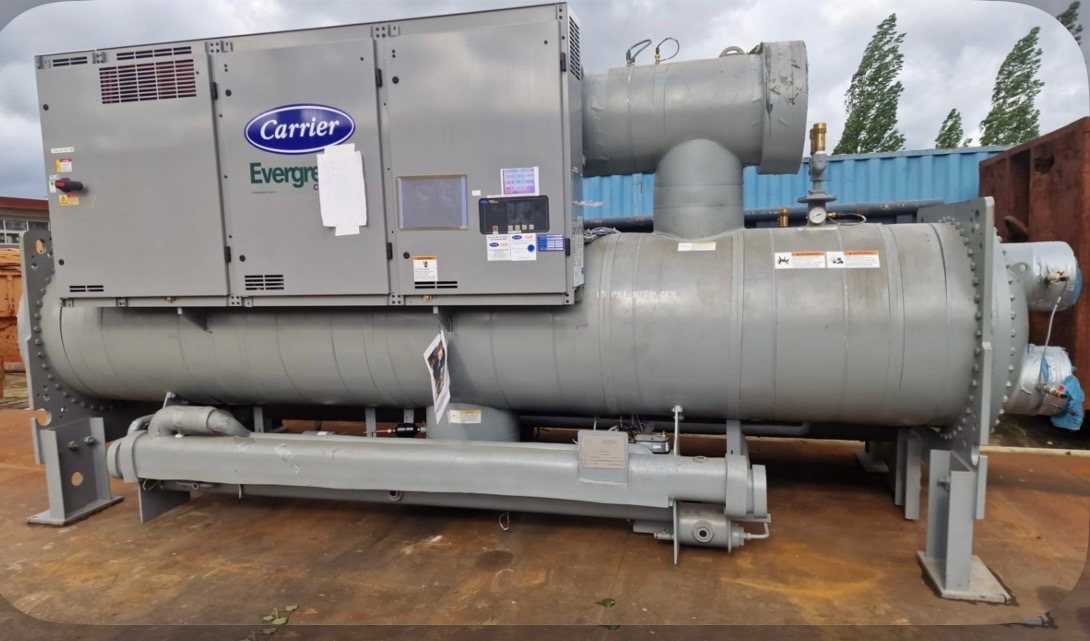
Water-cooled Chiller Buyers in Metairie, Louisiana
Offer and removal scope
Have a used water-cooled chiller in Metairie, Louisiana to remove? We are chiller buyers, and a test run is not required to request an upfront cash offer. The buyer handles crane service, rigging, disconnects, refrigerant recovery, loading, hauling and freight. Share the machine's visible details and the site's known restrictions so the work can be coordinated with authorized personnel.
Access starts at the unit
For an accurate removal discussion, include the street address, equipment location and the site's preferred truck entrance. A door measurement is useful, but the path can also be limited by a turn, low ceiling or floor transition. Describe known obstacles and share photographs where permitted. The buyer's riggers evaluate the route rather than assuming that the chiller will move intact.
Start with the visible configuration
Identify the chilled-water and condenser-water connections from labels or drawings if available. If labels are missing, send the drawing or a safe wide view and say that the connections are unidentified. A condenser-water loop and a chilled-water loop are not interchangeable, and other equipment may depend on either one.
Where the equipment sits
The regional context for Metairie includes greater New Orleans west of the city. It is in Jefferson Parish. A commercial or institutional property may have restricted loading space; give the actual entrance and dimensions of the removal path. Share the actual address, building and approved entrance where known. The buyer's team must assess the specific property rather than infer a clear route from a regional map. For this water-cooled unit, identify known shared condenser-water or chilled-water connections when describing the work area.
Measure the load, not just the rating
A truck and crane are selected around the real load, not the chiller's rated cooling tons. Send available length, width, height and documented weight for the machine and for any separate included enclosure. Also share the nameplate capacity so the buyer can identify the equipment. It is fine to say that dimensions or a weight still need confirmation.
Information for the rigger
Give the buyer any available shipping weights, lifting drawings and pictures of the machine's surroundings. Explain known limits on crane setup, floor loading, overhead clearance or staging space, and note where information is unavailable. The buyer coordinates the crane and qualified riggers. An equipment plate or a general diagram is useful context, but it is not a substitute for a site-specific lift plan.
Condition and associated components
Share visible shell condition, signs of external corrosion and any records on water treatment or tube maintenance. External photos and existing maintenance records are useful even if internal tube condition is not known. Do not open a shell to investigate; note visible issues and provide records with their dates if those records are available.
From staging to hauling
The buyer handles loading, hauling and freight as well as the rigging that gets the equipment to the truck. For planning, identify the actual loading area, gate width and any restrictions on large vehicles or staging. A regional highway may be nearby, but the last stretch into a property can still be constrained. The freight team assesses the actual route and load dimensions.
Match the plate to the unit
Give the buyer enough information to distinguish the machine from adjacent equipment: an overall photograph, a legible plate and the location of any separate controls included. The model and serial number are useful where visible, but a partial record is still a reasonable starting point. Mark any values copied from old documentation rather than the plate itself.
Removal considerations for this design
Note piping isolation points and any tower-loop connections so qualified personnel can coordinate draining and disconnects. A tower or common loop may serve machines that remain in operation. The buyer handles disconnects with qualified personnel, coordinating isolation and draining with the site so remaining services and fluid handling are addressed in the plan.
What is actually included?
A nameplate tells only part of the story if controls, a starter or modules sit elsewhere. Identify the chiller in a wide photograph and indicate the components that belong to the proposed transaction. Note shared equipment or uncertainties. If the heat-rejection method or compressor type is unclear, available drawings and exterior photos are more useful than a confident guess.
Report condition without a test
A photo of the whole machine, close views of visible wear and a short note about known faults provide useful context. If there was a shutdown or previous repair, include the date only when known and distinguish a recollection from a documented record. The buyer can review the information without asking you to run or test the chiller.
Electrical information for the team
Existing drawings and exterior photos can help identify electrical interfaces, including a remote starter or shared controls. Record plate voltage and phase only if safely visible; an unreadable value can remain unknown. The buyer arranges qualified electrical disconnects in coordination with the site, so there is no reason for the owner to expose conductors or test the system.
When the charge is uncertain
Refrigerant information affects the recovery plan, but the seller need not determine the contents by opening the circuit. Photograph safely visible labels and provide service or conversion records if they exist; tell the buyer about any known leak or missing information. The buyer arranges qualified recovery in coordination with the site. Never vent refrigerant or attempt to handle it yourself.
Agree on the work boundaries
An owner, facilities manager and building occupant may have different responsibilities. Identify who can approve access and isolation, and tell the buyer about any remaining cooling load or shared controls. The buyer coordinates qualified work and transport with the site. If an outage window has not been approved, describe it as undecided instead of committing another party to a date.