Carrier Chiller Buyers in Natchitoches, Louisiana
A practical way to start
An owner with a used Carrier chiller in Natchitoches, Louisiana can begin with photographs and available records; no equipment testing is required. We buy chillers and provide an upfront cash offer. The buyer handles crane service, rigging, disconnects, refrigerant recovery, loading, hauling and freight, coordinating with authorized site personnel. An unknown detail is worth flagging; it does not need to be turned into a guess.
Define the purchase scope
One photo can show several assets without showing which one is surplus. Mark the intended chiller on a wide image, then pair its plate with the same asset in the equipment list. Say whether associated controls or modules are part of the sale. If the owner has not decided what is included, flag that question for the buyer and site representative to resolve.
Identify this manufacturer's unit
Photograph the Carrier chiller nameplate and record its model, serial number and stated capacity if legible. If the plate is worn, send a wide photo that shows where it is located and transcribe only what remains legible. An equipment schedule may supply a missing model or capacity, but label the source so it is not mistaken for a reading from the plate.
Two very different measurements
The buyer needs two different kinds of size information. Rated cooling tons describe performance, whereas transport planning depends on the actual length, width, height and documented weight of each piece. Explain whether a figure covers the whole chiller or a single module and whether a starter or other enclosure is separate. Do not estimate a load weight from cooling capacity.
Identify shared power equipment
Record power details from labels or drawings already available, and say if the voltage or phase cannot be confirmed. A separate drive or starter may have its own enclosure and removal path, and it may not be part of the purchase. The buyer handles disconnects using qualified personnel, working with authorized staff who control the site's isolation procedures.
Photograph the equipment in context
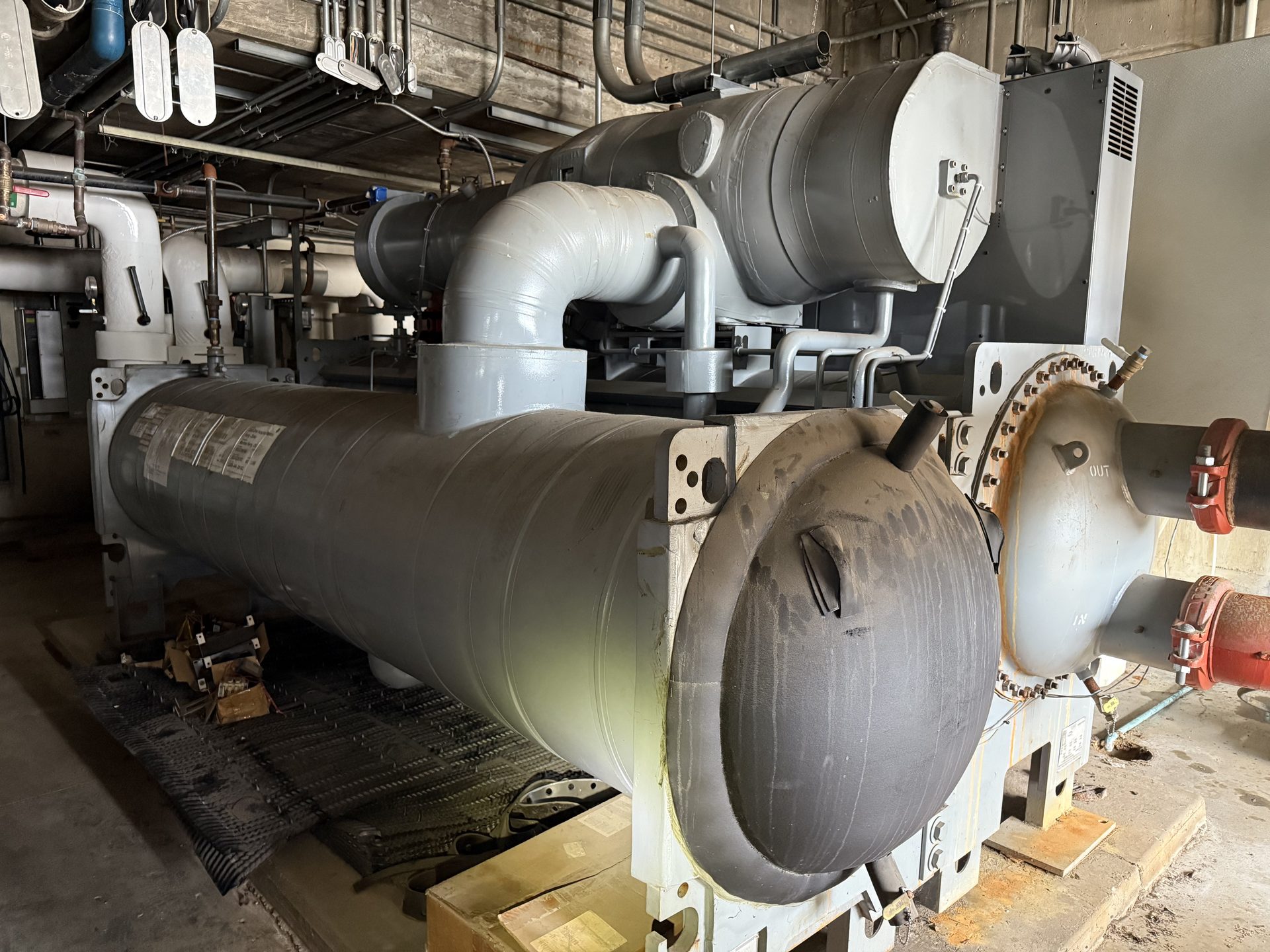
Share exterior photos of the compressor, heat exchangers and control cabinet so the configuration can be identified without running the unit. A view of the whole assembly alongside closer views helps distinguish equipment included with the chiller from neighboring plant equipment. Say whether a starter or controls are separate, if you know, and which pieces are included in the proposed sale.
Where the equipment sits
The regional context for Natchitoches includes north-central Louisiana, the Cane River area and nearby I-49. It is in Natchitoches Parish. A historic property or campus may have building and access restrictions; share the rules that actually apply to the machine being offered. Share the actual address, building and approved entrance where known. The buyer's team must assess the specific property rather than infer a clear route from a regional map. If a separate starter or control is included, show where it sits relative to the chiller and the path to the loading area.
Refrigerant records and recovery
Refrigerant information affects the recovery plan, but the seller need not determine the contents by opening the circuit. Photograph safely visible labels and provide service or conversion records if they exist; tell the buyer about any known leak or missing information. The buyer arranges qualified recovery in coordination with the site. Never vent refrigerant or attempt to handle it yourself.
Keep remaining services in view
An owner, facilities manager and building occupant may have different responsibilities. Identify who can approve access and isolation, and tell the buyer about any remaining cooling load or shared controls. The buyer coordinates qualified work and transport with the site. If an outage window has not been approved, describe it as undecided instead of committing another party to a date.
Document the route and lift
Provide any model-specific lifting or installation documents and note the route from the chiller to the loading area. The buyer can share the documents with the lifting team. A passage that looks wide enough at the doorway can still be restricted by a pipe, bend or change in floor level; mention those conditions instead of assuming the chiller will fit through intact.
Access starts at the unit
Describe the path from the machine to a loading area, not just the mailing address. Note the floor or roof, door widths, turns, overhead pipes, stairs and any changes in level that are known. Photographs of tight spots help the buyer's riggers assess the route. Share site rules for escorts, loading zones and permitted access; do not assume the chiller can leave through the nearest door.
The actual lifting constraints
A clear ground-level view does not guarantee a clear lift: overhead services, structural limits and the available crane position also matter. Send the buyer what the site knows about those constraints, along with documented dimensions and weight. Professional riggers arranged by the buyer develop the equipment-specific plan. Do not tie on lifting gear or attempt to shift the chiller yourself.
Loading and the road out
A truck-ready plan begins with the site entrance and a realistic loading area. Tell the buyer about restricted gates, low overhead services, surface limits or delivery traffic that may affect access. Supply equipment dimensions and documented weight when available. The buyer arranges loading, hauling and freight; the route and vehicle arrangement depend on the actual load and property conditions.