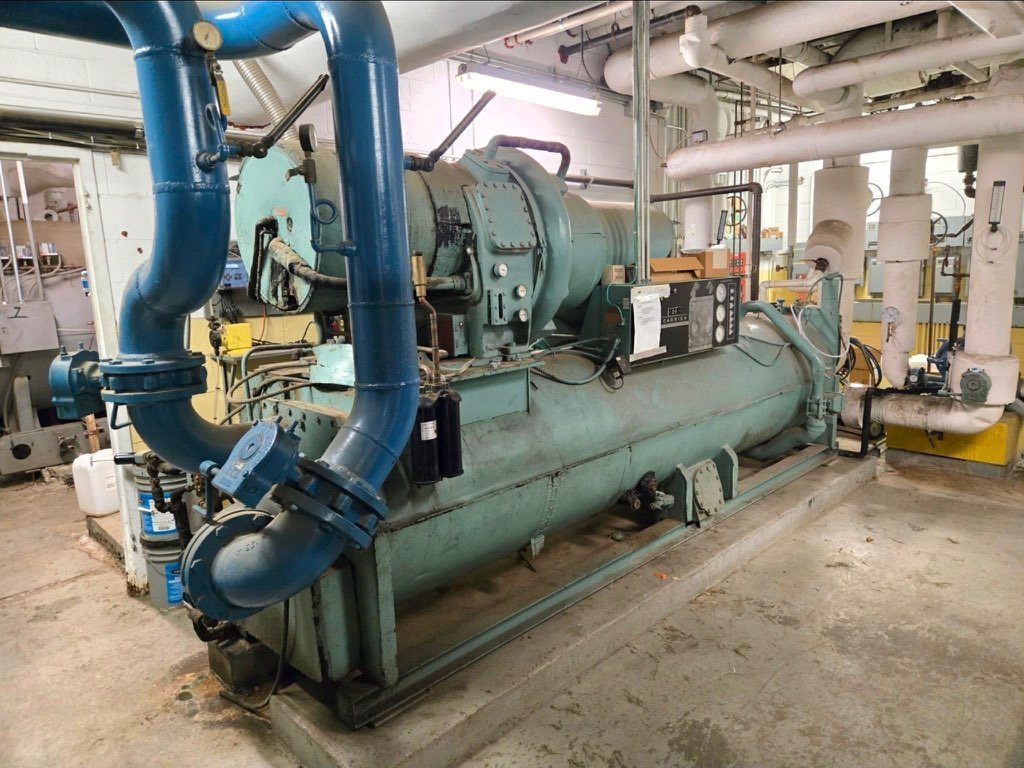
Screw Chiller Buyers in Natchitoches, Louisiana
From surplus unit to removal
An owner with a used screw chiller in Natchitoches, Louisiana can begin with photographs and available records; no equipment testing is required. We buy chillers and provide an upfront cash offer. The buyer handles crane service, rigging, disconnects, refrigerant recovery, loading, hauling and freight, coordinating with authorized site personnel. An unknown detail is worth flagging; it does not need to be turned into a guess.
Local context, actual site
The regional context for Natchitoches includes north-central Louisiana, the Cane River area and nearby I-49. It is in Natchitoches Parish. A historic property or campus may have building and access restrictions; share the rules that actually apply to the machine being offered. Share the actual address, building and approved entrance where known. The buyer's team must assess the specific property rather than infer a clear route from a regional map. For this screw chiller, identify accessible compressor and connection photos with the correct equipment location.
Openings, turns and overhead limits
A rooftop, basement, mechanical room and fenced yard each create different access questions. Provide the actual building and unit location, any known opening dimensions and a safe photo of the route. Mention screens, parapets, overhead services or a tight corner if present. Site restrictions should be confirmed with authorized staff rather than inferred from a map or from the machine's size.
Start with the visible configuration
Photograph the unit nameplate and visible compressor housings; note how many compressors are present if clearly visible. Do not assume the number of compressors from the word screw. If the housings or labels are not visible without opening a cover, say the count is unknown and provide a safe overall photo instead.
Capacity is not shipping weight
A truck and crane are selected around the real load, not the chiller's rated cooling tons. Send available length, width, height and documented weight for the machine and for any separate included enclosure. Also share the nameplate capacity so the buyer can identify the equipment. It is fine to say that dimensions or a weight still need confirmation.
Plan the lift around the site
A clear ground-level view does not guarantee a clear lift: overhead services, structural limits and the available crane position also matter. Send the buyer what the site knows about those constraints, along with documented dimensions and weight. Professional riggers arranged by the buyer develop the equipment-specific plan. Do not tie on lifting gear or attempt to shift the chiller yourself.
Condition and associated components
Share available maintenance history, including oil or compressor service records, without opening the system. An older service invoice can establish what work was reported, but it does not guarantee present condition. Flag incomplete maintenance history, known damage and missing parts honestly; no operating demonstration is needed to start a review.
Where can the truck load?
If a unit or separate cabinet has to be staged before loading, tell the buyer what space the facility can make available and any restrictions on its use. Share measurements, documented weights and the route through the gate. The buyer arranges loading, hauling and freight; its personnel assess whether the proposed route and vehicle access are workable for the actual load.
Identify the machine
Match the chiller to its records before sending an equipment list. A photo of the complete machine and a close view of the nameplate help distinguish it from neighboring assets; an equipment schedule can fill some gaps. Tell the buyer when a model, serial number or capacity comes from a drawing rather than the actual plate, and leave uncertain details marked as such.
Plan the interfaces and access
Identify visible fluid and electrical connections and note the equipment's location and removal clearances. Include any separate power or control cabinet if it belongs in the transaction, and identify lines that the site believes are shared. Qualified personnel plan the disconnects while the buyer's riggers evaluate the path and lift.
Map the components
The machine may be one unit in a bank or an individual assembly with separate controls. Describe what is present and what the owner intends to include. Air-cooled or water-cooled refers to heat rejection, while screw, scroll or centrifugal describes the compressor; those classifications can overlap. Do not infer a unit's exact configuration simply from a brand name.
Electrical information for the team
A site representative can point out which control cabinets belong to the chiller and which must remain. The buyer's qualified personnel coordinate the electrical disconnect with that representative. For the initial review, an accessible nameplate photograph or existing schedule is enough to communicate the listed power information; the seller should not probe, open or operate electrical equipment.
Labels, history and safe recovery
A refrigerant label should travel with any later retrofit or service documentation so the recovery team sees the whole recorded history. Give the stated quantity only if documented and describe known damage without touching the circuit. The buyer arranges appropriately qualified personnel for recovery; leave valves closed and never vent refrigerant to make a machine easier to move.
Coordinate with the facility
The facility controls access and knows which systems and areas must remain in service. Share the name or role of an authorized site contact, the approved access requirements and any shutdown window already established. The buyer coordinates disconnects, refrigerant recovery, rigging and freight with that contact. Do not assume a removal date until the necessary site and equipment details have been reviewed together.
Request an offer
A useful first message does not need every field completed. Identify the chiller and its location, send safe photographs and disclose known damage, missing records or access restrictions. The buyer provides an upfront cash offer without requiring equipment testing and handles the removal work in coordination with the site. Further details can be clarified as the actual scope is reviewed.