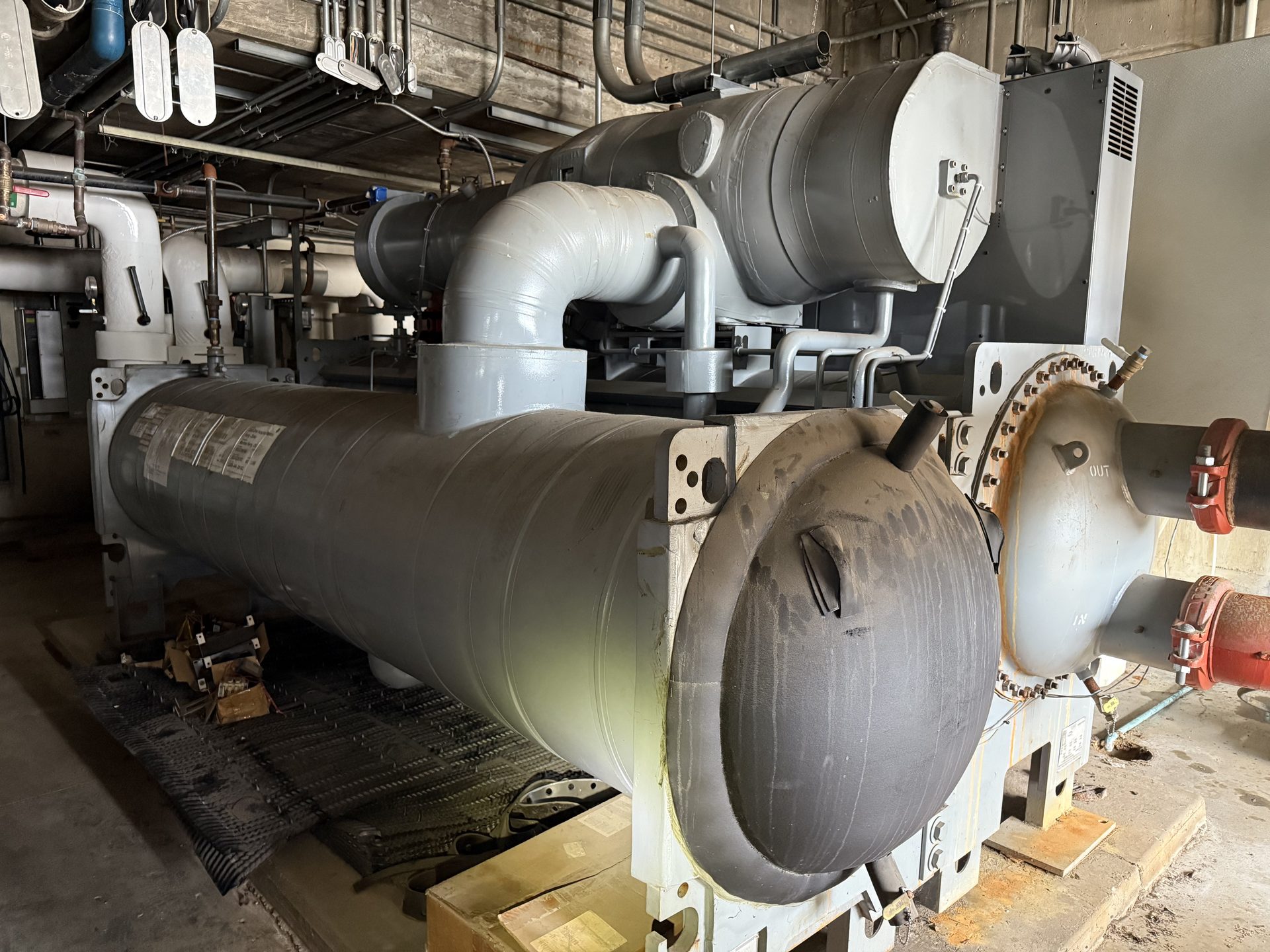
Carrier Chiller Buyers in Alexandria, Louisiana
Offer and removal scope
Have a used Carrier chiller in Alexandria, Louisiana to remove? We are chiller buyers, and a test run is not required to request an upfront cash offer. The buyer handles crane service, rigging, disconnects, refrigerant recovery, loading, hauling and freight. Share the machine's visible details and the site's known restrictions so the work can be coordinated with authorized personnel.
Location and site access
The regional context for Alexandria includes central Louisiana and the Red River and I-49 corridors. It is in Rapides Parish. If the property has multiple buildings, give the buyer the correct building and loading entrance as well as the unit's dimensions. Give the street address and the unit's position on the property; a regional highway does not establish which gate, route or loading area can be used at that site. If a separate starter or control is included, show where it sits relative to the chiller and the path to the loading area.
From the chiller to the loading area
The first obstacle may be inside the building rather than on the road. Tell the buyer where the unit sits, how it is reached and where a truck might be allowed to load. Identify narrow openings, overhead obstructions and any restricted travel paths from existing measurements. The buyer's professional team verifies the route and determines the handling plan for the specific equipment.
Identify this manufacturer's unit
Photograph the Carrier chiller nameplate and record its model, serial number and stated capacity if legible. If the plate is worn, send a wide photo that shows where it is located and transcribe only what remains legible. An equipment schedule may supply a missing model or capacity, but label the source so it is not mistaken for a reading from the plate.
Cooling tons and transport size
A truck and crane are selected around the real load, not the chiller's rated cooling tons. Send available length, width, height and documented weight for the machine and for any separate included enclosure. Also share the nameplate capacity so the buyer can identify the equipment. It is fine to say that dimensions or a weight still need confirmation.
Information for the rigger
The buyer handles the crane and rigging, with a professional lift plan based on the particular machine and site. Share documented weights, manufacturer lifting instructions and photos of visible lifting-point markings if available. Identify overhead wires, nearby structures, ground or floor limits and possible staging space. Do not select a lift point or attempt to separate components yourself; the rigger evaluates the actual conditions.
Record the actual arrangement
Share exterior photos of the compressor, heat exchangers and control cabinet so the configuration can be identified without running the unit. A view of the whole assembly alongside closer views helps distinguish equipment included with the chiller from neighboring plant equipment. Say whether a starter or controls are separate, if you know, and which pieces are included in the proposed sale.
Freight begins at the gate
The relevant address for a pickup includes more than a postal code. Identify the truck entrance, security requirements and the point at which equipment can be loaded, if the site has selected one. Documented weight and physical dimensions are important to planning the load. The buyer handles loading, hauling and freight, coordinating the approach with the facility and rigging team.
Map the components
A nameplate tells only part of the story if controls, a starter or modules sit elsewhere. Identify the chiller in a wide photograph and indicate the components that belong to the proposed transaction. Note shared equipment or uncertainties. If the heat-rejection method or compressor type is unclear, available drawings and exterior photos are more useful than a confident guess.
Separate the scope from the assumptions
Provide any model-specific lifting or installation documents and note the route from the chiller to the loading area. The buyer can share the documents with the lifting team. A passage that looks wide enough at the doorway can still be restricted by a pipe, bend or change in floor level; mention those conditions instead of assuming the chiller will fit through intact.
Identify shared power equipment
An electrical schedule may identify voltage, phase, frequency and a remote starter even when the main machine is disconnected. Share the documents and safe exterior photos, noting whether controls are included or serve other units. The buyer coordinates qualified electrical disconnect personnel with the site. Do not open energized or closed cabinets, test circuits or disturb wiring to prepare a description.
Keep the circuit closed
A refrigerant label should travel with any later retrofit or service documentation so the recovery team sees the whole recorded history. Give the stated quantity only if documented and describe known damage without touching the circuit. The buyer arranges appropriately qualified personnel for recovery; leave valves closed and never vent refrigerant to make a machine easier to move.
Access and operating constraints
An owner, facilities manager and building occupant may have different responsibilities. Identify who can approve access and isolation, and tell the buyer about any remaining cooling load or shared controls. The buyer coordinates qualified work and transport with the site. If an outage window has not been approved, describe it as undecided instead of committing another party to a date.
Request an offer
Begin with the information that is readily available: a nameplate photo, an overall view, the equipment location and a description of access. The buyer can make an upfront cash offer without a test run. Point out missing records and any equipment that must remain; questions about the removal scope can then be resolved with the site before work is arranged.