Carrier Chiller Buyers in New Iberia, Louisiana
A buyer for your chiller
We purchase a used Carrier chiller in New Iberia, Louisiana; we do not sell chillers. The process starts with an upfront cash offer based on the information available, with no equipment test required. The buyer handles crane service, rigging, disconnects, refrigerant recovery, loading, hauling and freight. Site staff and appropriately qualified personnel coordinate the work around actual equipment and facility constraints.
Two very different measurements
The buyer needs two different kinds of size information. Rated cooling tons describe performance, whereas transport planning depends on the actual length, width, height and documented weight of each piece. Explain whether a figure covers the whole chiller or a single module and whether a starter or other enclosure is separate. Do not estimate a load weight from cooling capacity.
Identify this manufacturer's unit
Photograph the Carrier chiller nameplate and record its model, serial number and stated capacity if legible. If the plate is worn, send a wide photo that shows where it is located and transcribe only what remains legible. An equipment schedule may supply a missing model or capacity, but label the source so it is not mistaken for a reading from the plate.
Power and separate controls
Provide the voltage, phase and frequency listed on an accessible nameplate or equipment schedule, if legible. Note any separate starter, drive or control enclosure and whether it is included or shared. Do not open a panel or handle wiring to collect these details. The buyer coordinates qualified disconnect personnel with authorized site staff, who identify isolation boundaries and any equipment that must remain energized.
Keep the circuit closed
A retired chiller can still contain refrigerant, so its status should not be inferred from its operating history. Provide the safely visible designation and any known service or recovery notes, including gaps. The buyer coordinates the recovery work through appropriately qualified personnel; the seller leaves the circuit closed and does not vent or transfer refrigerant.
Photograph the equipment in context
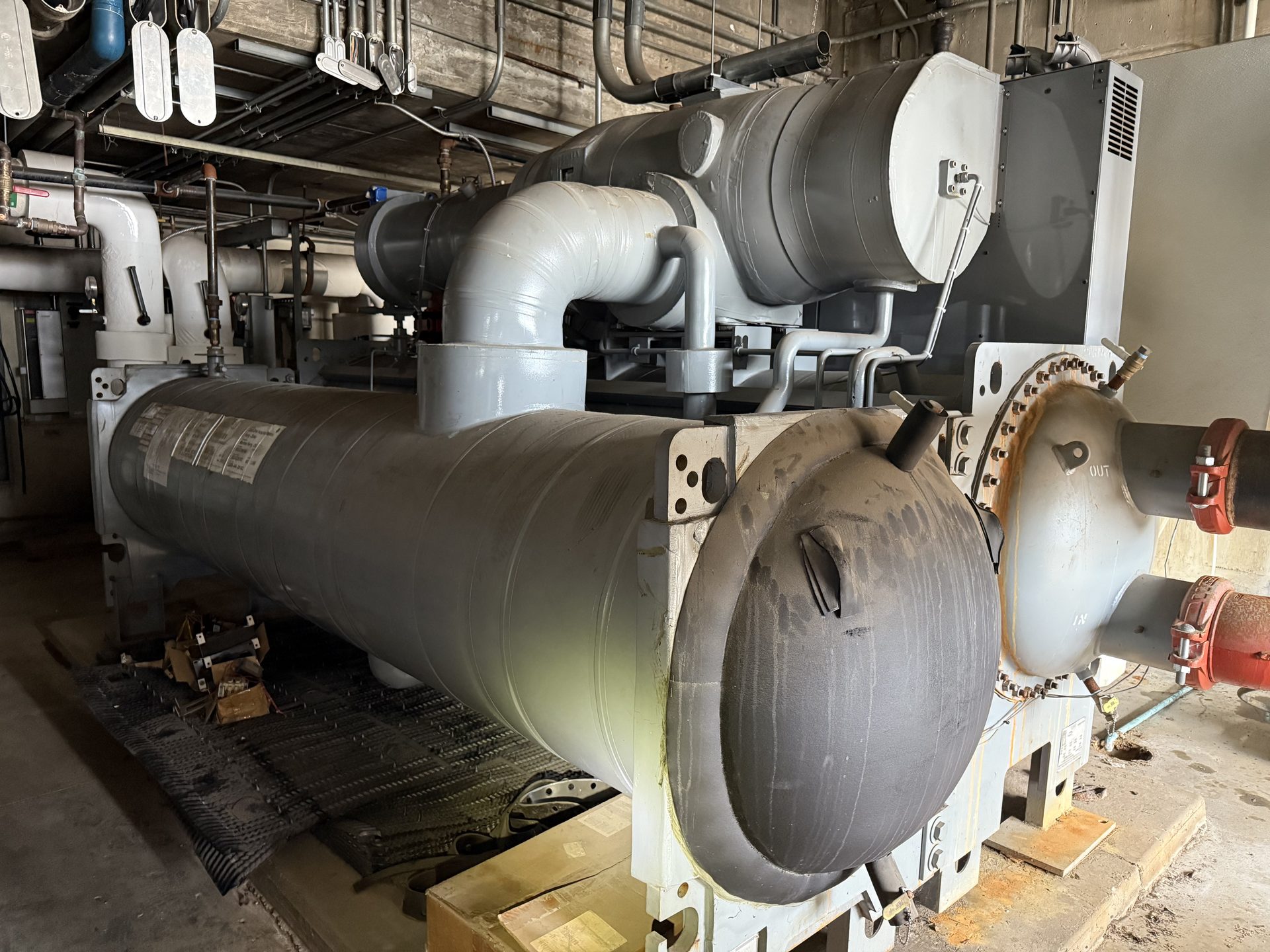
Share exterior photos of the compressor, heat exchangers and control cabinet so the configuration can be identified without running the unit. A view of the whole assembly alongside closer views helps distinguish equipment included with the chiller from neighboring plant equipment. Say whether a starter or controls are separate, if you know, and which pieces are included in the proposed sale.
Plan from the real address
The regional context for New Iberia includes Acadiana and Bayou Teche. It is in Iberia Parish. Where applicable, distinguish food-process cooling from ordinary building air conditioning, and identify any process connections that the site must manage. A regional route or facility category cannot establish the conditions at a particular property. Provide the street address, building or yard location, and any known gate, loading or access restrictions for the actual chiller. If a separate starter or control is included, show where it sits relative to the chiller and the path to the loading area.
Keep remaining services in view
Before removal, define what stays in service and who can authorize work at the property. Existing site rules may cover escorts, work windows, protected areas or shared utilities. The buyer arranges the removal team and coordinates with authorized personnel; the site supplies its requirements. Any window discussed is a planning input, not a promise that a particular date will be available.
The route out of the building
For an accurate removal discussion, include the street address, equipment location and the site's preferred truck entrance. A door measurement is useful, but the path can also be limited by a turn, low ceiling or floor transition. Describe known obstacles and share photographs where permitted. The buyer's riggers evaluate the route rather than assuming that the chiller will move intact.
Document the route and lift
Provide any model-specific lifting or installation documents and note the route from the chiller to the loading area. The buyer can share the documents with the lifting team. A passage that looks wide enough at the doorway can still be restricted by a pipe, bend or change in floor level; mention those conditions instead of assuming the chiller will fit through intact.
Information for the rigger
The buyer handles the crane and rigging, with a professional lift plan based on the particular machine and site. Share documented weights, manufacturer lifting instructions and photos of visible lifting-point markings if available. Identify overhead wires, nearby structures, ground or floor limits and possible staging space. Do not select a lift point or attempt to separate components yourself; the rigger evaluates the actual conditions.
From staging to hauling
Moving a chiller off its foundation and getting it onto a truck are separate planning steps. Show the proposed staging and loading area, identify any site traffic restrictions and share the measurements you have. The buyer coordinates loading, hauling and freight with the riggers. If the route or truck position is unknown, say so rather than assuming a particular vehicle will fit.
Start with what you know
To request an upfront cash offer, send the buyer the equipment details and photographs you already have, together with the location and site contact. A missing serial number, incomplete service history or unknown refrigerant can be noted rather than guessed. No equipment testing is required. The buyer reviews the information and coordinates the removal scope and site requirements with the authorized representative.