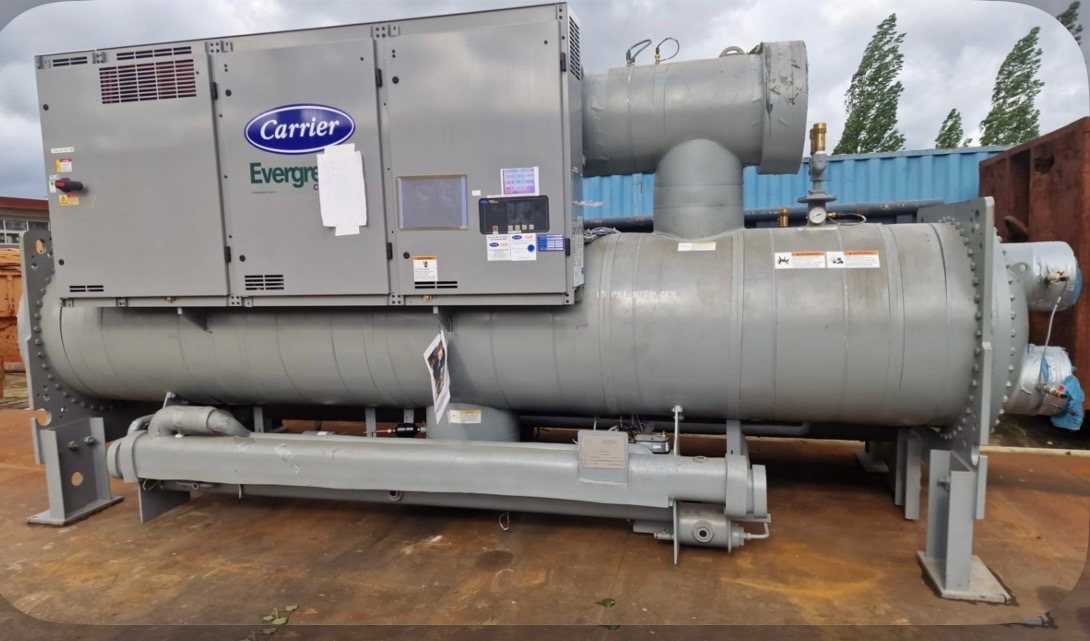
McQuay Chiller Buyers in New Iberia, Louisiana
A practical way to start
We purchase a used McQuay chiller in New Iberia, Louisiana; we do not sell chillers. The process starts with an upfront cash offer based on the information available, with no equipment test required. The buyer handles crane service, rigging, disconnects, refrigerant recovery, loading, hauling and freight. Site staff and appropriately qualified personnel coordinate the work around actual equipment and facility constraints.
What you can see safely
It is fine to say that operating condition is unknown. Send the records the site already has, note visible exterior damage and identify components that are absent or excluded. Avoid drawing conclusions about internal condition from appearance alone. There is no need to energize the chiller, connect test equipment or remove covers in order to request an offer.
Identify this manufacturer's unit
Photograph the McQuay nameplate and any retrofit labels so the actual model and listed refrigerant can be checked. A retrofit label can differ from the original plate, so provide both rather than choosing the number that looks newer. If a plate is missing, available drawings and wide photographs can still help identify the particular chiller.
Cooling tons and transport size
The buyer needs two different kinds of size information. Rated cooling tons describe performance, whereas transport planning depends on the actual length, width, height and documented weight of each piece. Explain whether a figure covers the whole chiller or a single module and whether a starter or other enclosure is separate. Do not estimate a load weight from cooling capacity.
Refrigerant records and recovery
A refrigerant label should travel with any later retrofit or service documentation so the recovery team sees the whole recorded history. Give the stated quantity only if documented and describe known damage without touching the circuit. The buyer arranges appropriately qualified personnel for recovery; leave valves closed and never vent refrigerant to make a machine easier to move.
Record the actual arrangement
Share available service records and photos of the chiller's compressor, heat exchangers and controls; do not start it for an offer. Records of past service are useful even when they do not prove current operating condition. Describe what you know, such as an old repair or a missing control, without opening the machine, energizing it or promising that it will run.
Plan from the real address
The regional context for New Iberia includes Acadiana and Bayou Teche. It is in Iberia Parish. Where applicable, distinguish food-process cooling from ordinary building air conditioning, and identify any process connections that the site must manage. Give the street address and the unit's position on the property; a regional highway does not establish which gate, route or loading area can be used at that site. If a separate starter or control is included, show where it sits relative to the chiller and the path to the loading area.
Power and separate controls
Existing drawings and exterior photos can help identify electrical interfaces, including a remote starter or shared controls. Record plate voltage and phase only if safely visible; an unreadable value can remain unknown. The buyer arranges qualified electrical disconnects in coordination with the site, so there is no reason for the owner to expose conductors or test the system.
Access and operating constraints
The facility controls access and knows which systems and areas must remain in service. Share the name or role of an authorized site contact, the approved access requirements and any shutdown window already established. The buyer coordinates disconnects, refrigerant recovery, rigging and freight with that contact. Do not assume a removal date until the necessary site and equipment details have been reviewed together.
Document the route and lift
Flag missing data plates, obsolete-looking controls or tightly enclosed equipment so identification and removal can be planned. An enclosed location can make both identification and the extraction route harder to assess. Share room openings, overhead obstacles and a photo of the installed unit; the buyer's riggers can determine what further information is needed.
The actual lifting constraints
Give the buyer any available shipping weights, lifting drawings and pictures of the machine's surroundings. Explain known limits on crane setup, floor loading, overhead clearance or staging space, and note where information is unavailable. The buyer coordinates the crane and qualified riggers. An equipment plate or a general diagram is useful context, but it is not a substitute for a site-specific lift plan.
Openings, turns and overhead limits
A facility address can contain more than one gate, building and equipment room. Specify the right entrance and unit location, along with any escort or vehicle restrictions known to the site. If a roof or indoor route is involved, provide opening dimensions and photographs from safe locations. The removal team will assess turns, floor transitions and overhead clearance as well as the doorway.
From staging to hauling
Moving a chiller off its foundation and getting it onto a truck are separate planning steps. Show the proposed staging and loading area, identify any site traffic restrictions and share the measurements you have. The buyer coordinates loading, hauling and freight with the riggers. If the route or truck position is unknown, say so rather than assuming a particular vehicle will fit.