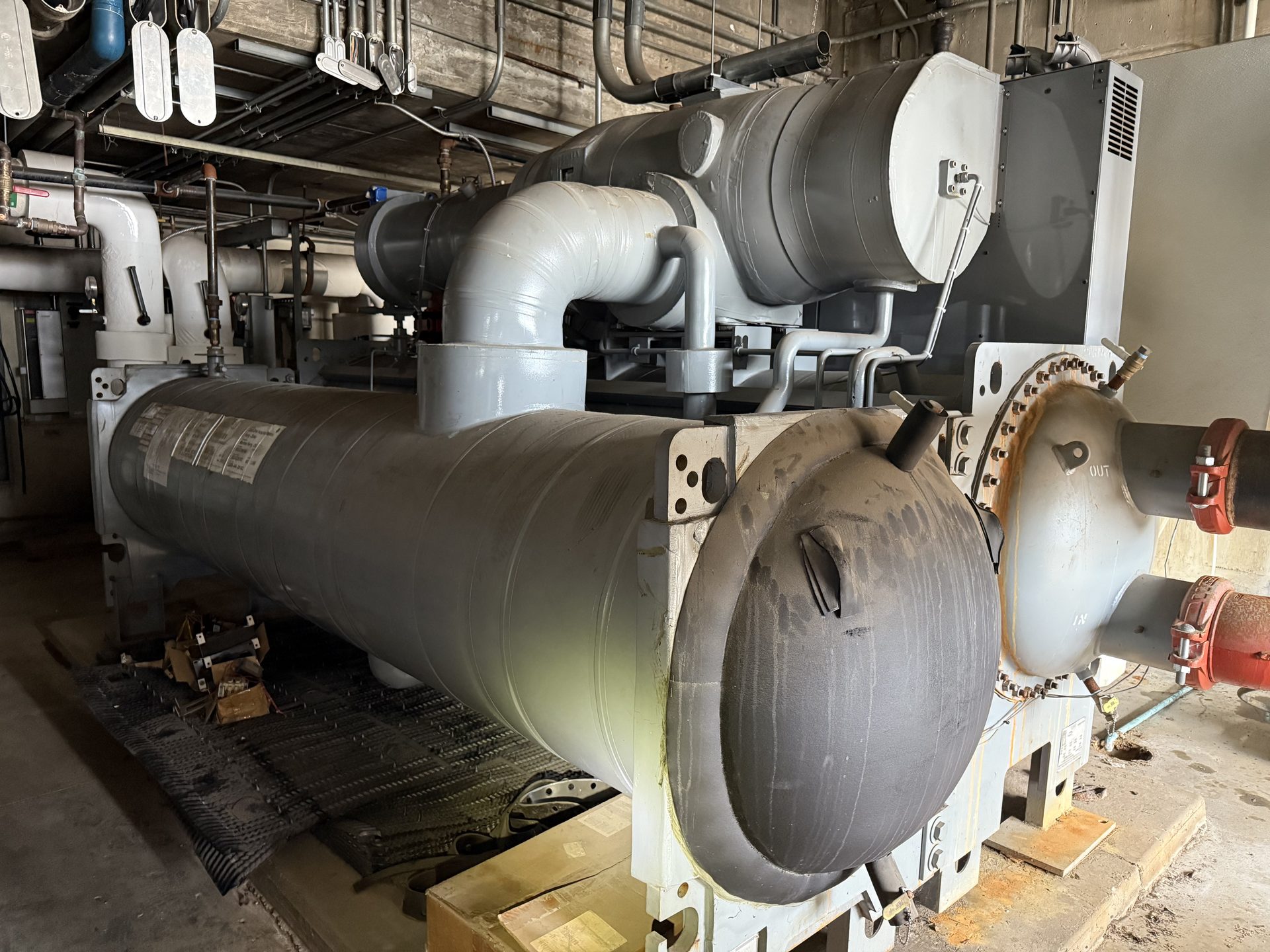
Air-cooled Chiller Buyers in New Iberia, Louisiana
A buyer for your chiller
Have a used air-cooled chiller in New Iberia, Louisiana to remove? We are chiller buyers, and a test run is not required to request an upfront cash offer. The buyer handles crane service, rigging, disconnects, refrigerant recovery, loading, hauling and freight. Share the machine's visible details and the site's known restrictions so the work can be coordinated with authorized personnel.
Match the plate to the unit
Start with the main nameplate: a legible model, serial number, manufacturer and rated capacity can anchor the review. A wide photo showing the plate's location is useful if several machines are close together. Include a separate control or starter plate only if visible safely, and say when a number cannot be read. Do not open a cabinet or remove a guard to obtain information.
Start with the visible configuration
Share photos of condenser coils, fans and visible guards, noting any exterior damage or corrosion. Photograph from a safe position outside the enclosure, without moving guards or reaching into fans. Describe visible damage as an observation, not a diagnosis; the buyer does not need the unit started to review the information.
Capacity is not shipping weight
When a record says tons, ask whether that figure describes cooling output for one unit or for a group. It is not the load weight for rigging. Supply physical dimensions and a documented shipping or operating weight if known, and specify whether protrusions and separate cabinets are included. If the document does not say, let the buyer know rather than filling the gap with an estimate.
Define the purchase scope
A list of assets is especially useful when one room contains multiple similar chillers. Pair each plate photo with a location and say which machine, modules and separate cabinets are included. Identify anything shared or excluded. A plant-wide schedule can accompany the list, but a combined cooling total should not be presented as the rating of each individual unit.
Details that affect the review
Provide the unit dimensions and whether it is on a roof, pad or elevated structure. A roof, raised support and ground-level pad present different access questions. Include the height and extent of nearby screens or parapets if known, and say whether the stated dimensions include protruding parts.
Location and site access
The regional context for New Iberia includes Acadiana and Bayou Teche. It is in Iberia Parish. Where applicable, distinguish food-process cooling from ordinary building air conditioning, and identify any process connections that the site must manage. A regional route or facility category cannot establish the conditions at a particular property. Provide the street address, building or yard location, and any known gate, loading or access restrictions for the actual chiller. If this air-cooled chiller is on a roof, report any known screens or parapets along with the possible crane setup area.
Keep the circuit closed
Share the refrigerant designation and charge quantity from the plate or records if available, along with any retrofit label. The original plate does not necessarily describe a later conversion, and an unknown charge should stay unknown until qualified personnel assess it. The buyer handles refrigerant recovery with appropriately qualified personnel. Keep the circuit closed: do not attach gauges, transfer or vent refrigerant.
Identify shared power equipment
An electrical schedule may identify voltage, phase, frequency and a remote starter even when the main machine is disconnected. Share the documents and safe exterior photos, noting whether controls are included or serve other units. The buyer coordinates qualified electrical disconnect personnel with the site. Do not open energized or closed cabinets, test circuits or disturb wiring to prepare a description.
Account for the equipment path
Flag overhead wires, parapets, crane access and any restricted loading route before removal planning. The buyer's rigger assesses the reach, clearance and truck position for the specific lift. A clear photo of the surroundings and any known underground or surface restrictions is more useful than assuming that a crane can simply park beside the unit.
Coordinate with the facility
The facility controls access and knows which systems and areas must remain in service. Share the name or role of an authorized site contact, the approved access requirements and any shutdown window already established. The buyer coordinates disconnects, refrigerant recovery, rigging and freight with that contact. Do not assume a removal date until the necessary site and equipment details have been reviewed together.
Crane and rigging considerations
The buyer handles the crane and rigging, with a professional lift plan based on the particular machine and site. Share documented weights, manufacturer lifting instructions and photos of visible lifting-point markings if available. Identify overhead wires, nearby structures, ground or floor limits and possible staging space. Do not select a lift point or attempt to separate components yourself; the rigger evaluates the actual conditions.
Openings, turns and overhead limits
A facility address can contain more than one gate, building and equipment room. Specify the right entrance and unit location, along with any escort or vehicle restrictions known to the site. If a roof or indoor route is involved, provide opening dimensions and photographs from safe locations. The removal team will assess turns, floor transitions and overhead clearance as well as the doorway.
From staging to hauling
The buyer handles loading, hauling and freight as well as the rigging that gets the equipment to the truck. For planning, identify the actual loading area, gate width and any restrictions on large vehicles or staging. A regional highway may be nearby, but the last stretch into a property can still be constrained. The freight team assesses the actual route and load dimensions.
Send the information on hand
Begin with the information that is readily available: a nameplate photo, an overall view, the equipment location and a description of access. The buyer can make an upfront cash offer without a test run. Point out missing records and any equipment that must remain; questions about the removal scope can then be resolved with the site before work is arranged.