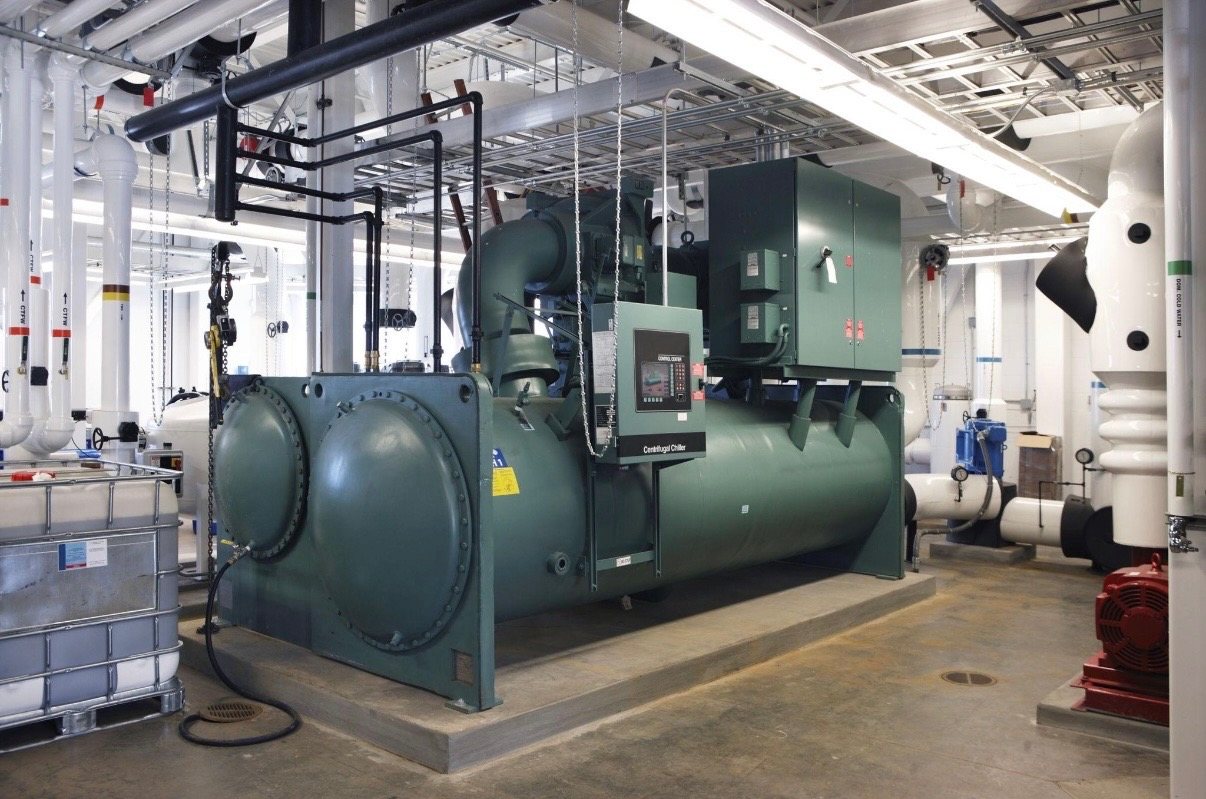
Centrifugal Chiller Buyers in Pineville, Louisiana
Offer and removal scope
If you have a used centrifugal chiller in Pineville, Louisiana, we buy chillers rather than sell them. Share what you know for an upfront cash offer; no equipment testing is required. The buyer handles crane service, rigging, disconnects, refrigerant recovery, loading, hauling and freight, coordinating qualified personnel with the site. A precise inventory and an honest account of access restrictions help shape the removal plan.
Agree on the work boundaries
A chiller can be surplus while nearby systems remain essential. Ask the authorized facility representative to identify protected services, shared controls and the people who can approve access. The buyer arranges the work and coordinates the plan with the site, including any qualified disconnect and recovery personnel. Treat timing as subject to actual site approval, not a guaranteed removal date.
Identify the connections and machine
Share nameplate photos and any available records identifying the compressor, refrigerant and rated cooling capacity. Capacity and refrigerant are properties of the specific machine, not something to infer from the compressor category. An old equipment schedule or a partial plate is useful when clearly marked as incomplete or unverified.
Make the equipment list clear
Define the boundaries of the proposed purchase before arranging a lift. Photograph the machine in place, list any included starter or controls, and mark equipment that will remain. For a bank, distinguish individual modules from the total system. When ownership or inclusion of a component is uncertain, tell the buyer and resolve it with the authorized site representative.
Match the plate to the unit
Start with the main nameplate: a legible model, serial number, manufacturer and rated capacity can anchor the review. A wide photo showing the plate's location is useful if several machines are close together. Include a separate control or starter plate only if visible safely, and say when a number cannot be read. Do not open a cabinet or remove a guard to obtain information.
Details that affect the review
Identify separate starter, drive or control cabinets if present and say whether they are included. A starter or drive can be physically separate and may not be obvious in a picture of the chiller. Mark which cabinets belong to the machine, what is included and whether any controls also serve equipment that will remain.
Location and site access
The regional context for Pineville includes the east side of the Red River across from Alexandria. It is in Rapides Parish. Tell the buyer the equipment building and entrance, and flag any known bridge or site-routing constraint for the freight team to review. Share the actual address, building and approved entrance where known. The buyer's team must assess the specific property rather than infer a clear route from a regional map. For this centrifugal machine, describe the path for the shell and any separate starter or drive that is included.
Power and separate controls
An electrical schedule may identify voltage, phase, frequency and a remote starter even when the main machine is disconnected. Share the documents and safe exterior photos, noting whether controls are included or serve other units. The buyer coordinates qualified electrical disconnect personnel with the site. Do not open energized or closed cabinets, test circuits or disturb wiring to prepare a description.
Keep the circuit closed
Tell the buyer whether a refrigerant designation comes from a nameplate, a later conversion label or a service record. If the source is missing or the charge is unknown, say that plainly. The buyer handles recovery with qualified personnel. There is no reason for the seller to fit gauges, open a valve, mix refrigerants or release any contents.
Plan the interfaces and access
Document shell dimensions and available equipment-room openings; any disassembly should be planned by qualified personnel for that unit. Measure only where safely accessible and share original drawings when available. Door size alone may not describe the full route: bends, overhead services and floor load limits can determine whether the proposed path needs further assessment.
Measure the load, not just the rating
The buyer needs two different kinds of size information. Rated cooling tons describe performance, whereas transport planning depends on the actual length, width, height and documented weight of each piece. Explain whether a figure covers the whole chiller or a single module and whether a starter or other enclosure is separate. Do not estimate a load weight from cooling capacity.
The route out of the building
A rooftop, basement, mechanical room and fenced yard each create different access questions. Provide the actual building and unit location, any known opening dimensions and a safe photo of the route. Mention screens, parapets, overhead services or a tight corner if present. Site restrictions should be confirmed with authorized staff rather than inferred from a map or from the machine's size.
The actual lifting constraints
If a unit is above grade or inside a constrained room, describe the possible route and any known structural or overhead limits. A safe photo of the surrounding area can help, along with unit-specific rigging documents. The buyer's rigging team assesses lift points, crane position and whether components can move as assembled. The seller is not expected to perform rigging or dismantling.
Where can the truck load?
The buyer handles loading, hauling and freight as well as the rigging that gets the equipment to the truck. For planning, identify the actual loading area, gate width and any restrictions on large vehicles or staging. A regional highway may be nearby, but the last stretch into a property can still be constrained. The freight team assesses the actual route and load dimensions.