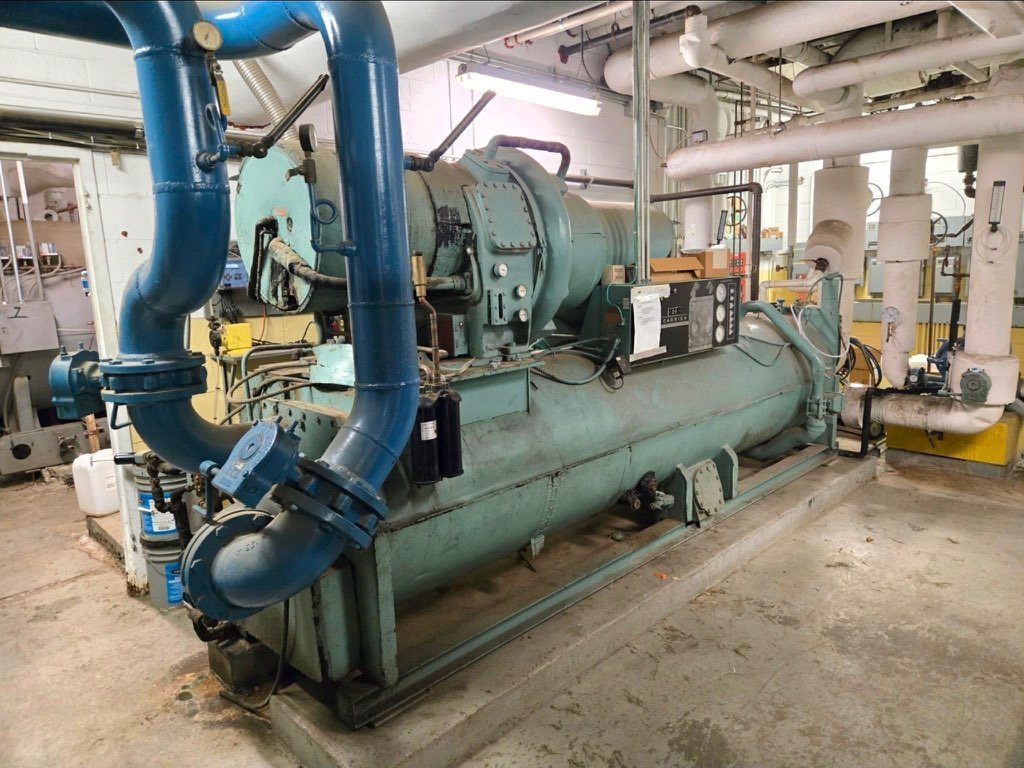
Daikin Chiller Buyers in Pineville, Louisiana
From surplus unit to removal
We purchase a used Daikin chiller in Pineville, Louisiana; we do not sell chillers. The process starts with an upfront cash offer based on the information available, with no equipment test required. The buyer handles crane service, rigging, disconnects, refrigerant recovery, loading, hauling and freight. Site staff and appropriately qualified personnel coordinate the work around actual equipment and facility constraints.
Agree on the work boundaries
The facility controls access and knows which systems and areas must remain in service. Share the name or role of an authorized site contact, the approved access requirements and any shutdown window already established. The buyer coordinates disconnects, refrigerant recovery, rigging and freight with that contact. Do not assume a removal date until the necessary site and equipment details have been reviewed together.
Start with the unit's labels
Record the Daikin model and serial numbers and photograph the capacity and refrigerant information on the unit nameplate. Use the actual unit plate rather than assuming that every machine in the same plant has the same refrigerant or rating. If a label was changed or a record is missing, send the photographs and explain the uncertainty.
Make the equipment list clear
A list of assets is especially useful when one room contains multiple similar chillers. Pair each plate photo with a location and say which machine, modules and separate cabinets are included. Identify anything shared or excluded. A plant-wide schedule can accompany the list, but a combined cooling total should not be presented as the rating of each individual unit.
Electrical information for the team
A separate power cabinet can affect both the sale scope and the removal route. If known, provide the nameplate voltage, phase and frequency and say whether the cabinet serves only this machine. Site personnel and the buyer's qualified disconnect team coordinate electrical isolation; never open a cabinet or attempt electrical work merely to gather details for the buyer.
Which components belong to the chiller?
Share photos showing the full unit, visible compressors or modules, and fluid connections without removing any covers. A module count and visible connection photos are especially useful if the equipment is arranged in a bank. Indicate whether the capacity you have is for one piece or the entire group, and do not remove guards to get a closer view.
Keep the circuit closed
A label and a service record can tell different parts of the chiller's refrigerant history. Send both, identify the machine they belong to, and note any uncertainty about the designation or quantity. The buyer coordinates appropriately qualified recovery personnel for the actual system. Leave valves and connections untouched and do not release refrigerant, even if the unit has been idle for years.
Capacity is not shipping weight
When a record says tons, ask whether that figure describes cooling output for one unit or for a group. It is not the load weight for rigging. Supply physical dimensions and a documented shipping or operating weight if known, and specify whether protrusions and separate cabinets are included. If the document does not say, let the buyer know rather than filling the gap with an estimate.
Plan around the installed machine
Mention rooftop location, screened enclosures or other access limits that could affect crane or freight planning. A roof screen or narrow service yard can alter the path from the unit to a truck. Give the buyer the building address, approximate location of the machine and any known limits on crane setup; the lifting team will assess the actual site.
The route out of the building
The first obstacle may be inside the building rather than on the road. Tell the buyer where the unit sits, how it is reached and where a truck might be allowed to load. Identify narrow openings, overhead obstructions and any restricted travel paths from existing measurements. The buyer's professional team verifies the route and determines the handling plan for the specific equipment.
Local context, actual site
The regional context for Pineville includes the east side of the Red River across from Alexandria. It is in Rapides Parish. Tell the buyer the equipment building and entrance, and flag any known bridge or site-routing constraint for the freight team to review. Share the actual address, building and approved entrance where known. The buyer's team must assess the specific property rather than infer a clear route from a regional map. If a separate starter or control is included, show where it sits relative to the chiller and the path to the loading area.
Information for the rigger
The seller can help the lift team by providing existing drawings, documented component weights and a safe view of the equipment's surroundings. Mention known overhead lines, roof edges, floor limits or restricted staging areas. The buyer handles crane service and rigging, with professionals determining the lift method and acceptable setup for the actual unit rather than relying on an estimated load.
Where can the truck load?
The buyer handles loading, hauling and freight as well as the rigging that gets the equipment to the truck. For planning, identify the actual loading area, gate width and any restrictions on large vehicles or staging. A regional highway may be nearby, but the last stretch into a property can still be constrained. The freight team assesses the actual route and load dimensions.