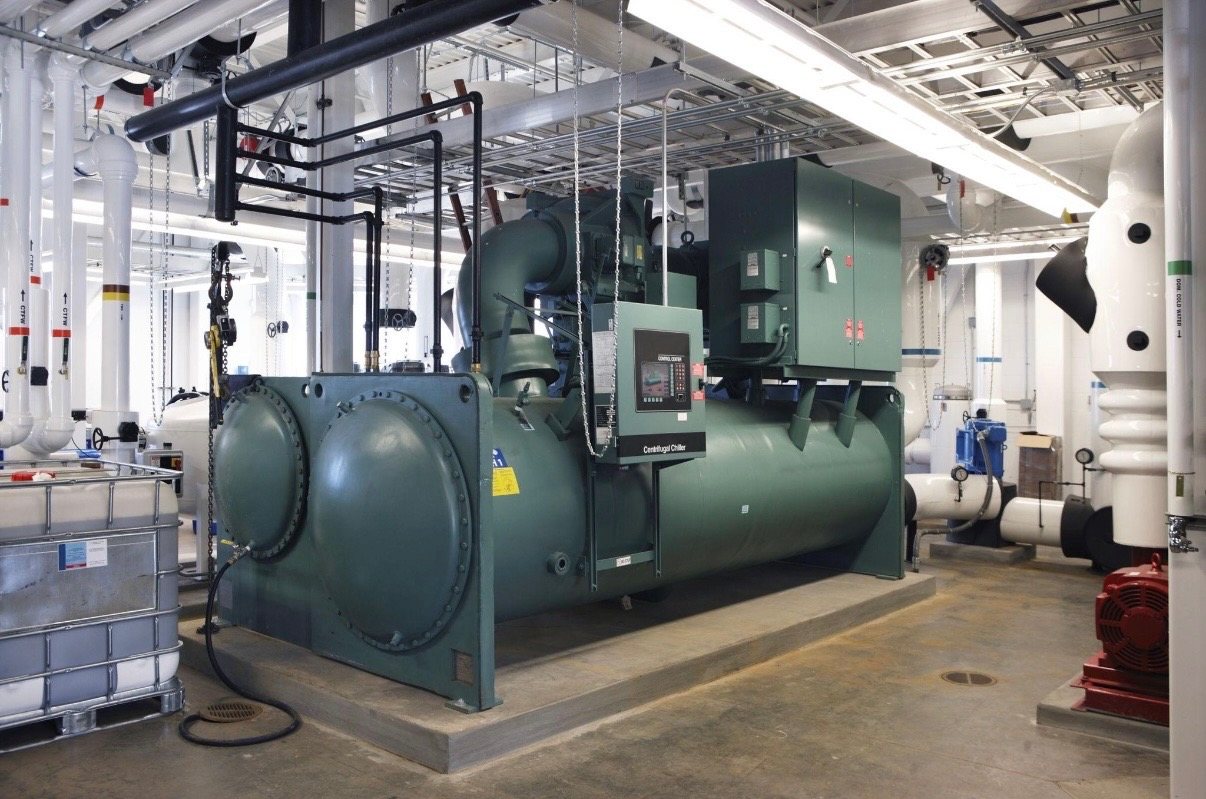
Multistack Chiller Buyers in Sulphur, Louisiana
A buyer for your chiller
Have a used Multistack chiller in Sulphur, Louisiana to remove? We are chiller buyers, and a test run is not required to request an upfront cash offer. The buyer handles crane service, rigging, disconnects, refrigerant recovery, loading, hauling and freight. Share the machine's visible details and the site's known restrictions so the work can be coordinated with authorized personnel.
Access starts at the unit
Identify where the chiller sits relative to the building entrance and loading area, then mention any known obstacles along that path. A narrow door, low pipe, tight turn or roof parapet may matter more than distance to the road. Provide existing measurements or photographs when permitted. The buyer's riggers verify the actual route and do not rely on an assumed clear opening.
Match the plate to the equipment
Photograph the Multistack system nameplate and individual module nameplates where safely accessible. Keep each module's plate paired with its position in the bank if possible. A system schedule can also help, but distinguish a bank-wide rating from a number that belongs to an individual module and leave illegible fields unguessed.
Local context, actual site
The regional context for Sulphur includes west Calcasieu and the I-10 corridor toward Texas. It is in Calcasieu Parish. At an industrial property, confirm gate access and the site's approved downtime rather than assuming the equipment can be removed immediately. A regional route or facility category cannot establish the conditions at a particular property. Provide the street address, building or yard location, and any known gate, loading or access restrictions for the actual chiller. If a separate starter or control is included, show where it sits relative to the chiller and the path to the loading area.
Capacity is not shipping weight
If a modular bank is involved, a building's total capacity can obscure the size of each piece. State how many modules are offered and which nameplate rating applies to each, if visible. The freight team also needs the actual outside dimensions and documented weight: a cooling ton is a capacity measure, not the weight of a shipping load.
Crane and rigging considerations
Give the buyer any available shipping weights, lifting drawings and pictures of the machine's surroundings. Explain known limits on crane setup, floor loading, overhead clearance or staging space, and note where information is unavailable. The buyer coordinates the crane and qualified riggers. An equipment plate or a general diagram is useful context, but it is not a substitute for a site-specific lift plan.
Record the actual arrangement
Count the modules and note whether the stated tonnage is per module or for the complete bank. A module count is not a substitute for the rating on each plate. Tell the buyer if the sale includes the entire bank or only certain modules, and whether any remaining modules must continue serving the building.
Where can the truck load?
A truck-ready plan begins with the site entrance and a realistic loading area. Tell the buyer about restricted gates, low overhead services, surface limits or delivery traffic that may affect access. Supply equipment dimensions and documented weight when available. The buyer arranges loading, hauling and freight; the route and vehicle arrangement depend on the actual load and property conditions.
Identify shared power equipment
Record power details from labels or drawings already available, and say if the voltage or phase cannot be confirmed. A separate drive or starter may have its own enclosure and removal path, and it may not be part of the purchase. The buyer handles disconnects using qualified personnel, working with authorized staff who control the site's isolation procedures.
Plan around the installed machine
Share photos of common headers, wiring and available clearance so qualified personnel can plan any module separation and removal. Headers and controls may be shared by equipment that is not being sold. Site personnel and the buyer's qualified team should identify interfaces and decide on any separation; the owner need not dismantle or disconnect the bank to request an offer.
Keep the circuit closed
Tell the buyer whether a refrigerant designation comes from a nameplate, a later conversion label or a service record. If the source is missing or the charge is unknown, say that plainly. The buyer handles recovery with qualified personnel. There is no reason for the seller to fit gauges, open a valve, mix refrigerants or release any contents.
Coordinate with the facility
A chiller can be surplus while nearby systems remain essential. Ask the authorized facility representative to identify protected services, shared controls and the people who can approve access. The buyer arranges the work and coordinates the plan with the site, including any qualified disconnect and recovery personnel. Treat timing as subject to actual site approval, not a guaranteed removal date.
A practical first message
A useful first message does not need every field completed. Identify the chiller and its location, send safe photographs and disclose known damage, missing records or access restrictions. The buyer provides an upfront cash offer without requiring equipment testing and handles the removal work in coordination with the site. Further details can be clarified as the actual scope is reviewed.