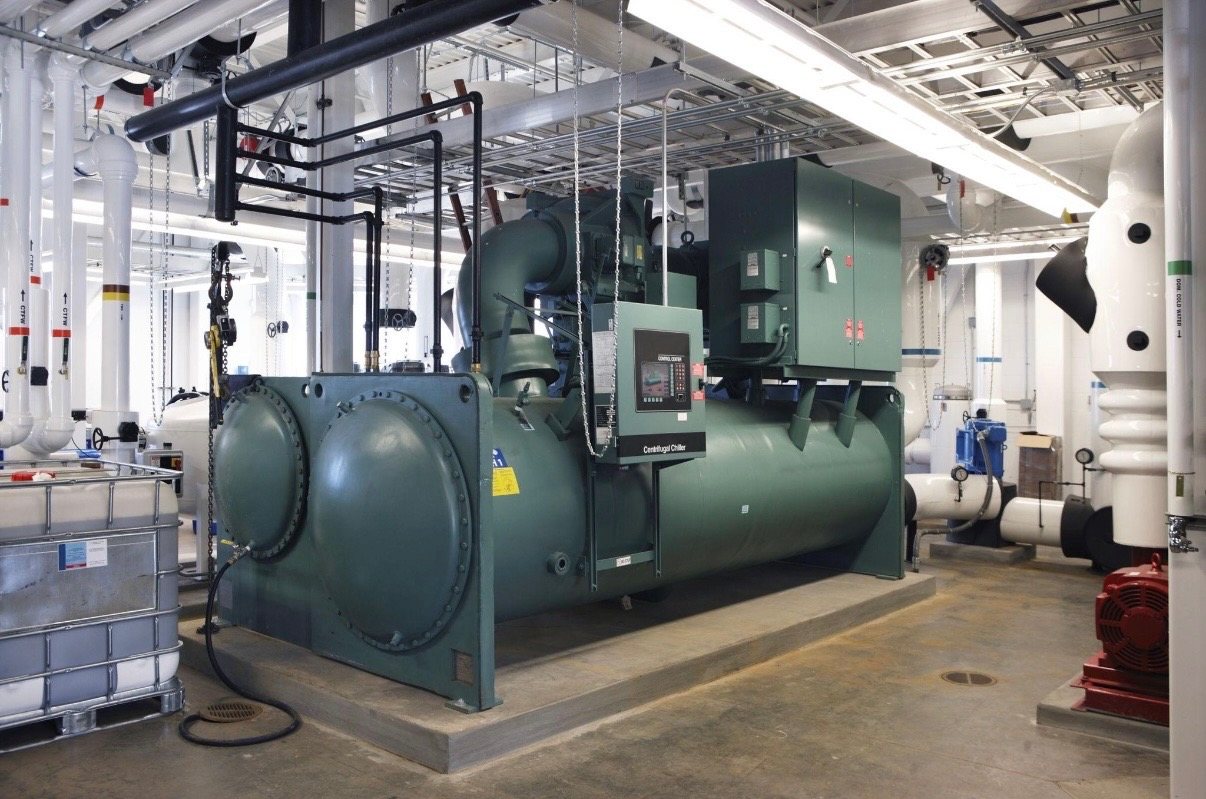
Multistack Chiller Buyers in New Orleans, Louisiana
A practical way to start
An owner with a used Multistack chiller in New Orleans, Louisiana can begin with photographs and available records; no equipment testing is required. We buy chillers and provide an upfront cash offer. The buyer handles crane service, rigging, disconnects, refrigerant recovery, loading, hauling and freight, coordinating with authorized site personnel. An unknown detail is worth flagging; it does not need to be turned into a guess.
The route out of the building
Identify where the chiller sits relative to the building entrance and loading area, then mention any known obstacles along that path. A narrow door, low pipe, tight turn or roof parapet may matter more than distance to the road. Provide existing measurements or photographs when permitted. The buyer's riggers verify the actual route and do not rely on an assumed clear opening.
Match the plate to the equipment
Photograph the Multistack system nameplate and individual module nameplates where safely accessible. Keep each module's plate paired with its position in the bank if possible. A system schedule can also help, but distinguish a bank-wide rating from a number that belongs to an individual module and leave illegible fields unguessed.
Local context, actual site
The regional context for New Orleans includes the Mississippi River port setting and the I-10 corridor. It is in Orleans Parish. Dense building locations can have restricted loading areas or building rules; identify the actual entrance and any limits on a crane position. A regional route or facility category cannot establish the conditions at a particular property. Provide the street address, building or yard location, and any known gate, loading or access restrictions for the actual chiller. If a separate starter or control is included, show where it sits relative to the chiller and the path to the loading area.
Capacity is not shipping weight
If a modular bank is involved, a building's total capacity can obscure the size of each piece. State how many modules are offered and which nameplate rating applies to each, if visible. The freight team also needs the actual outside dimensions and documented weight: a cooling ton is a capacity measure, not the weight of a shipping load.
Crane and rigging considerations
Give the buyer any available shipping weights, lifting drawings and pictures of the machine's surroundings. Explain known limits on crane setup, floor loading, overhead clearance or staging space, and note where information is unavailable. The buyer coordinates the crane and qualified riggers. An equipment plate or a general diagram is useful context, but it is not a substitute for a site-specific lift plan.
Which components belong to the chiller?
Count the modules and note whether the stated tonnage is per module or for the complete bank. A module count is not a substitute for the rating on each plate. Tell the buyer if the sale includes the entire bank or only certain modules, and whether any remaining modules must continue serving the building.
From staging to hauling
If a unit or separate cabinet has to be staged before loading, tell the buyer what space the facility can make available and any restrictions on its use. Share measurements, documented weights and the route through the gate. The buyer arranges loading, hauling and freight; its personnel assess whether the proposed route and vehicle access are workable for the actual load.
Identify shared power equipment
Provide the voltage, phase and frequency listed on an accessible nameplate or equipment schedule, if legible. Note any separate starter, drive or control enclosure and whether it is included or shared. Do not open a panel or handle wiring to collect these details. The buyer coordinates qualified disconnect personnel with authorized site staff, who identify isolation boundaries and any equipment that must remain energized.
Plan around the installed machine
Share photos of common headers, wiring and available clearance so qualified personnel can plan any module separation and removal. Headers and controls may be shared by equipment that is not being sold. Site personnel and the buyer's qualified team should identify interfaces and decide on any separation; the owner need not dismantle or disconnect the bank to request an offer.
What remains connected?
A chiller can be connected to building cooling, condenser water or a process loop, depending on its actual installation. If you know which connections are present, share the drawings and note which services must remain active. When the purpose or contents of a line are uncertain, say so. The buyer's qualified team and site personnel coordinate isolation, disconnects and fluid handling.
Labels, history and safe recovery
Share the refrigerant designation and charge quantity from the plate or records if available, along with any retrofit label. The original plate does not necessarily describe a later conversion, and an unknown charge should stay unknown until qualified personnel assess it. The buyer handles refrigerant recovery with appropriately qualified personnel. Keep the circuit closed: do not attach gauges, transfer or vent refrigerant.
Coordinate with the facility
Site conditions should be discussed before crews and equipment are assigned. Note any security, escort, loading-hour or shutdown requirements and identify the person authorized to coordinate them. The buyer handles the removal services, while site personnel define their operating and access constraints. Unknown dates or incomplete drawings can be flagged for follow-up rather than filled in with assumptions.