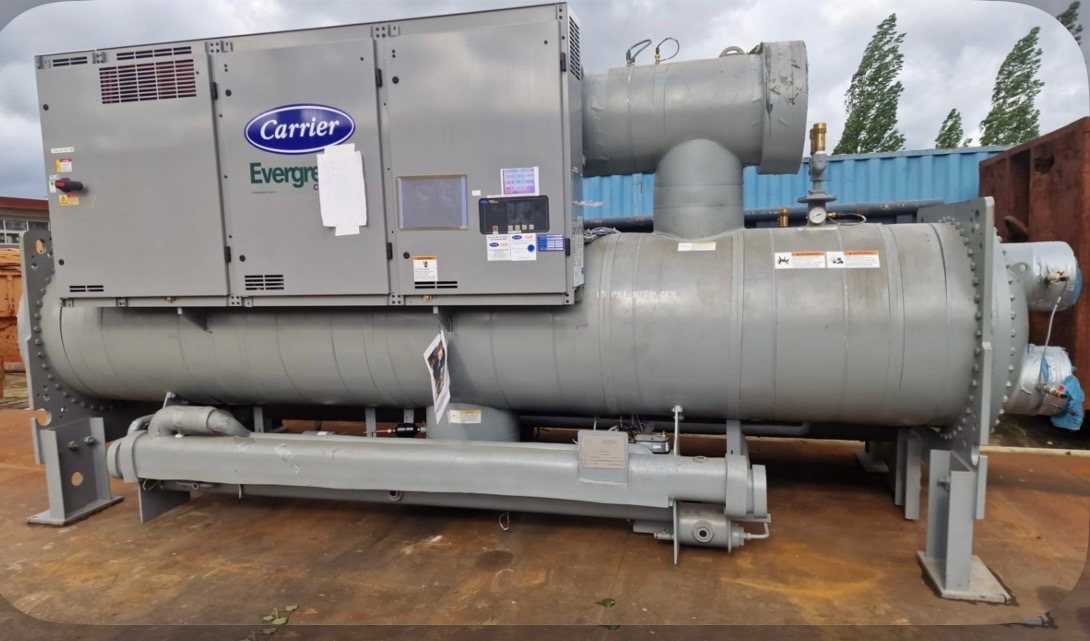
Chemical Plant Chiller Decommissioning in Louisiana
From surplus unit to removal
Have a surplus chiller associated with chemical plant turnarounds in Louisiana to remove? We are chiller buyers, and a test run is not required to request an upfront cash offer. The buyer handles crane service, rigging, disconnects, refrigerant recovery, loading, hauling and freight. Share the machine's visible details and the site's known restrictions so the work can be coordinated with authorized personnel.
From the chiller to the loading area
The first obstacle may be inside the building rather than on the road. Tell the buyer where the unit sits, how it is reached and where a truck might be allowed to load. Identify narrow openings, overhead obstructions and any restricted travel paths from existing measurements. The buyer's professional team verifies the route and determines the handling plan for the specific equipment.
Define the shutdown inventory
Provide chiller nameplates and identify any process-fluid or secondary-loop connections from site records. Drawings or labels may distinguish ordinary chilled-water connections from process or secondary-fluid interfaces. If the service is unclear, provide the records and say so; a photo or brand name cannot establish the contents of a line.
The Louisiana site
For a chiller anywhere in Louisiana, provide the actual street address and the building, yard, mechanical room or roof where the equipment sits. The city and parish help identify the property, but the gate, internal route and loading area determine how the buyer's team can reach it. Mention known access restrictions or a preferred site contact; if the location details are incomplete, say what remains to be confirmed.
Cooling tons and transport size
If the equipment schedule has a tonnage, match it to the correct machine and indicate whether the number is for one unit or a combined plant. Also provide available dimensions and any documented shipping or operating weight. A cabinet that fits inside the building may still have attachments that limit its exit; capacity alone says nothing reliable about those clearances.
Crane and rigging considerations
The buyer handles the crane and rigging, with a professional lift plan based on the particular machine and site. Share documented weights, manufacturer lifting instructions and photos of visible lifting-point markings if available. Identify overhead wires, nearby structures, ground or floor limits and possible staging space. Do not select a lift point or attempt to separate components yourself; the rigger evaluates the actual conditions.
Determine what must stay active
Ask authorized site personnel to identify contamination concerns and applicable isolation or decontamination requirements. The site must identify known contamination and its own isolation or decontamination requirements before a work plan is finalized. The buyer coordinates qualified disconnects rather than asking the seller to open or drain unknown lines.
From staging to hauling
The buyer handles loading, hauling and freight as well as the rigging that gets the equipment to the truck. For planning, identify the actual loading area, gate width and any restrictions on large vehicles or staging. A regional highway may be nearby, but the last stretch into a property can still be constrained. The freight team assesses the actual route and load dimensions.
Match the plate to the unit
A short identification packet can save a later round of questions: photograph the unit as installed, its accessible nameplate and any separate cabinet included in the transaction. List the model, serial number and rated cooling capacity if legible. Missing documentation is not a barrier to starting a conversation, and the seller does not need to take panels off.
Fit removal to the site
Coordinate lift paths, staging space and the removal window with the plant's turnaround team. A proposed lift path may cross active process areas or shared access routes. Explain the site's staging and work-window requirements so the buyer's riggers can assess them with authorized plant personnel rather than assuming an unobstructed move.
Define the purchase scope
If several chillers are available, list each machine separately with its location, model and rated capacity where known. Mark missing parts and distinguish individual modules from a complete bank. Identify control cabinets or other components included in the proposed purchase and anything that must stay. A separate line for each asset helps the buyer plan recovery, lifting and freight without confusing plant totals with unit ratings.
Electrical information for the team
A site representative can point out which control cabinets belong to the chiller and which must remain. The buyer's qualified personnel coordinate the electrical disconnect with that representative. For the initial review, an accessible nameplate photograph or existing schedule is enough to communicate the listed power information; the seller should not probe, open or operate electrical equipment.
When the charge is uncertain
A refrigerant label should travel with any later retrofit or service documentation so the recovery team sees the whole recorded history. Give the stated quantity only if documented and describe known damage without touching the circuit. The buyer arranges appropriately qualified personnel for recovery; leave valves closed and never vent refrigerant to make a machine easier to move.