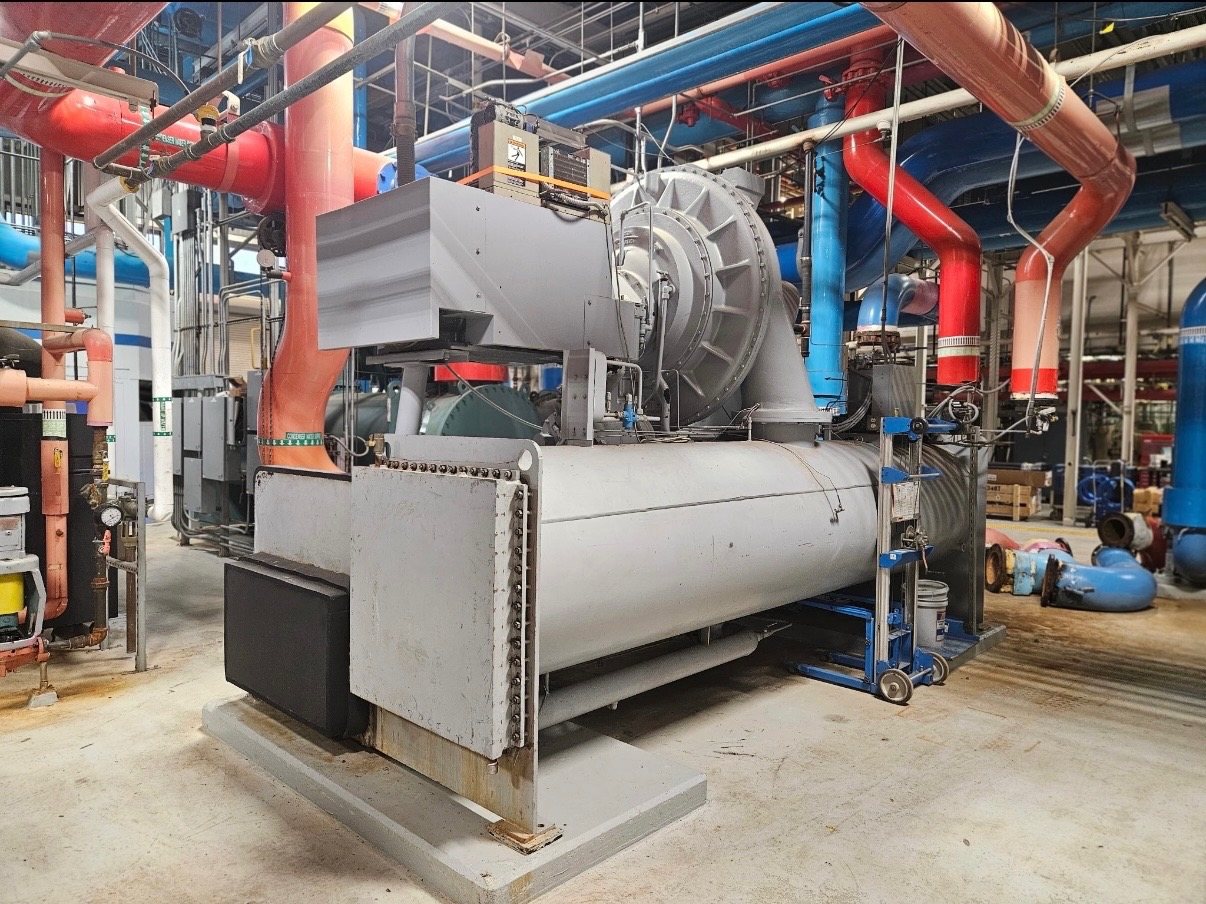
Chemical plant turnarounds Chiller Buyers in Kenner, Louisiana
Offer and removal scope
We purchase a surplus chiller associated with chemical plant turnarounds in Kenner, Louisiana; we do not sell chillers. The process starts with an upfront cash offer based on the information available, with no equipment test required. The buyer handles crane service, rigging, disconnects, refrigerant recovery, loading, hauling and freight. Site staff and appropriately qualified personnel coordinate the work around actual equipment and facility constraints.
The route out of the building
For an accurate removal discussion, include the street address, equipment location and the site's preferred truck entrance. A door measurement is useful, but the path can also be limited by a turn, low ceiling or floor transition. Describe known obstacles and share photographs where permitted. The buyer's riggers evaluate the route rather than assuming that the chiller will move intact.
Start with the site's equipment list
Provide chiller nameplates and identify any process-fluid or secondary-loop connections from site records. Drawings or labels may distinguish ordinary chilled-water connections from process or secondary-fluid interfaces. If the service is unclear, provide the records and say so; a photo or brand name cannot establish the contents of a line.
Plan from the real address
The regional context for Kenner includes western greater New Orleans and the airport-side I-10 corridor. It is in Jefferson Parish. For an airport-area property, ask the site about delivery entrances, security and operating-hour restrictions rather than assuming truck access. Give the street address and the unit's position on the property; a regional highway does not establish which gate, route or loading area can be used at that site. Include the facility's approved access and outage requirements alongside the inventory, especially where other cooling equipment must stay in service.
Measure the load, not just the rating
A truck and crane are selected around the real load, not the chiller's rated cooling tons. Send available length, width, height and documented weight for the machine and for any separate included enclosure. Also share the nameplate capacity so the buyer can identify the equipment. It is fine to say that dimensions or a weight still need confirmation.
The actual lifting constraints
If the machine must pass through a building opening or over a parapet, show the riggers the relevant route and any measurements already on file. Provide the unit-specific lifting documents and known weights where available. The buyer arranges crane and rigging services; the professional team decides on lifting points and whether an approved component separation is needed.
Determine what must stay active
Ask authorized site personnel to identify contamination concerns and applicable isolation or decontamination requirements. The site must identify known contamination and its own isolation or decontamination requirements before a work plan is finalized. The buyer coordinates qualified disconnects rather than asking the seller to open or drain unknown lines.
Loading and the road out
Moving a chiller off its foundation and getting it onto a truck are separate planning steps. Show the proposed staging and loading area, identify any site traffic restrictions and share the measurements you have. The buyer coordinates loading, hauling and freight with the riggers. If the route or truck position is unknown, say so rather than assuming a particular vehicle will fit.
Start with the nameplate
A short identification packet can save a later round of questions: photograph the unit as installed, its accessible nameplate and any separate cabinet included in the transaction. List the model, serial number and rated cooling capacity if legible. Missing documentation is not a barrier to starting a conversation, and the seller does not need to take panels off.
Fit removal to the site
Coordinate lift paths, staging space and the removal window with the plant's turnaround team. A proposed lift path may cross active process areas or shared access routes. Explain the site's staging and work-window requirements so the buyer's riggers can assess them with authorized plant personnel rather than assuming an unobstructed move.
Map the components
The machine may be one unit in a bank or an individual assembly with separate controls. Describe what is present and what the owner intends to include. Air-cooled or water-cooled refers to heat rejection, while screw, scroll or centrifugal describes the compressor; those classifications can overlap. Do not infer a unit's exact configuration simply from a brand name.
Identify shared power equipment
An electrical schedule may identify voltage, phase, frequency and a remote starter even when the main machine is disconnected. Share the documents and safe exterior photos, noting whether controls are included or serve other units. The buyer coordinates qualified electrical disconnect personnel with the site. Do not open energized or closed cabinets, test circuits or disturb wiring to prepare a description.
Refrigerant records and recovery
Share the refrigerant designation and charge quantity from the plate or records if available, along with any retrofit label. The original plate does not necessarily describe a later conversion, and an unknown charge should stay unknown until qualified personnel assess it. The buyer handles refrigerant recovery with appropriately qualified personnel. Keep the circuit closed: do not attach gauges, transfer or vent refrigerant.