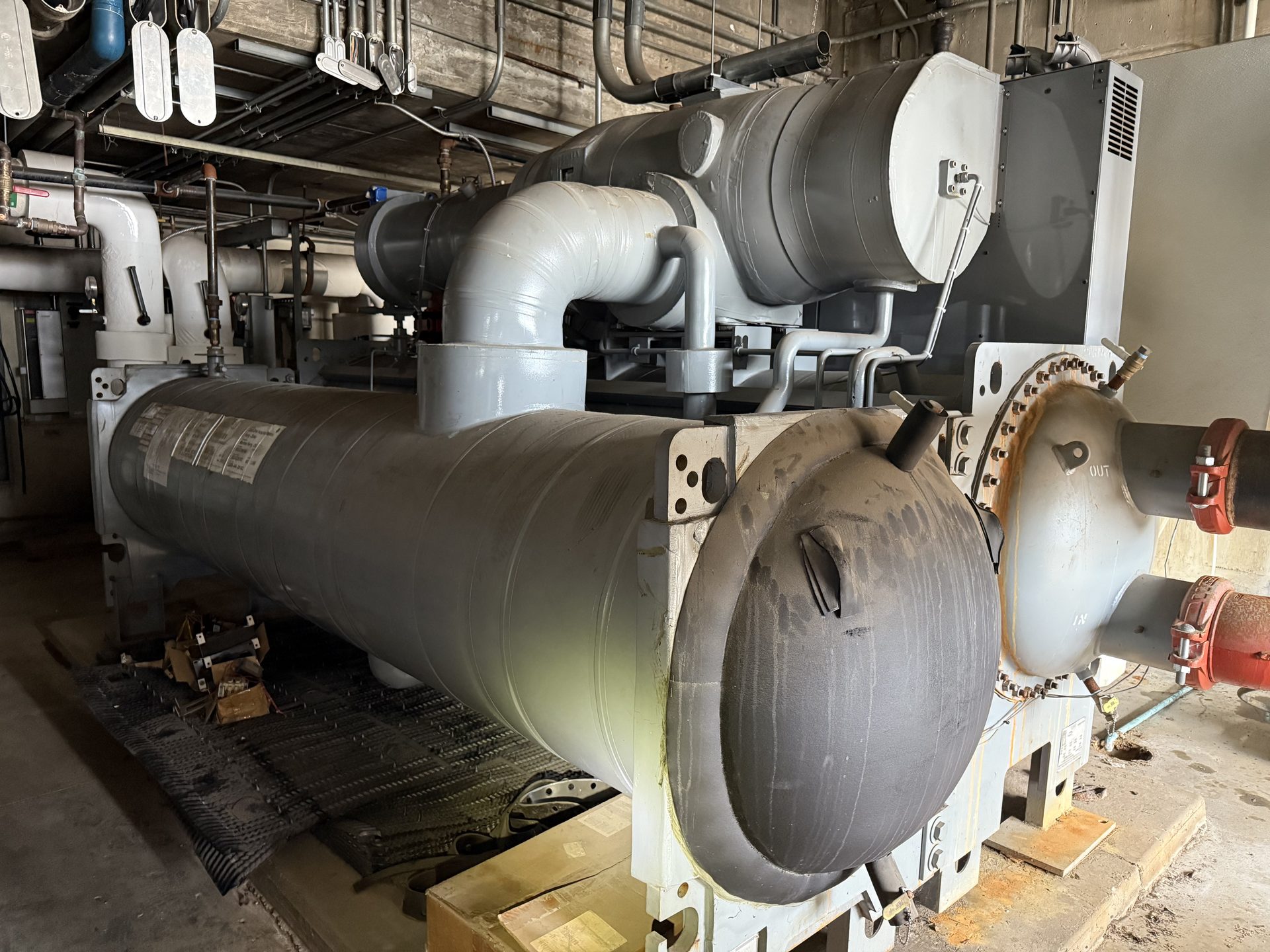
Chemical plant turnarounds Chiller Buyers in New Orleans, Louisiana
Offer and removal scope
If you have a surplus chiller associated with chemical plant turnarounds in New Orleans, Louisiana, we buy chillers rather than sell them. Share what you know for an upfront cash offer; no equipment testing is required. The buyer handles crane service, rigging, disconnects, refrigerant recovery, loading, hauling and freight, coordinating qualified personnel with the site. A precise inventory and an honest account of access restrictions help shape the removal plan.
Plan from the real address
The regional context for New Orleans includes the Mississippi River port setting and the I-10 corridor. It is in Orleans Parish. Dense building locations can have restricted loading areas or building rules; identify the actual entrance and any limits on a crane position. A regional route or facility category cannot establish the conditions at a particular property. Provide the street address, building or yard location, and any known gate, loading or access restrictions for the actual chiller. Include the facility's approved access and outage requirements alongside the inventory, especially where other cooling equipment must stay in service.
The details worth sending
Start with the main nameplate: a legible model, serial number, manufacturer and rated capacity can anchor the review. A wide photo showing the plate's location is useful if several machines are close together. Include a separate control or starter plate only if visible safely, and say when a number cannot be read. Do not open a cabinet or remove a guard to obtain information.
Define the shutdown inventory
Provide chiller nameplates and identify any process-fluid or secondary-loop connections from site records. Drawings or labels may distinguish ordinary chilled-water connections from process or secondary-fluid interfaces. If the service is unclear, provide the records and say so; a photo or brand name cannot establish the contents of a line.
Map the components
A nameplate tells only part of the story if controls, a starter or modules sit elsewhere. Identify the chiller in a wide photograph and indicate the components that belong to the proposed transaction. Note shared equipment or uncertainties. If the heat-rejection method or compressor type is unclear, available drawings and exterior photos are more useful than a confident guess.
What you can see safely
It is fine to say that operating condition is unknown. Send the records the site already has, note visible exterior damage and identify components that are absent or excluded. Avoid drawing conclusions about internal condition from appearance alone. There is no need to energize the chiller, connect test equipment or remove covers in order to request an offer.
Determine what must stay active
Ask authorized site personnel to identify contamination concerns and applicable isolation or decontamination requirements. The site must identify known contamination and its own isolation or decontamination requirements before a work plan is finalized. The buyer coordinates qualified disconnects rather than asking the seller to open or drain unknown lines.
Capacity is not shipping weight
If a modular bank is involved, a building's total capacity can obscure the size of each piece. State how many modules are offered and which nameplate rating applies to each, if visible. The freight team also needs the actual outside dimensions and documented weight: a cooling ton is a capacity measure, not the weight of a shipping load.
Power and separate controls
An electrical schedule may identify voltage, phase, frequency and a remote starter even when the main machine is disconnected. Share the documents and safe exterior photos, noting whether controls are included or serve other units. The buyer coordinates qualified electrical disconnect personnel with the site. Do not open energized or closed cabinets, test circuits or disturb wiring to prepare a description.
Fit removal to the site
Coordinate lift paths, staging space and the removal window with the plant's turnaround team. A proposed lift path may cross active process areas or shared access routes. Explain the site's staging and work-window requirements so the buyer's riggers can assess them with authorized plant personnel rather than assuming an unobstructed move.
Keep the circuit closed
If the refrigerant is unknown, say so rather than guessing from the make or compressor type. A photo of the original plate, any later conversion label and existing service notes gives the recovery team a starting point. Recovery is handled by the buyer's appropriately qualified personnel; the seller should neither open the circuit nor vent or mix its contents.
The route out of the building
Describe the path from the machine to a loading area, not just the mailing address. Note the floor or roof, door widths, turns, overhead pipes, stairs and any changes in level that are known. Photographs of tight spots help the buyer's riggers assess the route. Share site rules for escorts, loading zones and permitted access; do not assume the chiller can leave through the nearest door.
Plan the lift around the site
Give the buyer any available shipping weights, lifting drawings and pictures of the machine's surroundings. Explain known limits on crane setup, floor loading, overhead clearance or staging space, and note where information is unavailable. The buyer coordinates the crane and qualified riggers. An equipment plate or a general diagram is useful context, but it is not a substitute for a site-specific lift plan.
Freight begins at the gate
If a unit or separate cabinet has to be staged before loading, tell the buyer what space the facility can make available and any restrictions on its use. Share measurements, documented weights and the route through the gate. The buyer arranges loading, hauling and freight; its personnel assess whether the proposed route and vehicle access are workable for the actual load.