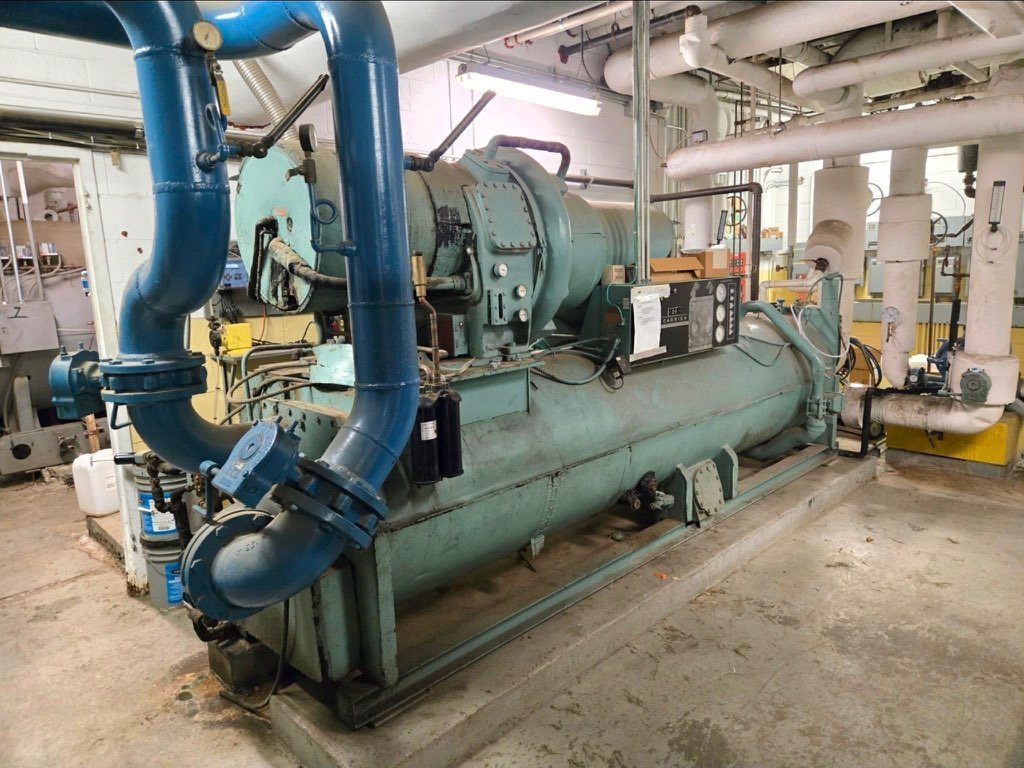
Daikin Chiller Buyers in New Orleans, Louisiana
Offer and removal scope
We purchase a used Daikin chiller in New Orleans, Louisiana; we do not sell chillers. The process starts with an upfront cash offer based on the information available, with no equipment test required. The buyer handles crane service, rigging, disconnects, refrigerant recovery, loading, hauling and freight. Site staff and appropriately qualified personnel coordinate the work around actual equipment and facility constraints.
The route out of the building
Describe the path from the machine to a loading area, not just the mailing address. Note the floor or roof, door widths, turns, overhead pipes, stairs and any changes in level that are known. Photographs of tight spots help the buyer's riggers assess the route. Share site rules for escorts, loading zones and permitted access; do not assume the chiller can leave through the nearest door.
Start with the unit's labels
Record the Daikin model and serial numbers and photograph the capacity and refrigerant information on the unit nameplate. Use the actual unit plate rather than assuming that every machine in the same plant has the same refrigerant or rating. If a label was changed or a record is missing, send the photographs and explain the uncertainty.
Measure the load, not just the rating
If a modular bank is involved, a building's total capacity can obscure the size of each piece. State how many modules are offered and which nameplate rating applies to each, if visible. The freight team also needs the actual outside dimensions and documented weight: a cooling ton is a capacity measure, not the weight of a shipping load.
Information for the rigger
If a unit is above grade or inside a constrained room, describe the possible route and any known structural or overhead limits. A safe photo of the surrounding area can help, along with unit-specific rigging documents. The buyer's rigging team assesses lift points, crane position and whether components can move as assembled. The seller is not expected to perform rigging or dismantling.
Photograph the equipment in context
Share photos showing the full unit, visible compressors or modules, and fluid connections without removing any covers. A module count and visible connection photos are especially useful if the equipment is arranged in a bank. Indicate whether the capacity you have is for one piece or the entire group, and do not remove guards to get a closer view.
Loading and the road out
The relevant address for a pickup includes more than a postal code. Identify the truck entrance, security requirements and the point at which equipment can be loaded, if the site has selected one. Documented weight and physical dimensions are important to planning the load. The buyer handles loading, hauling and freight, coordinating the approach with the facility and rigging team.
Make the equipment list clear
Define the boundaries of the proposed purchase before arranging a lift. Photograph the machine in place, list any included starter or controls, and mark equipment that will remain. For a bank, distinguish individual modules from the total system. When ownership or inclusion of a component is uncertain, tell the buyer and resolve it with the authorized site representative.
Separate the scope from the assumptions
Mention rooftop location, screened enclosures or other access limits that could affect crane or freight planning. A roof screen or narrow service yard can alter the path from the unit to a truck. Give the buyer the building address, approximate location of the machine and any known limits on crane setup; the lifting team will assess the actual site.
Power and separate controls
Existing drawings and exterior photos can help identify electrical interfaces, including a remote starter or shared controls. Record plate voltage and phase only if safely visible; an unreadable value can remain unknown. The buyer arranges qualified electrical disconnects in coordination with the site, so there is no reason for the owner to expose conductors or test the system.
Location and site access
The regional context for New Orleans includes the Mississippi River port setting and the I-10 corridor. It is in Orleans Parish. Dense building locations can have restricted loading areas or building rules; identify the actual entrance and any limits on a crane position. A regional route or facility category cannot establish the conditions at a particular property. Provide the street address, building or yard location, and any known gate, loading or access restrictions for the actual chiller. If a separate starter or control is included, show where it sits relative to the chiller and the path to the loading area.
When the charge is uncertain
Share the refrigerant designation and charge quantity from the plate or records if available, along with any retrofit label. The original plate does not necessarily describe a later conversion, and an unknown charge should stay unknown until qualified personnel assess it. The buyer handles refrigerant recovery with appropriately qualified personnel. Keep the circuit closed: do not attach gauges, transfer or vent refrigerant.
Access and operating constraints
Site conditions should be discussed before crews and equipment are assigned. Note any security, escort, loading-hour or shutdown requirements and identify the person authorized to coordinate them. The buyer handles the removal services, while site personnel define their operating and access constraints. Unknown dates or incomplete drawings can be flagged for follow-up rather than filled in with assumptions.