Carrier Chiller Buyers in Gonzales, Louisiana
A buyer for your chiller
An owner with a used Carrier chiller in Gonzales, Louisiana can begin with photographs and available records; no equipment testing is required. We buy chillers and provide an upfront cash offer. The buyer handles crane service, rigging, disconnects, refrigerant recovery, loading, hauling and freight, coordinating with authorized site personnel. An unknown detail is worth flagging; it does not need to be turned into a guess.
Location and site access
The regional context for Gonzales includes the I-10 corridor southeast of Baton Rouge. It is in Ascension Parish. Industrial security or shutdown requirements vary by property; provide the site's rules and the chiller's exact location. A regional route or facility category cannot establish the conditions at a particular property. Provide the street address, building or yard location, and any known gate, loading or access restrictions for the actual chiller. If a separate starter or control is included, show where it sits relative to the chiller and the path to the loading area.
Report condition without a test
Idle equipment does not need to be restarted to demonstrate it. Share a dated service record if available, note missing parts and describe only damage visible from a safe position. If the unit was removed from service for a known reason, explain that without claiming an internal diagnosis. The buyer can assess the submission without a test run.
Match the plate to the equipment
Photograph the Carrier chiller nameplate and record its model, serial number and stated capacity if legible. If the plate is worn, send a wide photo that shows where it is located and transcribe only what remains legible. An equipment schedule may supply a missing model or capacity, but label the source so it is not mistaken for a reading from the plate.
Cooling tons and transport size
If a modular bank is involved, a building's total capacity can obscure the size of each piece. State how many modules are offered and which nameplate rating applies to each, if visible. The freight team also needs the actual outside dimensions and documented weight: a cooling ton is a capacity measure, not the weight of a shipping load.
Identify shared power equipment
Power information belongs in the inventory even when the chiller is already idle. Share a safe photo of the rating plate and existing electrical drawings if available; identify separate controls and missing information. The buyer handles electrical disconnects through qualified personnel, coordinated with the site's authorized staff. The seller should not switch, probe or dismantle electrical components to prepare for an offer.
Which components belong to the chiller?
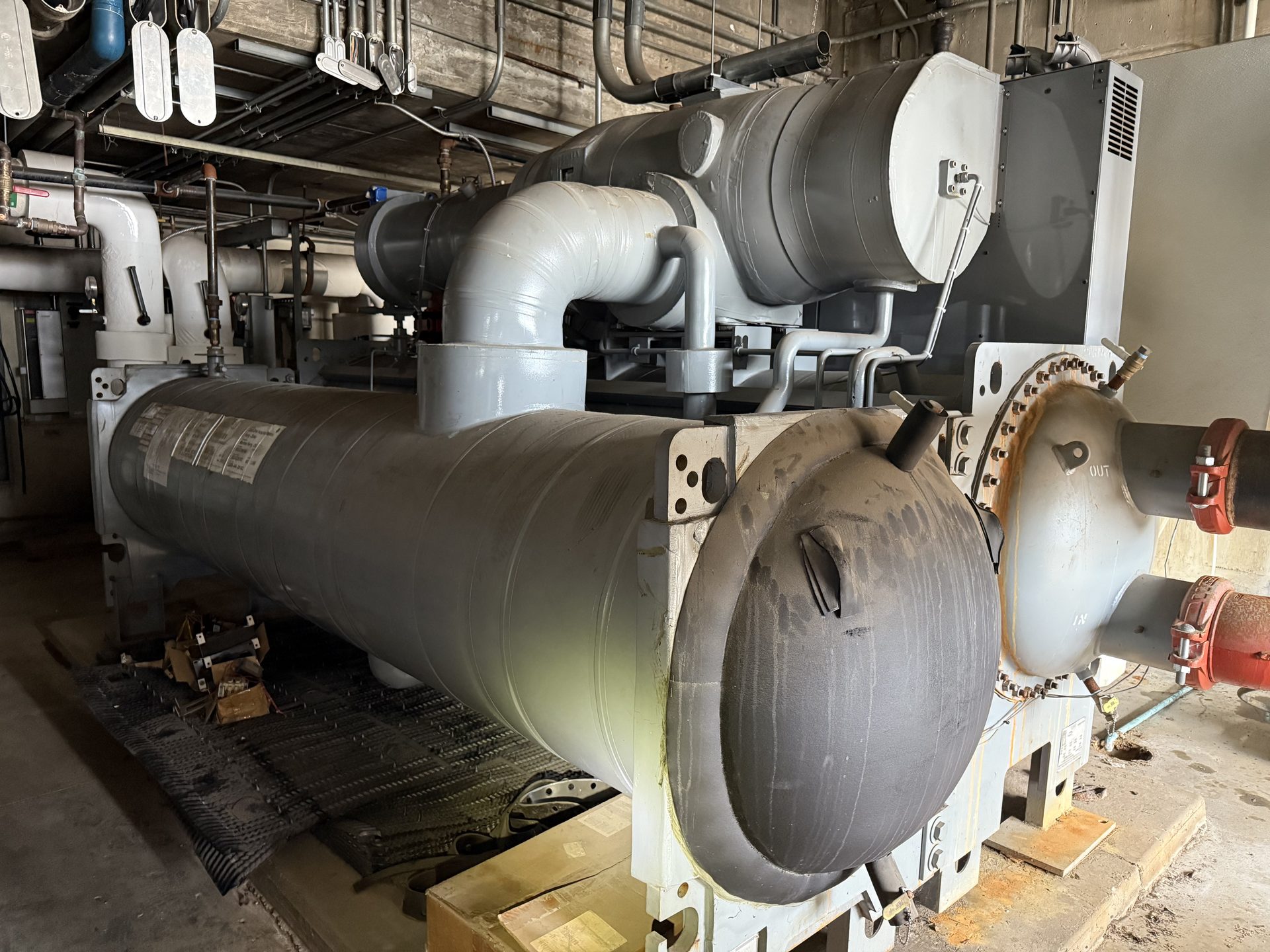
Share exterior photos of the compressor, heat exchangers and control cabinet so the configuration can be identified without running the unit. A view of the whole assembly alongside closer views helps distinguish equipment included with the chiller from neighboring plant equipment. Say whether a starter or controls are separate, if you know, and which pieces are included in the proposed sale.
What remains connected?
A chiller can be connected to building cooling, condenser water or a process loop, depending on its actual installation. If you know which connections are present, share the drawings and note which services must remain active. When the purpose or contents of a line are uncertain, say so. The buyer's qualified team and site personnel coordinate isolation, disconnects and fluid handling.
Keep the circuit closed
A label and a service record can tell different parts of the chiller's refrigerant history. Send both, identify the machine they belong to, and note any uncertainty about the designation or quantity. The buyer coordinates appropriately qualified recovery personnel for the actual system. Leave valves and connections untouched and do not release refrigerant, even if the unit has been idle for years.
Plan around the installed machine
Provide any model-specific lifting or installation documents and note the route from the chiller to the loading area. The buyer can share the documents with the lifting team. A passage that looks wide enough at the doorway can still be restricted by a pipe, bend or change in floor level; mention those conditions instead of assuming the chiller will fit through intact.
Keep remaining services in view
An owner, facilities manager and building occupant may have different responsibilities. Identify who can approve access and isolation, and tell the buyer about any remaining cooling load or shared controls. The buyer coordinates qualified work and transport with the site. If an outage window has not been approved, describe it as undecided instead of committing another party to a date.
From the chiller to the loading area
Access information can be provisional. Tell the buyer the known location of the equipment, possible loading zone and any measured opening, then identify the portions of the route that still need checking. Note nearby services or protected areas if known. The buyer's professional riggers coordinate with the facility before selecting a path; the seller need not move obstructions or disassemble the chiller.
The actual lifting constraints
If the machine must pass through a building opening or over a parapet, show the riggers the relevant route and any measurements already on file. Provide the unit-specific lifting documents and known weights where available. The buyer arranges crane and rigging services; the professional team decides on lifting points and whether an approved component separation is needed.
Loading and the road out
Moving a chiller off its foundation and getting it onto a truck are separate planning steps. Show the proposed staging and loading area, identify any site traffic restrictions and share the measurements you have. The buyer coordinates loading, hauling and freight with the riggers. If the route or truck position is unknown, say so rather than assuming a particular vehicle will fit.