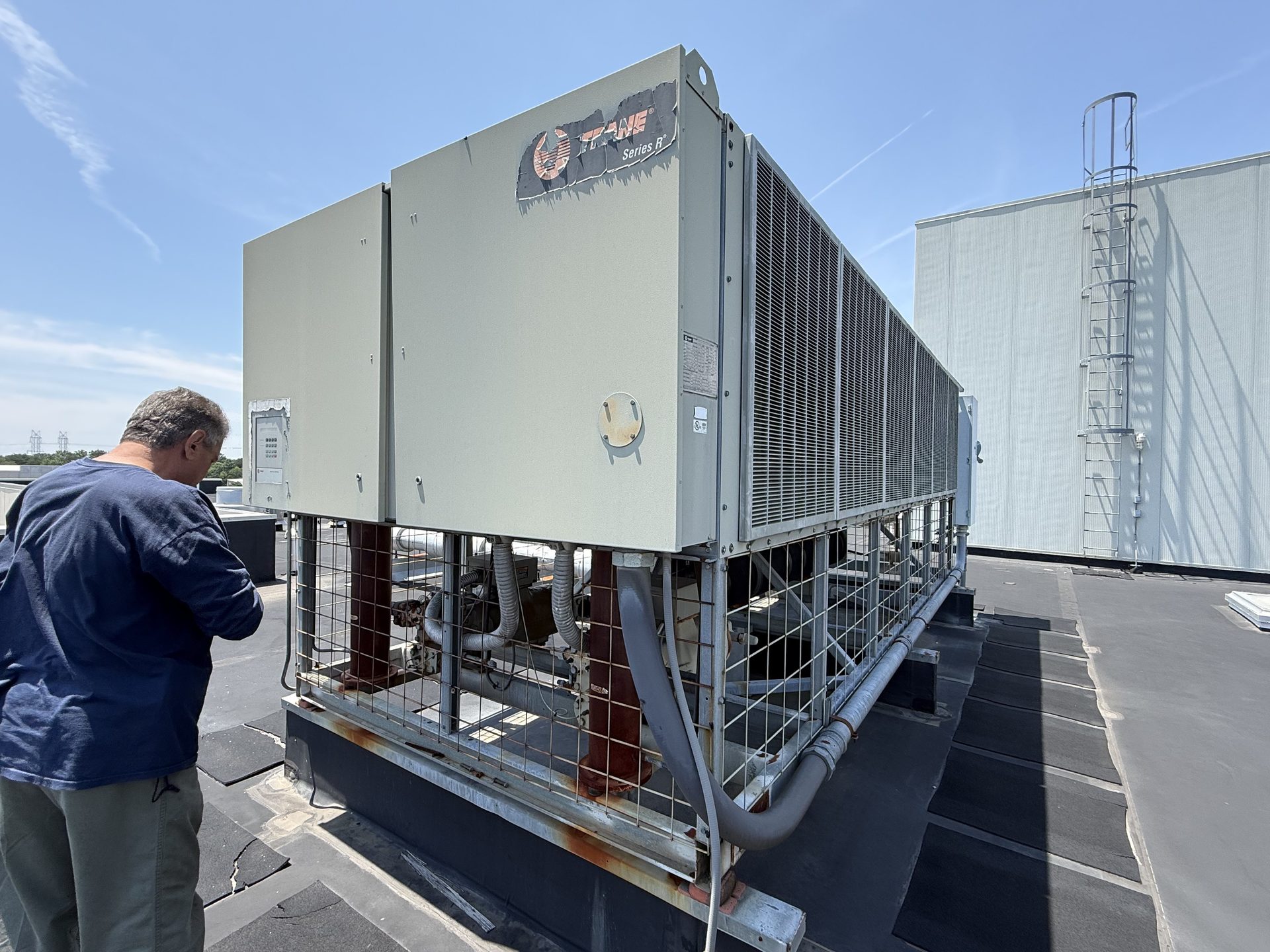
York Chiller Buyers in Gonzales, Louisiana
A practical way to start
An owner with a used York chiller in Gonzales, Louisiana can begin with photographs and available records; no equipment testing is required. We buy chillers and provide an upfront cash offer. The buyer handles crane service, rigging, disconnects, refrigerant recovery, loading, hauling and freight, coordinating with authorized site personnel. An unknown detail is worth flagging; it does not need to be turned into a guess.
Access starts at the unit
Identify where the chiller sits relative to the building entrance and loading area, then mention any known obstacles along that path. A narrow door, low pipe, tight turn or roof parapet may matter more than distance to the road. Provide existing measurements or photographs when permitted. The buyer's riggers verify the actual route and do not rely on an assumed clear opening.
Start with the unit's labels
Share a clear photo of the York unit nameplate and any separate compressor or starter identification plates that are safely visible. Separate identification plates can help distinguish the main machine from a starter or compressor. Photograph only what is visible without opening cabinets; leave an unreadable field blank rather than copying a number from a different component.
Location and site access
The regional context for Gonzales includes the I-10 corridor southeast of Baton Rouge. It is in Ascension Parish. Industrial security or shutdown requirements vary by property; provide the site's rules and the chiller's exact location. Give the street address and the unit's position on the property; a regional highway does not establish which gate, route or loading area can be used at that site. If a separate starter or control is included, show where it sits relative to the chiller and the path to the loading area.
Cooling tons and transport size
If a modular bank is involved, a building's total capacity can obscure the size of each piece. State how many modules are offered and which nameplate rating applies to each, if visible. The freight team also needs the actual outside dimensions and documented weight: a cooling ton is a capacity measure, not the weight of a shipping load.
The actual lifting constraints
If the machine must pass through a building opening or over a parapet, show the riggers the relevant route and any measurements already on file. Provide the unit-specific lifting documents and known weights where available. The buyer arranges crane and rigging services; the professional team decides on lifting points and whether an approved component separation is needed.
Record the actual arrangement
Describe the visible compressor and condenser arrangement and identify any separate starter or control cabinet included with the sale. A cabinet next to the machine is not necessarily included, and controls may serve other equipment. An inventory that says what stays and what goes helps the buyer plan the scope with the facility's authorized representative.
From staging to hauling
The relevant address for a pickup includes more than a postal code. Identify the truck entrance, security requirements and the point at which equipment can be loaded, if the site has selected one. Documented weight and physical dimensions are important to planning the load. The buyer handles loading, hauling and freight, coordinating the approach with the facility and rigging team.
Map the components
A nameplate tells only part of the story if controls, a starter or modules sit elsewhere. Identify the chiller in a wide photograph and indicate the components that belong to the proposed transaction. Note shared equipment or uncertainties. If the heat-rejection method or compressor type is unclear, available drawings and exterior photos are more useful than a confident guess.
Document the route and lift
Provide the unit dimensions, documented weight and model-specific rigging information if available; a rigger should confirm the lifting plan. Measure the outside envelope only where it is safe to do so, and distinguish a documented weight from an estimate. A qualified rigger evaluates actual lifting points, obstructions and component separation; the brand name is not a lifting plan.
Electrical information for the team
Provide the voltage, phase and frequency listed on an accessible nameplate or equipment schedule, if legible. Note any separate starter, drive or control enclosure and whether it is included or shared. Do not open a panel or handle wiring to collect these details. The buyer coordinates qualified disconnect personnel with authorized site staff, who identify isolation boundaries and any equipment that must remain energized.
Keep the circuit closed
A retired chiller can still contain refrigerant, so its status should not be inferred from its operating history. Provide the safely visible designation and any known service or recovery notes, including gaps. The buyer coordinates the recovery work through appropriately qualified personnel; the seller leaves the circuit closed and does not vent or transfer refrigerant.
Keep remaining services in view
Before removal, define what stays in service and who can authorize work at the property. Existing site rules may cover escorts, work windows, protected areas or shared utilities. The buyer arranges the removal team and coordinates with authorized personnel; the site supplies its requirements. Any window discussed is a planning input, not a promise that a particular date will be available.