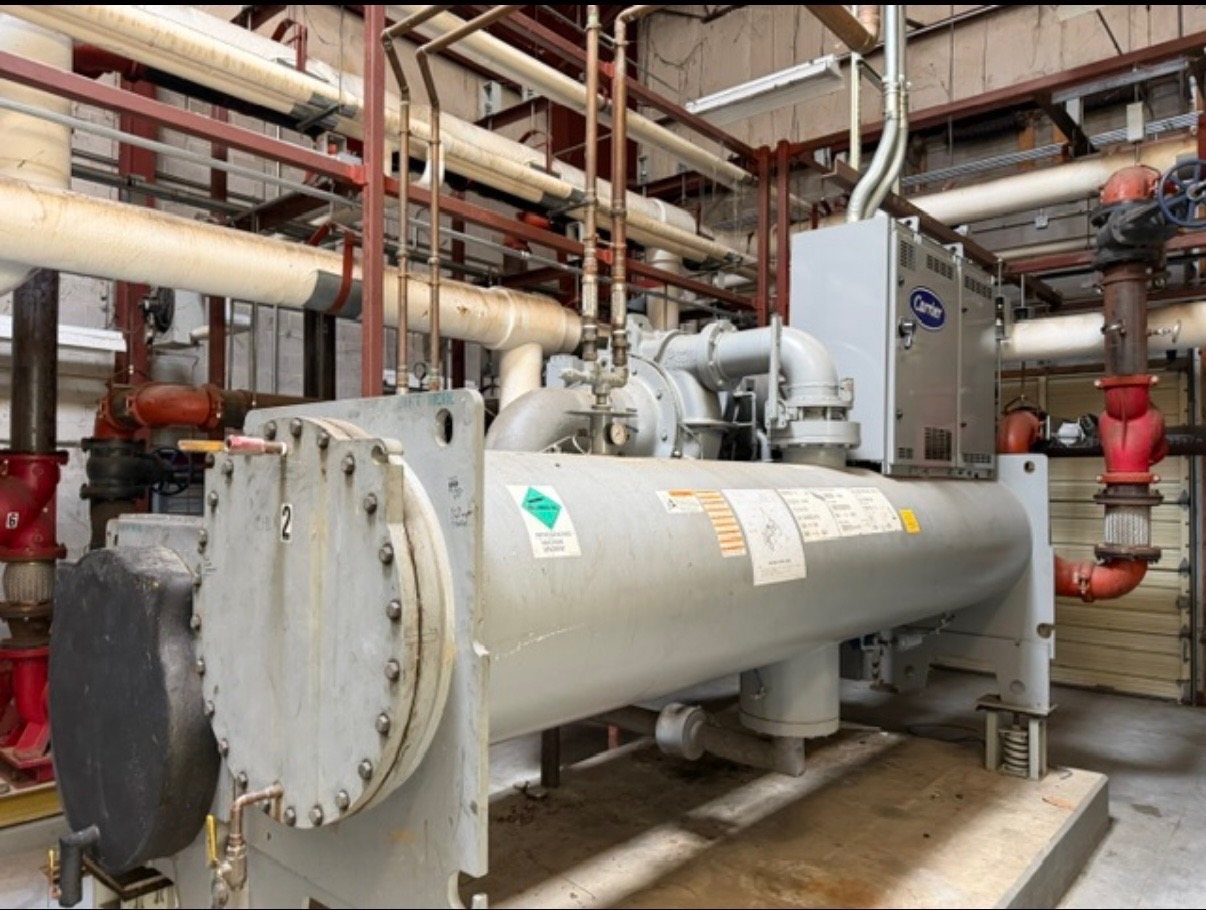
Screw Chiller Buyers in Gonzales, Louisiana
From surplus unit to removal
Have a used screw chiller in Gonzales, Louisiana to remove? We are chiller buyers, and a test run is not required to request an upfront cash offer. The buyer handles crane service, rigging, disconnects, refrigerant recovery, loading, hauling and freight. Share the machine's visible details and the site's known restrictions so the work can be coordinated with authorized personnel.
Identify the machine
A nameplate serves as an anchor for the discussion, not a reason to take equipment apart. From an accessible position, photograph the main plate and the machine around it; include model, serial and capacity only where legible. If the site has several similar chillers, label the photograph with the building and unit number so records are not accidentally matched to the wrong asset.
Start with the visible configuration
Photograph the unit nameplate and visible compressor housings; note how many compressors are present if clearly visible. Do not assume the number of compressors from the word screw. If the housings or labels are not visible without opening a cover, say the count is unknown and provide a safe overall photo instead.
Measure the load, not just the rating
If the equipment schedule has a tonnage, match it to the correct machine and indicate whether the number is for one unit or a combined plant. Also provide available dimensions and any documented shipping or operating weight. A cabinet that fits inside the building may still have attachments that limit its exit; capacity alone says nothing reliable about those clearances.
Describe the configuration
The machine may be one unit in a bank or an individual assembly with separate controls. Describe what is present and what the owner intends to include. Air-cooled or water-cooled refers to heat rejection, while screw, scroll or centrifugal describes the compressor; those classifications can overlap. Do not infer a unit's exact configuration simply from a brand name.
Record what is actually installed
Share available maintenance history, including oil or compressor service records, without opening the system. An older service invoice can establish what work was reported, but it does not guarantee present condition. Flag incomplete maintenance history, known damage and missing parts honestly; no operating demonstration is needed to start a review.
One machine or several?
Define the boundaries of the proposed purchase before arranging a lift. Photograph the machine in place, list any included starter or controls, and mark equipment that will remain. For a bank, distinguish individual modules from the total system. When ownership or inclusion of a component is uncertain, tell the buyer and resolve it with the authorized site representative.
Labels, history and safe recovery
Tell the buyer whether a refrigerant designation comes from a nameplate, a later conversion label or a service record. If the source is missing or the charge is unknown, say that plainly. The buyer handles recovery with qualified personnel. There is no reason for the seller to fit gauges, open a valve, mix refrigerants or release any contents.
Plan the interfaces and access
Identify visible fluid and electrical connections and note the equipment's location and removal clearances. Include any separate power or control cabinet if it belongs in the transaction, and identify lines that the site believes are shared. Qualified personnel plan the disconnects while the buyer's riggers evaluate the path and lift.
Plan the disconnects safely
Power information belongs in the inventory even when the chiller is already idle. Share a safe photo of the rating plate and existing electrical drawings if available; identify separate controls and missing information. The buyer handles electrical disconnects through qualified personnel, coordinated with the site's authorized staff. The seller should not switch, probe or dismantle electrical components to prepare for an offer.
Access and operating constraints
An approved work window and a site contact are more useful than a proposed date that no one has confirmed. Identify access, escort and shutdown restrictions, and explain which cooling or process services must continue. The buyer coordinates the removal work with authorized personnel. Where the schedule or operating boundaries remain undecided, flag those questions for the facility rather than guessing.
Information for the rigger
A lift plan depends on more than the cooling rating. Provide the known equipment dimensions, documented weights, roof or room access and any instructions that came with the unit. Tell the buyer about known overhead or ground restrictions and whether staging space is limited. The buyer arranges crane service and professional rigging; qualified personnel determine the lifting and separation method.
Location and site access
The regional context for Gonzales includes the I-10 corridor southeast of Baton Rouge. It is in Ascension Parish. Industrial security or shutdown requirements vary by property; provide the site's rules and the chiller's exact location. Share the actual address, building and approved entrance where known. The buyer's team must assess the specific property rather than infer a clear route from a regional map. For this screw chiller, identify accessible compressor and connection photos with the correct equipment location.
Access starts at the unit
Describe the path from the machine to a loading area, not just the mailing address. Note the floor or roof, door widths, turns, overhead pipes, stairs and any changes in level that are known. Photographs of tight spots help the buyer's riggers assess the route. Share site rules for escorts, loading zones and permitted access; do not assume the chiller can leave through the nearest door.
From staging to hauling
A good freight discussion includes the equipment's documented weight, outside dimensions, gate location and space available to load. Identify narrow internal roads, overhead obstructions or restrictions on large vehicles if known. The buyer handles loading and hauling as part of the freight arrangement, while its team checks the actual route with the site. Cooling tons alone cannot establish transport requirements.