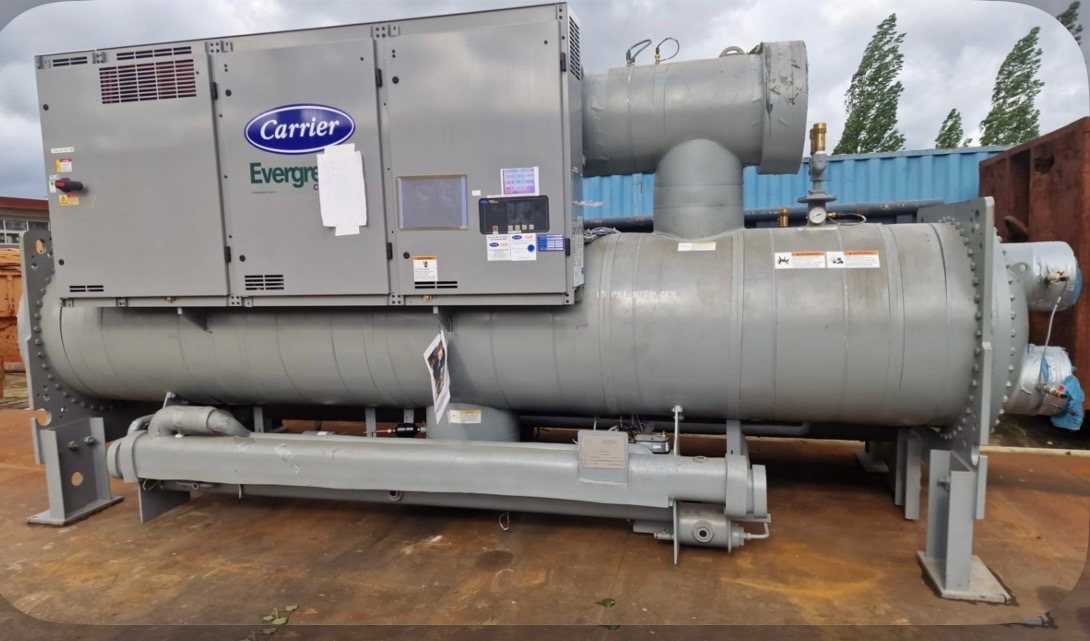
McQuay Chiller Buyers in Gonzales, Louisiana
A practical way to start
If you have a used McQuay chiller in Gonzales, Louisiana, we buy chillers rather than sell them. Share what you know for an upfront cash offer; no equipment testing is required. The buyer handles crane service, rigging, disconnects, refrigerant recovery, loading, hauling and freight, coordinating qualified personnel with the site. A precise inventory and an honest account of access restrictions help shape the removal plan.
Measure the load, not just the rating
When a record says tons, ask whether that figure describes cooling output for one unit or for a group. It is not the load weight for rigging. Supply physical dimensions and a documented shipping or operating weight if known, and specify whether protrusions and separate cabinets are included. If the document does not say, let the buyer know rather than filling the gap with an estimate.
Identify this manufacturer's unit
Photograph the McQuay nameplate and any retrofit labels so the actual model and listed refrigerant can be checked. A retrofit label can differ from the original plate, so provide both rather than choosing the number that looks newer. If a plate is missing, available drawings and wide photographs can still help identify the particular chiller.
When the charge is uncertain
A refrigerant label should travel with any later retrofit or service documentation so the recovery team sees the whole recorded history. Give the stated quantity only if documented and describe known damage without touching the circuit. The buyer arranges appropriately qualified personnel for recovery; leave valves closed and never vent refrigerant to make a machine easier to move.
Identify shared power equipment
Provide the voltage, phase and frequency listed on an accessible nameplate or equipment schedule, if legible. Note any separate starter, drive or control enclosure and whether it is included or shared. Do not open a panel or handle wiring to collect these details. The buyer coordinates qualified disconnect personnel with authorized site staff, who identify isolation boundaries and any equipment that must remain energized.
Record the actual arrangement
Share available service records and photos of the chiller's compressor, heat exchangers and controls; do not start it for an offer. Records of past service are useful even when they do not prove current operating condition. Describe what you know, such as an old repair or a missing control, without opening the machine, energizing it or promising that it will run.
Where the equipment sits
The regional context for Gonzales includes the I-10 corridor southeast of Baton Rouge. It is in Ascension Parish. Industrial security or shutdown requirements vary by property; provide the site's rules and the chiller's exact location. A regional route or facility category cannot establish the conditions at a particular property. Provide the street address, building or yard location, and any known gate, loading or access restrictions for the actual chiller. If a separate starter or control is included, show where it sits relative to the chiller and the path to the loading area.
Coordinate with the facility
An approved work window and a site contact are more useful than a proposed date that no one has confirmed. Identify access, escort and shutdown restrictions, and explain which cooling or process services must continue. The buyer coordinates the removal work with authorized personnel. Where the schedule or operating boundaries remain undecided, flag those questions for the facility rather than guessing.
Information for the rigger
If a unit is above grade or inside a constrained room, describe the possible route and any known structural or overhead limits. A safe photo of the surrounding area can help, along with unit-specific rigging documents. The buyer's rigging team assesses lift points, crane position and whether components can move as assembled. The seller is not expected to perform rigging or dismantling.
Document the route and lift
Flag missing data plates, obsolete-looking controls or tightly enclosed equipment so identification and removal can be planned. An enclosed location can make both identification and the extraction route harder to assess. Share room openings, overhead obstacles and a photo of the installed unit; the buyer's riggers can determine what further information is needed.
From the chiller to the loading area
A rooftop, basement, mechanical room and fenced yard each create different access questions. Provide the actual building and unit location, any known opening dimensions and a safe photo of the route. Mention screens, parapets, overhead services or a tight corner if present. Site restrictions should be confirmed with authorized staff rather than inferred from a map or from the machine's size.
From staging to hauling
The relevant address for a pickup includes more than a postal code. Identify the truck entrance, security requirements and the point at which equipment can be loaded, if the site has selected one. Documented weight and physical dimensions are important to planning the load. The buyer handles loading, hauling and freight, coordinating the approach with the facility and rigging team.
Start with what you know
Begin with the information that is readily available: a nameplate photo, an overall view, the equipment location and a description of access. The buyer can make an upfront cash offer without a test run. Point out missing records and any equipment that must remain; questions about the removal scope can then be resolved with the site before work is arranged.